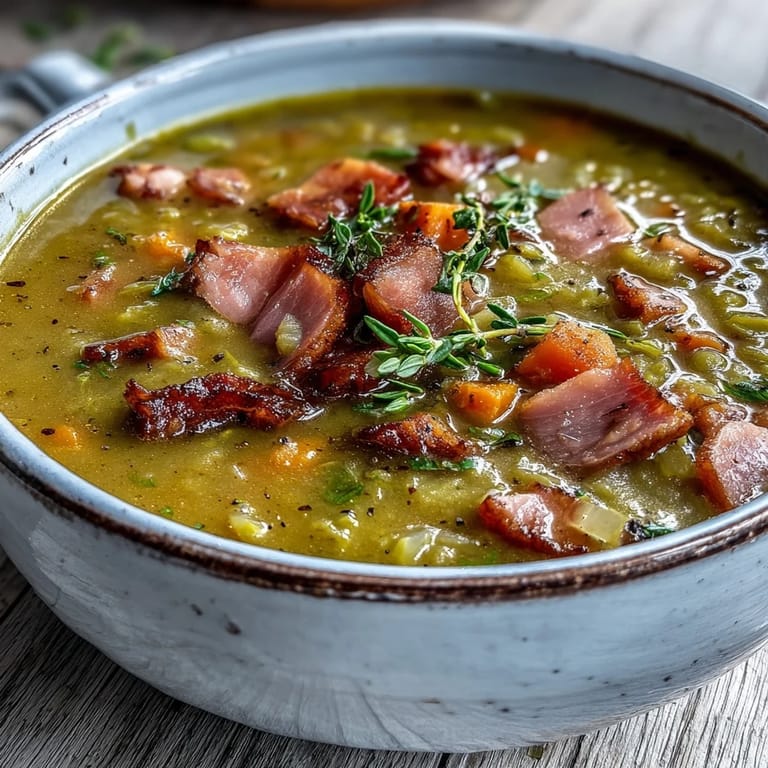
 Save to Pinterest
 My grandmother kept a ham bone in her freezer like some people hoard lottery tickets, waiting for the right cold snap to transform it into soup. One January afternoon, when the wind was rattling the kitchen windows and I couldn't shake the chill, she handed me that bone wrapped in butcher paper and said, "This is how you know winter." That first pot I made taught me that the best soups aren't rushed—they're built layer by layer, each ingredient whispering its own story into the broth.
I made this soup for my neighbor after her surgery, and watching her face soften when she tasted it—really tasted it, not just ate it—reminded me why simple food matters. She told me it tasted like "the kind of thing that heals you," which is exactly what I wanted. That's when I stopped overthinking the recipe and started listening to what the soup was telling me it needed.
Ingredients
- 1 meaty ham bone or 2 cups diced cooked ham: The foundation of everything—if you use a bone, it releases gelatin that makes the broth silky; if you use diced ham, you get immediate texture and flavor without the wait.
- 1 pound dried split peas, rinsed and sorted: Those little green gems thicken the soup naturally as they break down, and rinsing them first keeps any dust or debris at bay.
- 1 large onion, 2 carrots, 2 celery stalks, all diced: This trio is the holy foundation—don't skip it or rush it, because those six minutes of softening are where the magic starts.
- 2 cloves garlic, minced: One minute is all it takes for garlic to go from raw to fragrant, so watch it like a hawk or it'll taste burnt and bitter.
- 1 bay leaf: It sits quietly in the background the whole time, adding an herbal whisper that you can't quite identify but absolutely would miss.
- 8 cups broth and 2 cups water: Use low-sodium broth so you can control the salt—store-bought broths are already salty enough, and this soup concentrates as it simmers.
- 1 teaspoon dried thyme and ½ teaspoon black pepper: Thyme is the voice of winter in dried form, and pepper should always be freshly ground—it makes a difference you'll actually taste.
- Salt, to taste: Add it at the end, a pinch at a time, because the ham and broth are already contributing saltiness.
Tired of Takeout? 🥡
Get 10 meals you can make faster than delivery arrives. Seriously.
One email. No spam. Unsubscribe anytime.
Instructions
- Build your aromatic base:
- Heat oil in your large pot over medium heat, then add the onion, carrots, and celery. Stir them for about five to six minutes, listening for the gentle sizzle to soften into a quiet simmer—you want them translucent and tender, not browned.
- Wake up the garlic:
- Add the minced garlic and stir constantly for just one minute, until the kitchen fills with that unmistakable smell. One minute more and it tips into bitterness, so trust your nose here.
- Combine everything:
- Pour in the rinsed split peas, add your ham bone or diced ham, toss in the bay leaf, sprinkle the thyme, then add all the broth and water. Stir everything together so nothing sticks to the bottom.
- Bring to a boil and settle into a simmer:
- Let it heat until you see rolling bubbles, then drop the temperature to low, cover the pot, and let it do its work for an hour. Stir it every fifteen minutes or so—not because it needs you to, but because stirring a simmering pot is meditative and you'll smell all the good things developing.
- Uncover and let it thicken:
- After an hour, remove the lid and simmer for another twenty to thirty minutes, stirring occasionally. The peas will start dissolving into the liquid, and the soup will go from brothlike to creamy and substantial.
- Finish with the ham:
- Pull out the bay leaf and, if you used a bone, fish it out and pick any meat clinging to it—there's always some good stuff hiding there. Chop it and stir it back in.
- Make it your texture:
- Season with black pepper and salt to taste. If you like it chunky, leave it as is; if you want creaminess, mash some of the peas with the back of a spoon, or blend part of it with an immersion blender for a halfway texture.
- Serve and savor:
- Ladle it into bowls while it's hot and think about adding fresh herbs if you have them—parsley or chives brighten everything up.
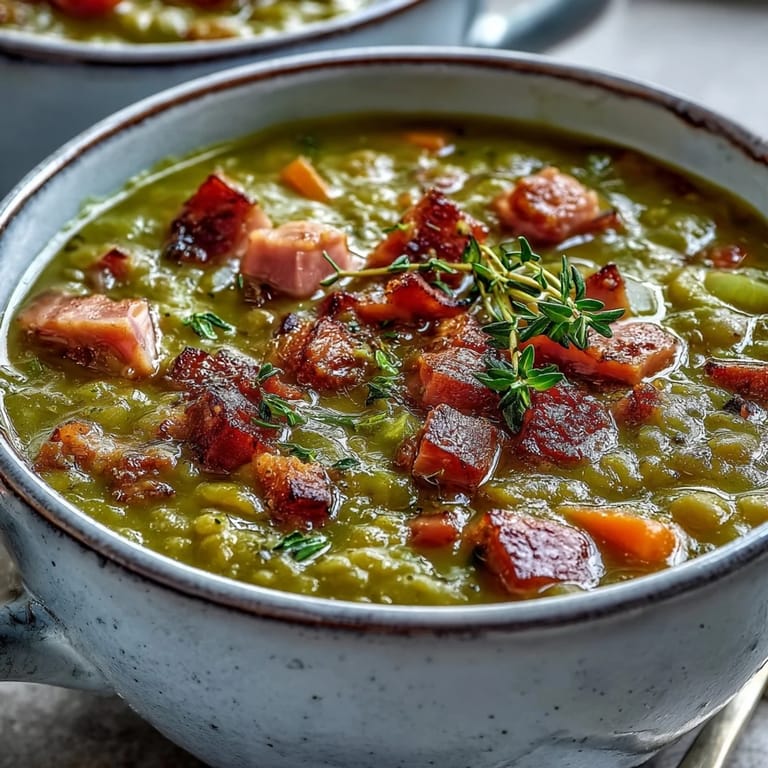 Save to Pinterest
 There's a moment in every pot of split pea soup where you realize you're not just making food—you're making something that will warm someone from the inside, literally and otherwise. That moment is usually when you first taste it and suddenly understand why people have been making this soup for generations.
The Ham Bone Question
If you're standing in front of your freezer wondering whether to save that ham bone, save it. Bones are patience in solid form—they give you gelatin, depth, and a sense of thriftiness that modern cooking has mostly forgotten. A ham bone simmered for an hour tastes richer than pre-cooked diced ham, but if you're short on time or prefer simplicity, diced ham gets you there just fine, just with a slightly lighter broth.
Timing and Make-Ahead Magic
This soup actually improves with time, which is why making it on Sunday and eating it throughout the week feels like cheating. The flavors deepen, the peas soften even more if they haven't already, and the whole thing becomes more cohesive and comforting. You can refrigerate it for four days or freeze it for three months, and honestly, a quick reheat on the stove is all it needs.
Ways to Make It Your Own
The skeleton of this recipe is strong enough to support your own variations without falling apart. Diced potatoes or parsnips add extra heft, smoked paprika can replace the ham if you're making a vegetarian version, and some people swear by a splash of vinegar at the end to brighten everything up. The soup welcomes creativity as long as you respect the core—the peas, the aromatics, and the slow simmer that brings it all together.
- A handful of spinach or kale stirred in at the very end adds brightness without diluting the richness.
- Fresh thyme is excellent if you have it, but dried thyme is reliable and honest in a way that works perfectly here.
- Serve it with crusty bread for soaking up the last spoonfuls, which is non-negotiable.
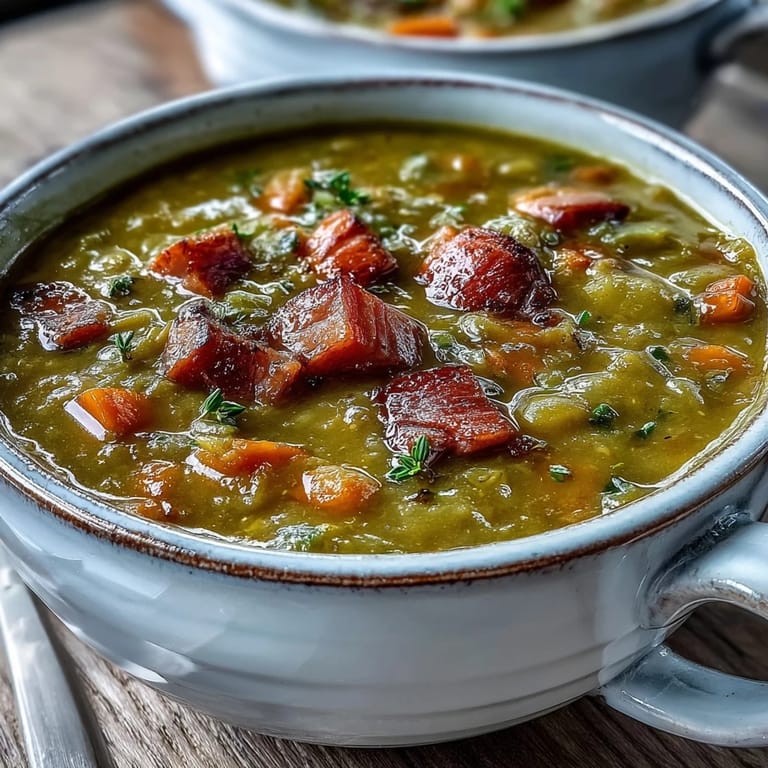 Save to Pinterest
 Split pea soup is one of those recipes that asks very little of you but gives back generously, which might be why it's been around forever. Make it once and you'll understand why.
Recipe FAQs
- → Do I need to soak split peas before cooking?
No, split peas do not require soaking. Unlike dried beans, they cook relatively quickly and will soften completely during the simmering process.
- → Can I make this soup vegetarian?
Yes, simply omit the ham bone and use vegetable broth instead of chicken broth. Add smoked paprika or liquid smoke to maintain that depth of flavor typically provided by the ham.
- → How do I store leftovers?
Store cooled soup in an airtight container in the refrigerator for up to 4 days. You can also freeze it for up to 3 months. The soup may thicken in the fridge—thin with broth when reheating.
- → Why is my soup still watery after cooking?
Sometimes peas vary in cooking time. Continue simmering uncovered until the peas break down and the soup reaches desired thickness. You can also mash some peas against the side of the pot.
- → What can I serve with split pea soup?
Crusty bread makes an excellent accompaniment for dipping. A simple green salad with vinaigrette provides a fresh contrast to the rich, hearty soup.
- → Can I use a ham hock instead of a ham bone?
Yes, a smoked ham hock works beautifully and adds even more smoky flavor. Cook it with the soup, then remove the meat from the skin and bone before serving.