 Save to Pinterest
 My first encounter with tteokbokki happened on a freezing Seoul afternoon when I ducked into a street vendor's tent seeking warmth. The vendor stirred that bubbling red pot with such casual confidence, and when I bit into those chewy rice cakes, I understood why people lined up in the cold for this. Years later, I still chase that exact moment of heat and spice.
I made this for my friend Jess who claimed she didn't like spicy food, then watched her demolish two bowls and ask for the recipe immediately. That moment taught me that tteokbokki isn't just about heat—it's about balance, richness, and that strange comfort you get from something that challenges your taste buds.
Ingredients
- Rice cakes (tteok): These aren't like any other rice cake you've tried; they're cylindrical, chewier, and they drink up sauce like nothing else. Frozen or dried varieties both work, but soaking matters.
- Gochujang: This fermented chili paste is your foundation—it brings depth beyond just spice, with funky umami notes that linger beautifully.
- Gochugaru: Korean chili flakes add brightness and texture that gochujang alone can't deliver.
- Kombu and anchovies: The secret weapon for a broth that tastes homemade and honest, even though it takes just minutes to build.
- Eggs: Boiled eggs ground this dish into something more substantial and turn it from snack into a proper meal.
- Soy sauce, honey, and sesame oil: This trio rounds out the sharp spice with warmth, sweetness, and that toasted aroma that makes everything feel intentional.
Tired of Takeout? 🥡
Get 10 meals you can make faster than delivery arrives. Seriously.
One email. No spam. Unsubscribe anytime.
Instructions
- Wake up the rice cakes:
- Soak them in warm water for 10 minutes if they're hard or cold from the fridge. You want them pliable and ready to absorb flavor.
- Build your broth:
- In a medium saucepan, add water, kombu, and anchovies, then bring to a gentle boil. Let it simmer for 10 minutes—the aromas will get sweeter and deeper—then fish out the solids. What's left is liquid gold.
- Cook the eggs:
- While the broth does its thing, boil your eggs for 8 to 9 minutes, then shock them in cold water. Peeling them while they're still slightly warm makes the shells slip off easier.
- Create the sauce:
- Whisk gochujang, gochugaru, soy sauce, sugar, honey, garlic, and sesame oil into your broth. Stir until the paste fully dissolves and the color becomes a rich, glossy red.
- Bring it all together:
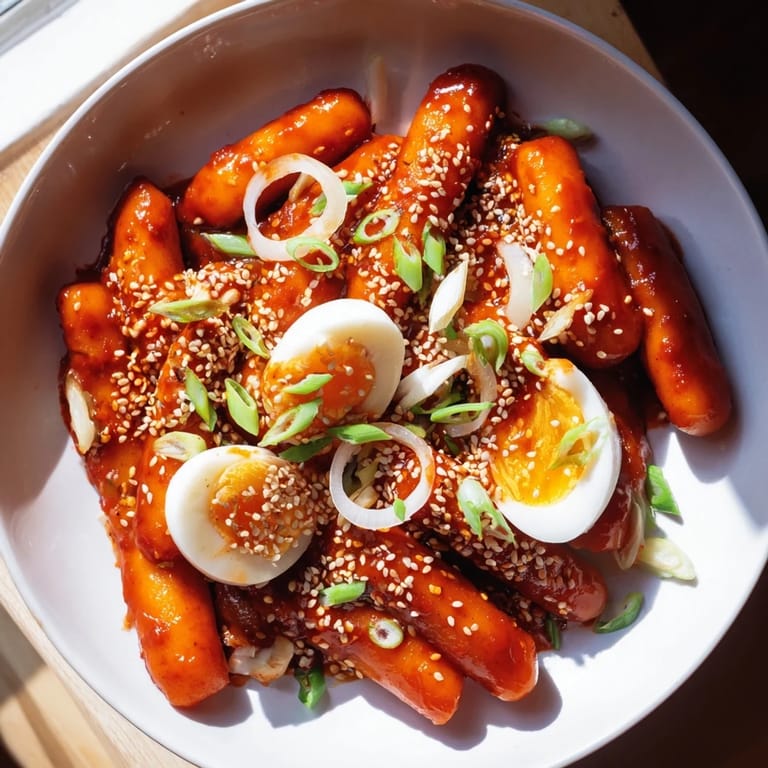
- Add the drained rice cakes, onion, and fish cake (if using) to the sauce. Stir occasionally over medium heat for 10 to 12 minutes until the sauce thickens and coats each cake in that gorgeous reddish glaze.
- Final warm:
- Slide in the boiled eggs and let everything heat through for another 2 to 3 minutes. The eggs will soak up some of that spicy flavor from the outside.
- Plate and celebrate:
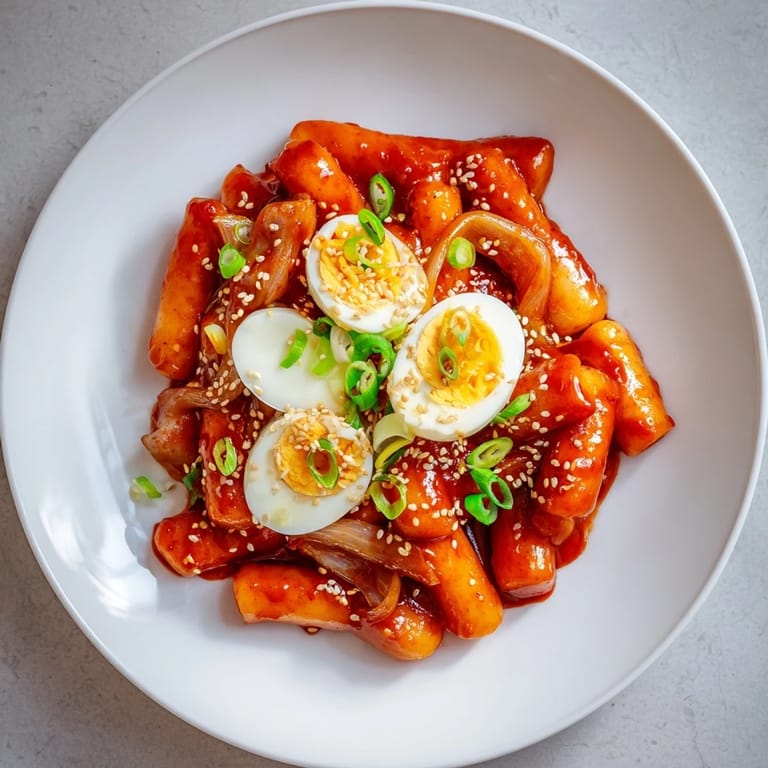
- Scatter green onions and toasted sesame seeds over the top right before serving hot.
 Save to Pinterest
 There's something almost meditative about stirring this pot, watching the sauce go glossy and thick, knowing you're about to eat something that tastes like someone who learned to cook on the streets of Seoul taught you their secrets. That's when tteokbokki stopped being just a snack and became comfort.
Making It Your Own
The beauty of tteokbokki is how it bends to what you have on hand. I've added shredded cabbage when I wanted more texture, carrots for sweetness, even ramen noodles when I was feeling rebellious. The core stays the same—that gochujang-anchovy magic—but the rest is yours to improvise with.
Vegetarian Without Compromise
Skip the anchovies and fish cake, and use vegetable broth instead, but don't think you're losing anything crucial. Double your kombu, add a piece of dried shiitake mushroom to the broth, and you'll get an umami depth that stands on its own. The spice and sweetness do most of the heavy lifting anyway.
Timing and Temperature
This dish demands hot—not just warm, but actually steaming when it hits the table. The heat wakes up the chili flavors and makes those soft rice cakes shine. If you're making this ahead, reheat it gently on the stove rather than the microwave, which can make the sauce break.
- Serve immediately after garnishing so the sesame seeds don't absorb steam and get soggy.
- If feeding a crowd, keep the pot on low heat and let people serve themselves.
- Leftover tteokbokki reheats better than you'd expect—just add a splash of water to loosen the sauce.
 Save to Pinterest
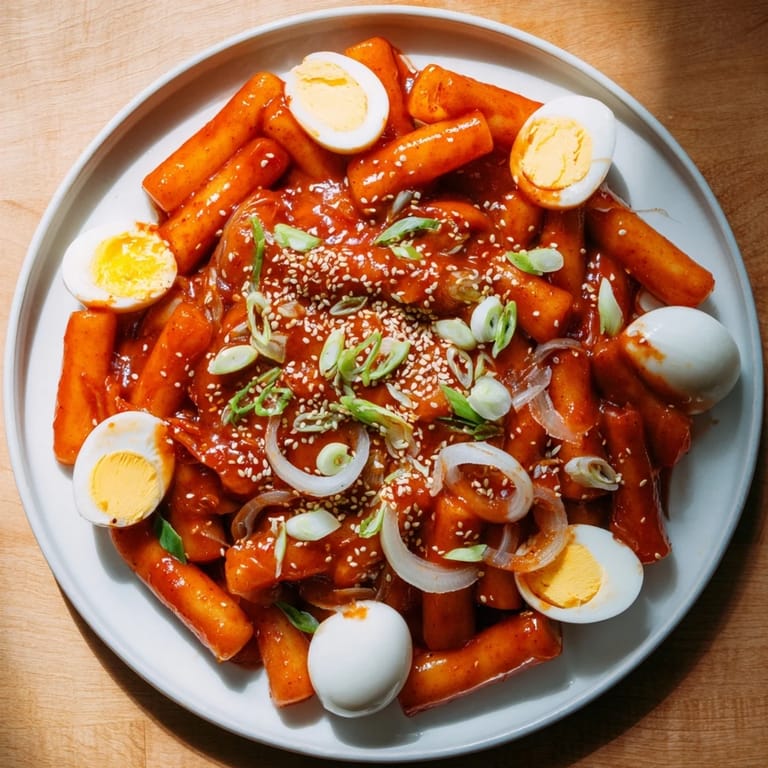
 Tteokbokki is proof that bold, honest food doesn't need to be complicated. Make this when you want something that feels celebratory but takes almost no time, or when you simply need that particular kind of warm spice and chew that nothing else can give you.
Recipe FAQs
- → How do I soften the rice cakes before cooking?
Soak the rice cakes in warm water for about 10 minutes if they are hard or refrigerated to ensure a chewy texture after simmering.
- → Can I make this dish vegetarian?
Yes, omit anchovies and fish cake, and use a vegetable broth instead to keep it vegetarian-friendly without losing flavor.
- → What spice level does this dish have?
The dish balances spicy and sweet flavors from gochujang and gochugaru; adjust quantities to suit your heat preference.
- → How long should I boil the eggs for?
Boil large eggs for 8 to 9 minutes to achieve a firm but creamy yolk, then cool and peel before adding to the dish.
- → What garnishes enhance this dish?
Top with sliced green onions and toasted sesame seeds for added aroma and a subtle nutty crunch.
- → Can I add other vegetables or noodles?
Yes, incorporating cabbage, carrots, or ramen noodles can add extra texture and heartiness to the dish.