 Save to Pinterest
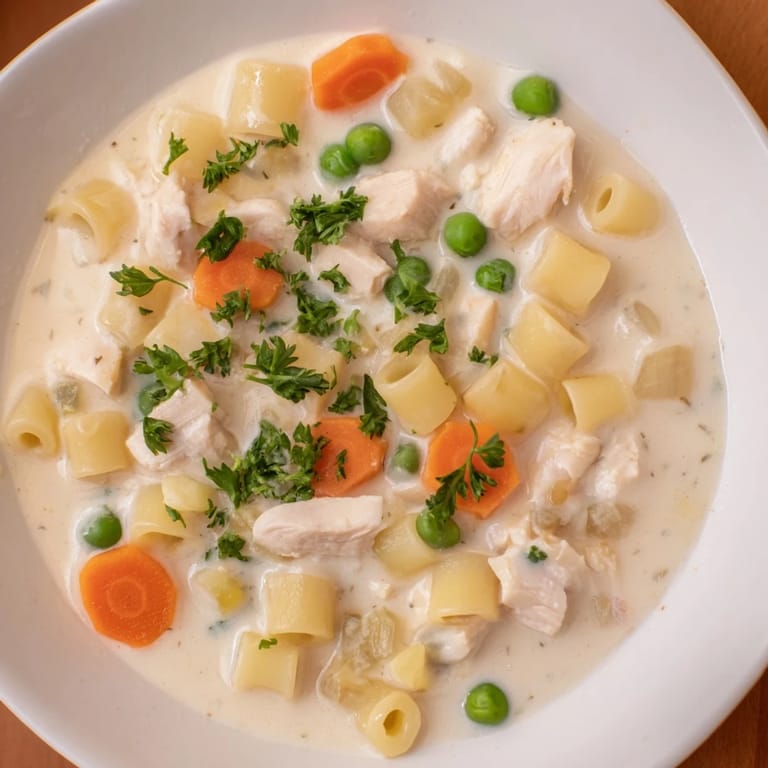
 There's something about a pot pie that stops me mid-afternoon—maybe it's the memory of watching my grandmother ladle soup into wide bowls, steam rising like little clouds. One winter, I decided to skip the fussy crust and just make it as soup instead, and honestly, it was even better. The pasta swirls around, the chicken is impossibly tender, and that cream sinks into every corner. It became the thing I make when someone needs comfort on a Tuesday.
I made this for my neighbor after her kids had been sick, and she cried a little when she tasted it. Not in a dramatic way—just quietly, sitting at her kitchen table with a bowl warming her hands. That's when I knew this recipe belonged in the regular rotation, the one you come back to when life feels hard or cold.
Ingredients
- Cooked chicken breast, 2 cups shredded or diced: Use rotisserie if you're short on time, or poach your own for a cleaner broth (the meat should shred easily, never tough).
- Carrots, 1 cup diced: Cut them about the size of your pinky fingernail so they soften in the same time as the pasta.
- Celery, 1 cup diced: This is the quiet flavor builder—don't skip it, even though people always do.
- Frozen peas, 1 cup: Frozen actually works better than fresh here because they hold their shape and stay bright green.
- Yellow onion, 1 small diced: The foundation of everything warm and savory about this soup.
- Garlic, 2 cloves minced: Bloom it in that butter moment before the flour—that's where the magic starts.
- Fresh parsley, 2 tablespoons chopped plus extra for garnish: Save some for the end; it brightens everything.
- Ditalini pasta, 1 cup uncooked: Those little tubes are perfect because they catch the broth, but small shells work beautifully too.
- Low-sodium chicken broth, 4 cups: Good broth makes everything taste homemade; use the best one you can find.
- Whole milk, 1 cup: This is your creamy canvas—don't use skim, you'll miss the richness.
- Heavy cream, 1/2 cup: The secret to that restaurant-quality texture.
- Unsalted butter, 2 tablespoons: Unsalted lets you control the salt and gives you the cleanest flavor.
- All-purpose flour, 2 tablespoons: The roux is your thickener—cook it long enough to taste like toasted wheat, not raw flour.
- Salt, 1 teaspoon or to taste: Add at the end and adjust—broth is already salty, so go slow.
- Ground black pepper, 1/2 teaspoon: Freshly ground if you can; it makes a real difference.
- Dried thyme, 1/2 teaspoon: This is what makes it taste like pot pie.
- Dried sage, 1/2 teaspoon optional: If you use it, you'll understand why it's optional but also why you might never skip it again.
Tired of Takeout? 🥡
Get 10 meals you can make faster than delivery arrives. Seriously.
One email. No spam. Unsubscribe anytime.
Instructions
- Build your base:
- Melt butter over medium heat and add onion, carrots, and celery. Listen for the gentle sizzle—you want softened vegetables, not browned ones. Stir occasionally and let them release their sweetness, about 5 minutes.
- Toast your flour:
- Stir in minced garlic, then sprinkle flour over the vegetables and cook, stirring constantly, for 2 minutes. This removes the raw, chalky taste and creates your thickening base.
- Create the broth:
- Whisk in the chicken broth slowly to avoid lumps, then add milk and cream. Watch it thicken slightly as it simmers—this is the moment it starts to feel like comfort.
- Cook the pasta:
- Add ditalini, thyme, and sage. Simmer uncovered for about 10 minutes, stirring often, until the pasta is al dente and the broth has turned creamy and thick.
- Finish with chicken and peas:
- Stir in shredded chicken and frozen peas, then simmer for 3 to 5 minutes until the peas are tender and the entire pot is hot throughout.
- Season and serve:
- Taste and adjust salt and pepper. Stir in fresh parsley right before serving, ladle into bowls, and top with more parsley if you want it to look as good as it tastes.
 Save to Pinterest
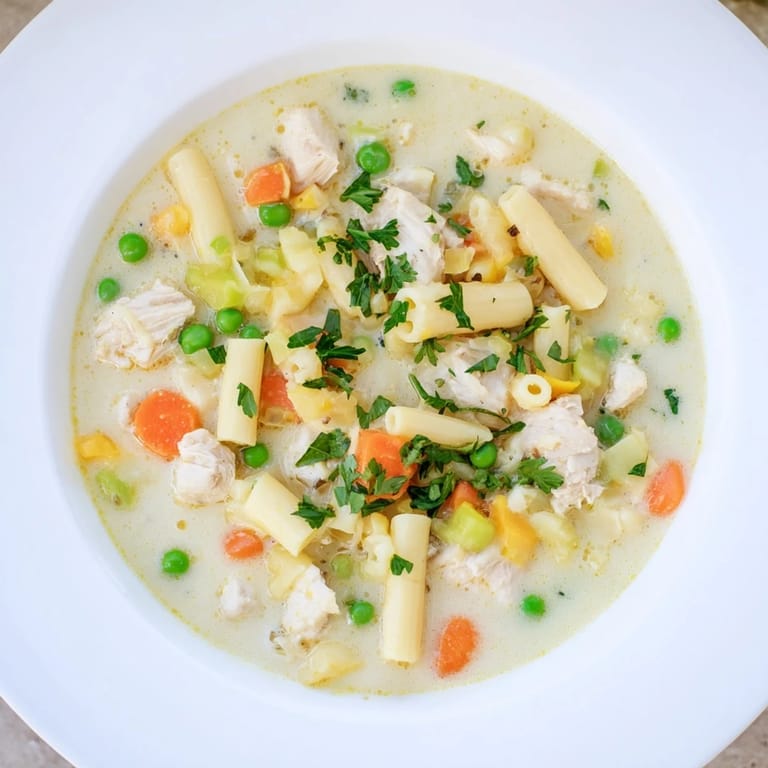
 My daughter asked for seconds that first time I made it, and then thirds. She's not usually a soup person, but something about this one—maybe the soft pasta mixed with tender chicken, maybe just the way it feels on a cold day—made her pause her cartoon and actually sit at the table.
Why This Beats Actual Pot Pie
No pie crust means no stress, no rolling pins, no blind baking. You get all the flavors and textures of a pot pie—the creamy broth, the soft vegetables, the chicken, the herbs—but in a warm, spoonable form that's ready to eat the moment it's done. It's faster, easier, and honestly, every bit as satisfying.
Swaps and Variations
This recipe is forgiving enough to work with what you have. Turkey works just as well as chicken if that's what's in your kitchen. A splash of dry white wine added with the broth brings an elegant depth that people always ask about. For a lighter version, use half-and-half instead of cream, or try whole wheat ditalini if you want more texture and nutrition.
Storing and Reheating
Refrigerate leftovers in an airtight container for up to 3 days. When you reheat it, the pasta will have absorbed even more broth, so warm it gently over medium heat and add a splash of broth or milk to get back to that creamy consistency. This soup also freezes beautifully for up to 2 months—just remember that frozen peas will soften further, so account for that texture difference.
- Reheat gently on the stovetop rather than microwaving, which can make the cream separate.
- Fresh parsley should be stirred in after reheating so it stays bright and fresh tasting.
- A crusty piece of bread on the side turns this into something that feels like Sunday dinner.
 Save to Pinterest
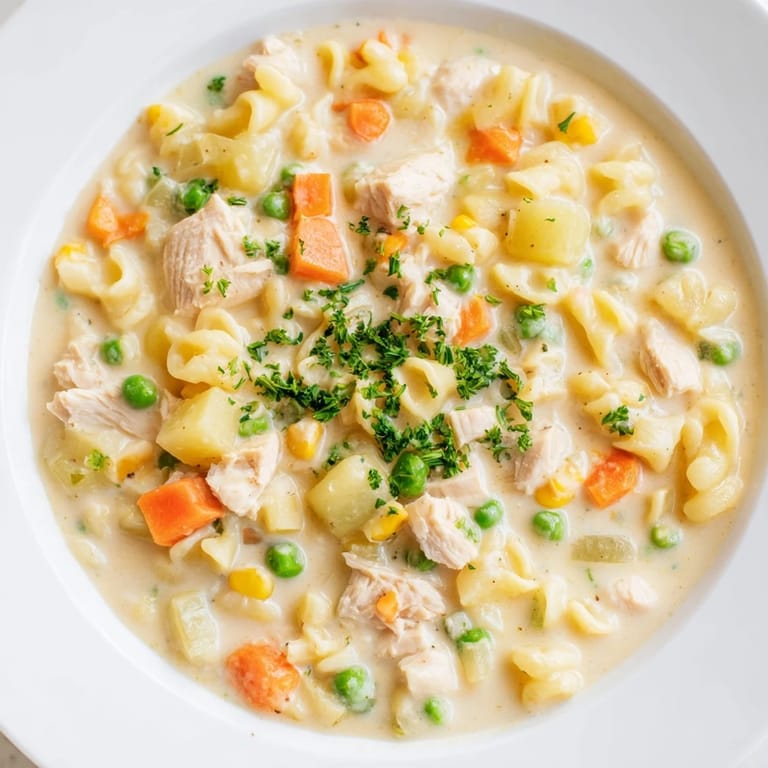
 This is the kind of recipe that reminds you why you cook—not for points or perfection, but because warm food in a bowl is one of the most honest ways to say 'I'm thinking of you.' Make it, share it, watch someone's face soften over a spoonful.