 Save to Pinterest
 The first time the aroma of wok-fired cabbage hit me, I was standing in my kitchen windows flung wide open to a drizzly afternoon and music playing just loud enough to drown out any outside noise. I reached for ingredients more out of curiosity than culinary intent stirring together a quick lunch with what was left in the fridge. The wave of heat from the chilies mingling with sweet cabbage and sharp ginger surprised me as I tasted straight from the wok with chopsticks. That unlikely burst of flavor turned a simple vegetable stir fry into a dish that now marks any day I crave speed comfort and a jolt of brightness. I still smile remembering how I coughed a little from the first whiff of chili smoke.
On a rainy Saturday, I made this spicy cabbage stir fry for friends who dropped by unannounced, everyone crowding into the kitchen as we chopped and laughed. We all leaned over the sizzling pan to breathe in that sharp garlicky perfume, and I watched how the colors and scents turned the room lively. Passing bowls around, someone joked that it beat takeout by a mile. Something about stirring a pan together as music plays really brings people close. That day, cabbage was anything but ordinary.
Ingredients
- Green cabbage: Go for a crisp fresh head slice it thinly so it cooks evenly and keeps its snap.
- Carrot: Adds cheerful color and balances the heat with a bit of sweetness I love to sneak this in especially for guests.
- Spring onions: Divide the white and green parts; the whites add depth early the greens bring a fresh lift at the end.
- Garlic: Lots of garlic mean irresistible aroma; chop it fine so it melts into the oil.
- Fresh ginger: Adds brightness and warmth grate it to release maximum flavor.
- Fresh red chilies: Adjust the quantity to your spice comfort—more for kick less for subtlety.
- Soy sauce: Umami backbone; use tamari for a gluten free batch and watch the salt as soy packs a punch.
- Rice vinegar: Hits with a touch of tang brightening every bite.
- Toasted sesame oil: Just a splash infuses a nutty aroma best added with the sauce not too early.
- Sugar or maple syrup: Only a little—its a quiet sweetness that helps balance the heat and acidity.
- Ground white pepper: A background warmth that sneaks up on you far gentler than black pepper.
- Vegetable oil: Use a neutral high-heat oil; the hot pan is essential for proper char.
- Toasted sesame seeds: Sprinkle at the end for crunch and toasty notes.
- Fresh coriander leaves: Optional but if you like it it adds a burst of green and flavor on top.
Tired of Takeout? 🥡
Get 10 meals you can make faster than delivery arrives. Seriously.
One email. No spam. Unsubscribe anytime.
Instructions
- Prep everything first:
- Slice the cabbage thin julienne the carrot chop and separate the spring onions then gather your sauces so nothing catches you off guard once the wok is hot.
- Heat the oil:
- Pour vegetable oil into your wok or skillet turn the heat high and listen for it to shimmer a little before tossing anything in.
- Bloom aromatics:
- Add garlic ginger and sliced red chilies to the sizzling oil and stir with quick movements just until a cloud of spicy fragrance launches upward.
- Begin with veggies:
- Drop in the white parts of the spring onions and carrots stirring for about a minute as colors start to deepen and edges catch a bit of gold.
- Stir fry the cabbage:
- Introduce the cabbage now tossing fast and constantly for just a few minutes—you want it to wilt but still have that satisfying crunch.
- Mix the sauce:
- In a spare bowl whisk the soy sauce rice vinegar sesame oil sugar or maple syrup and white pepper all at once until glossy and combined.
- Bring it together:
- Pour the sauce over the veggies tossing quickly to coat every shred and let the wok sizzle for another couple of minutes until everything shines and smells incredible.
- Finish and garnish:
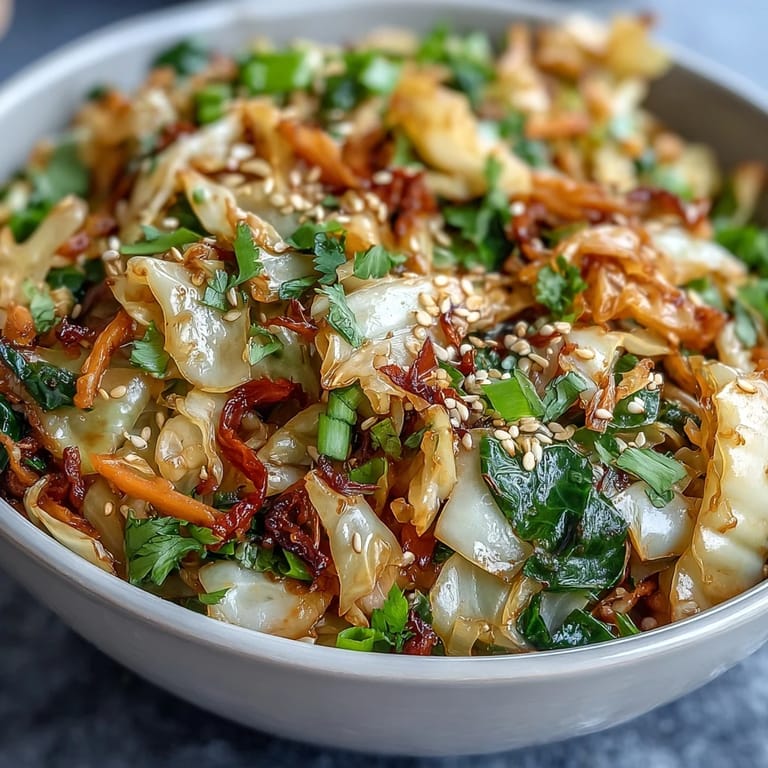
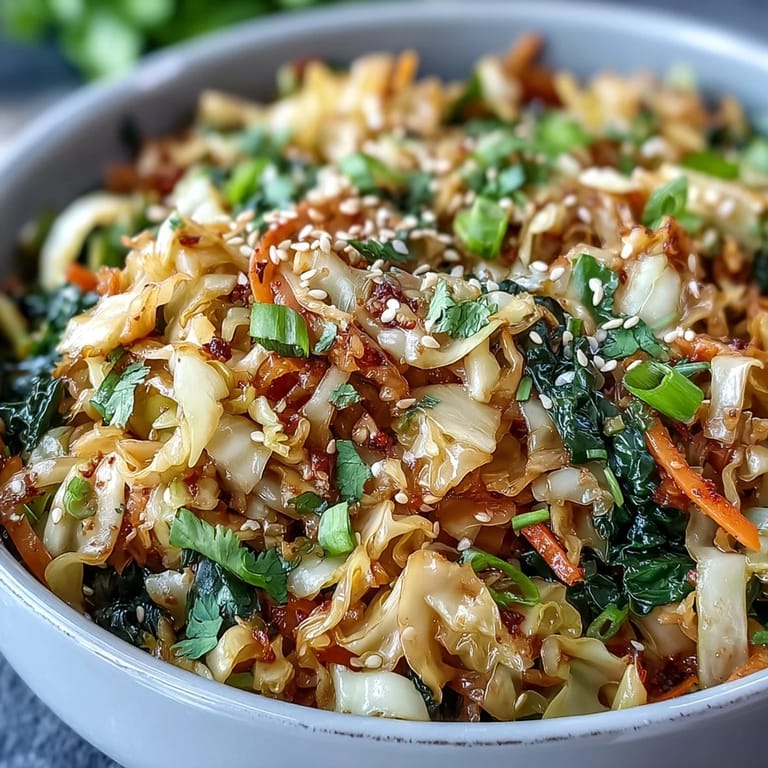
- Off the heat stir in green onion tops tumble onto a serving plate sprinkle sesame seeds and scatter coriander if you like serving hot for best flavor.
 Save to Pinterest
 Sharing this dish during a weeknight dinner with my partner became a ritual the second time I made it—we’d chop side by side arguing over chili quantities and licking sauce off our fingers with grins.
Doubling Up For Dinner Parties
If youre feeding a crowd, stir fry in batches so nothing steams and all your veggies stay crisp and vivid. Pile the finished portions on a warm platter then toss together at the end with extra sesame seeds for show. This makes everyone feel special—no soggy cabbage in sight!
Ingredient Swaps And Shortcuts
Ive tried this recipe with everything from bell peppers to mushrooms when the cabbage was a little sparse—its forgiving. Pre-shredded coleslaw mix works in a pinch, too, and saves chopping time on busy nights. The base sauce is so adaptable it makes even kitchen improvisation taste intentional.
Keep It Spicy Or Mild, Your Call
Some nights I double up the chilies for an extra bold kick, and others I go easy so everyone feels at home at the table. Its your stir fry—start with less heat, taste, then adjust right before serving if you want a bigger punch.
- Mix in tofu or tempeh at the end for more substance.
- Pair with rice or noodles to turn this into a heartier main.
- Remember—dont be shy with the sauce if you want every bite glossy and flavorful.
 Save to Pinterest
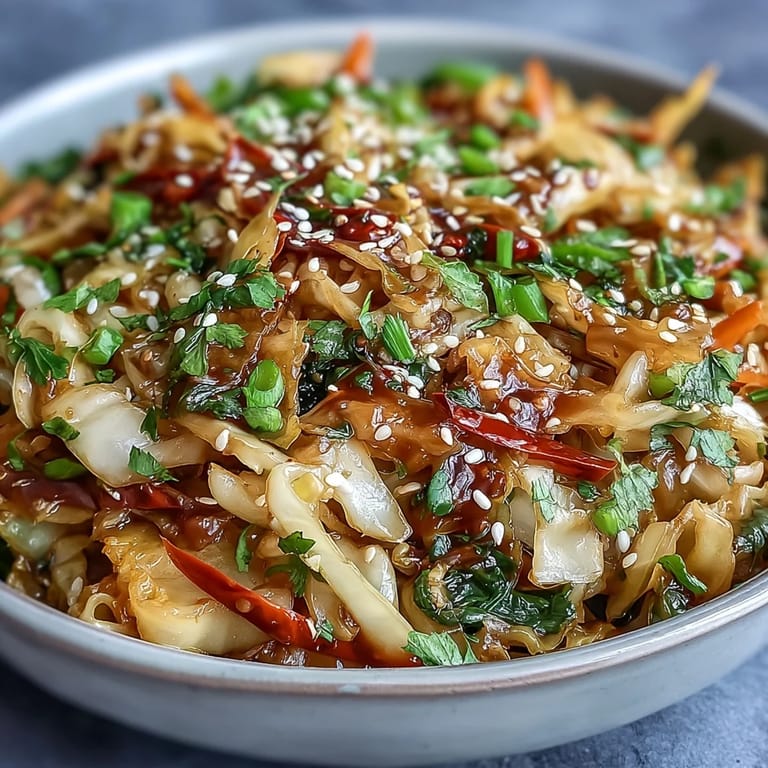
 This spicy cabbage stir fry brightens the mood of any evening—its friendly, flexible, and always more satisfying when shared. Give it a try and see how quickly it disappears from your table.
Recipe FAQs
- → How do I keep the cabbage crisp?
Use a very hot wok or skillet, slice the cabbage thinly, and stir-fry quickly without overcrowding. Add the sauce near the end so the cabbage wilts only slightly and stays crisp-tender.
- → What can I use instead of soy sauce for gluten-free?
Use tamari labeled gluten-free. Coconut aminos are another option if you prefer a milder, slightly sweeter umami substitute—adjust salt and sugar accordingly.
- → How can I reduce or increase the heat?
Remove seeds from fresh chilies or use fewer chilies to reduce heat. To increase heat, add extra sliced chilies, a pinch of chili flakes, or a splash of chili oil at the end.
- → What protein additions work well with this dish?
Firm tofu or tempeh tossed in at the end works great—pan-fry separately for a crisp exterior before combining. Cooked shrimp, thinly sliced chicken, or seared mushrooms are good options if not keeping it vegan.
- → Why did my cabbage become soggy?
Sogginess usually comes from overcrowding or low heat. Cook in a hot pan in batches if needed, avoid adding salt too early, and drain any excess moisture from vegetables before cooking.
- → How should I store and reheat leftovers?
Store leftovers in an airtight container in the fridge for up to 3 days. Reheat quickly in a hot skillet to revive texture; add a splash of oil or water if it seems dry.