 Save to Pinterest
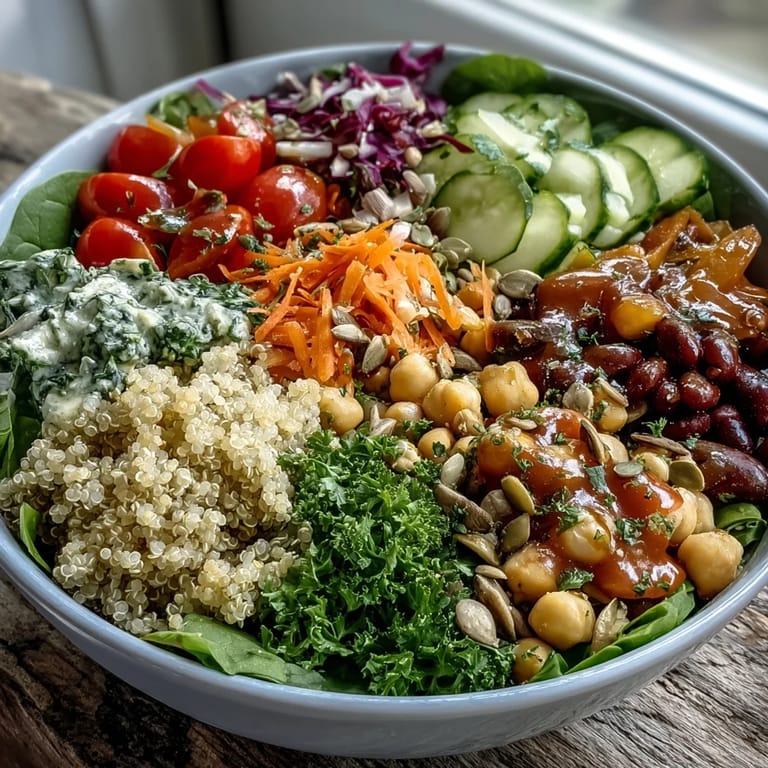
 My neighbor handed me a container of this rainbow salad one summer afternoon, and I was struck by how every color seemed to have a purpose—not just pretty, but packed with something good. I'd been stuck in a rut of the same sad desk lunches, so watching her arrange those vibrant sections like edible art made me want to understand what made it work. Turns out, it wasn't complicated at all, just intentional choices that somehow made eating feel less like an obligation and more like celebration.
I brought this to a potluck where someone had made three different pasta dishes, and honestly, people kept coming back to the salad bowl. There was something about the way the colors caught the light, and how it felt lighter after a heavy meal. That's when I realized this wasn't just nutritious—it was the kind of food people actually wanted to eat.
Ingredients
- Quinoa or brown rice: Use whichever you have time for—quinoa cooks faster and has a gentle nuttiness that doesn't compete with the vegetables.
- Cherry tomatoes: Halve them so the juice can mingle with the dressing, and honestly, taste one first to make sure they're worth eating.
- Purple cabbage: It holds its crunch for days, making this salad actually better the next afternoon than it is fresh.
- Carrots: Grated thin means they soften slightly and hold flavor better than chunks, a small trick that changes everything.
- Yellow bell pepper: The color matters here—it's brighter than red and sweeter than orange, cutting through the earthiness of the beans.
- Baby spinach: Raw and delicate, it wilts just slightly when the warm grain hits it, which is exactly what you want.
- Cucumber: Slice it fresh right before serving to avoid sogginess; this is where timing actually matters.
- Chickpeas and black beans: Rinse them thoroughly to remove the canning liquid, which sounds tedious but prevents the salad from becoming cloudy and heavy.
- Roasted cashews or almonds: The roasted kind adds flavor you don't have to build yourself; raw won't have the same effect.
- Pumpkin and sunflower seeds: These bring a mineral quality that makes the whole salad taste more substantial and grounded.
- Extra-virgin olive oil: Don't cheap out here—this is where the dressing gets its personality.
- Fresh lemon juice: Bottled will do in a pinch, but fresh tastes brighter and less tired.
- Maple syrup or honey: Just a touch to balance the acid without making it sweet; this is the move that people can't quite name when they eat it.
- Dijon mustard: It emulsifies the dressing and adds a gentle sharpness that wakes everything up.
- Garlic: Minced fresh, never powder—it should still have texture and bite.
Tired of Takeout? 🥡
Get 10 meals you can make faster than delivery arrives. Seriously.
One email. No spam. Unsubscribe anytime.
Instructions
- Cook your grain with patience:
- Follow package directions, but give it extra time to cool completely—warm grain will wilt the spinach before you're ready. I learned this the hard way and ended up with a sad, collapsed salad that tasted fine but looked defeated.
- Prep vegetables like you're setting a scene:
- Halve the tomatoes, slice the cucumber, dice the pepper, shred the cabbage—lay everything out before you start assembling. This moment of organization is when you'll actually enjoy building the salad instead of feeling rushed.
- Arrange everything in sections:
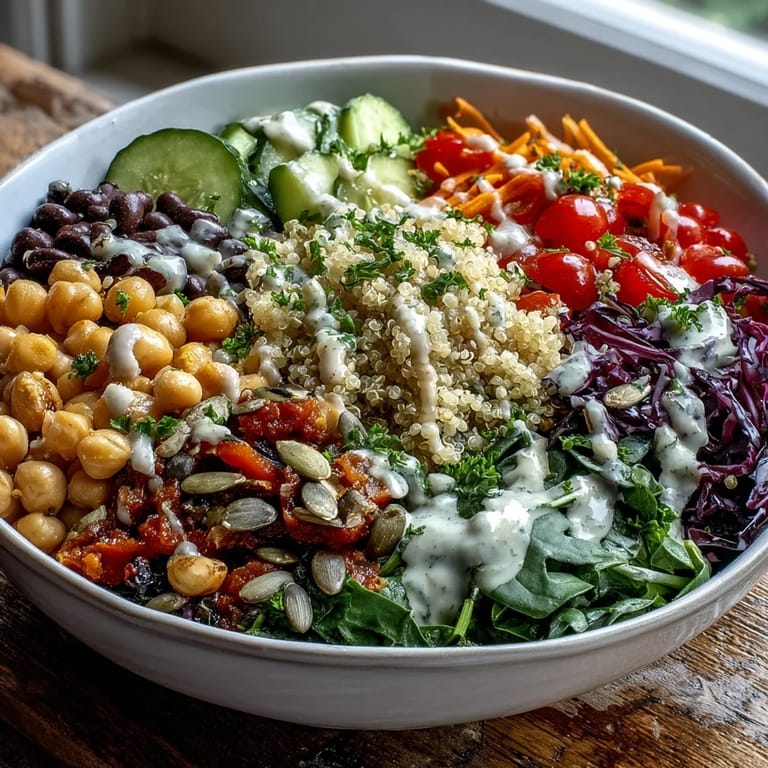
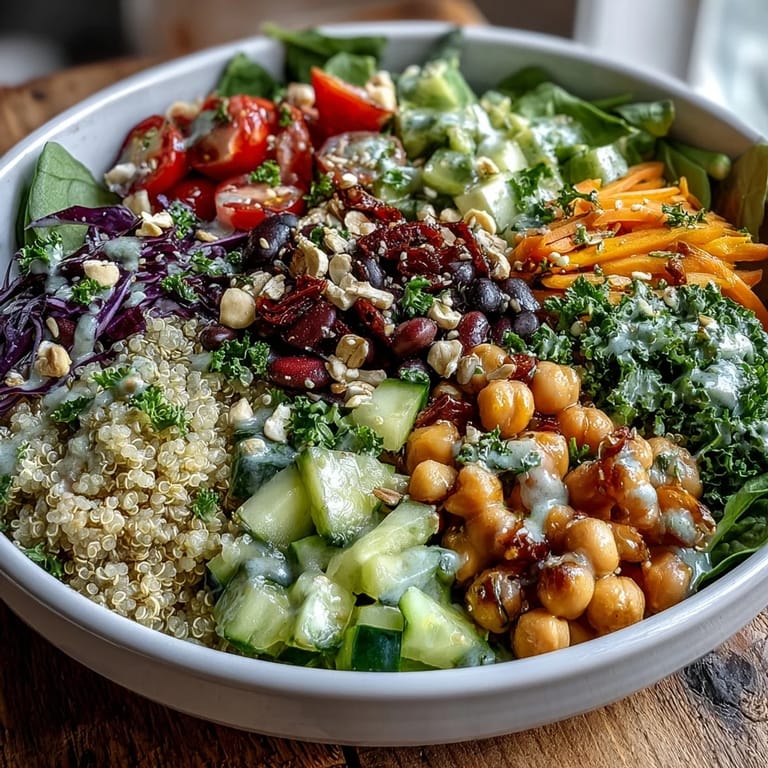
- Put the cooled grain in the center, then arrange vegetables, beans, nuts, and seeds around it like spokes on a wheel. It should look intentional and beautiful; that visual moment changes how people eat it.
- Make the dressing in a real bowl:
- Whisk together oil, lemon juice, maple syrup, mustard, and minced garlic until it looks slightly thickened and emulsified. Taste it before you pour it on—it should make your mouth water, not pucker.
- Add the dressing at the last moment:
- Drizzle it over the top just before serving, or pass it on the side so everyone can control how much they want. This is the difference between a salad that stays crisp for seconds and one that gets soggy.
- Finish with green and intention:
- Sprinkle fresh parsley or cilantro over the top at the very end. The fresh herb adds a brightness that feels like the final note in a song.
 Save to Pinterest
 My daughter asked for seconds, which she never does with salad. That small moment—her actually wanting more without being asked—made me understand that food stops being just nutrition and starts being something people choose when it's built with real attention.
The Art of Building Flavor Without Heat
This salad works because nothing is fighting for attention; instead, everything supports something else. The lemon juice doesn't overpower the vegetables, the maple syrup doesn't make it sweet, and the Dijon mustard adds structure without harshness. It's like a conversation where everyone gets to speak and be heard. The key is tasting as you go—add the dressing to your serving bowl a spoonful at a time, letting each component reveal itself before you commit to more.
Why This Salad Works as a Main Course
Most salads feel like an opening act, but this one has the protein, fat, and carbohydrates to be the real show. The chickpeas and black beans provide enough protein that you won't be hungry two hours later, while the nuts and seeds add fat that makes everything feel substantial. The grain is the foundation that turns this into something you'd actually build a meal around, not just push around a plate. When you layer in all the vegetables, you're not adding air—you're adding texture, minerals, and reasons to keep eating.
Making It Your Own Without Losing What Works
The skeleton of this salad is sturdy enough to handle changes. Swap grains based on what you have—farro brings earthiness, bulgur adds chew, wild rice brings drama. Add avocado if you want creaminess without cheese, or use crumbled feta if you're not vegan and want something tangy. Roast some chickpeas separately with spices if you want crunch instead of softness, or add a fried egg on top for richness. The dressing can shift too—use balsamic instead of lemon if you're feeling it, or add a tiny bit of tahini for Middle Eastern vibes.
- Grilled tofu or tempeh transforms this into something heartier and more substantial without changing what makes it special.
- A handful of fresh herbs like mint or basil can completely shift the energy depending on your mood or season.
- Keep extra dressing in the fridge because this salad will make you want to dress everything you eat for the next week.
 Save to Pinterest
 This salad reminds me that eating well doesn't have to be joyless or complicated. It just means paying attention and choosing colors, flavors, and textures that make you want to sit down and actually taste your food.
Recipe FAQs
- → Can I make this bowl ahead of time?
Yes, this bowl meal preps beautifully. Store components separately in airtight containers for up to 4 days. Keep the dressing in a small jar and add just before serving to maintain crisp textures.
- → What other grains work well in this bowl?
Brown rice, farro, bulgur, wheat berries, or even cauliflower rice for a lighter version. Choose grains that hold their texture well after cooling and won't become mushy when dressed.
- → How can I add more protein?
Grilled tofu, roasted chickpeas, hard-boiled eggs, or even shredded chicken work wonderfully. Feta cheese adds creaminess and protein if you eat dairy. The beans already provide solid protein at 14 grams per serving.
- → What vegetables can I substitute?
Roasted sweet potatoes, shredded beets, sliced radishes, corn kernels, or edamame all work great. Choose different colors to maintain the rainbow effect. Use whatever fresh produce looks best at your market.
- → Is the dressing necessary?
The light dressing ties everything together with brightness, but you could use tahini dressing, balsamic vinaigrette, or avocado crema instead. A squeeze of fresh lemon and drizzle of olive oil works in a pinch.
- → Can this be served warm?
Absolutely. Serve the grains warm while the vegetables remain crisp for a nice temperature contrast. The dressing flavors penetrate better when grains are slightly warm. Great for cooler weather dining.