 Save to Pinterest
 The first time I made this was on a whim—my roommate challenged me to recreate a viral video about Oreo-crusted chicken, and I laughed it off until midnight snack cravings hit. I pulled out some chicken tenders and a sleeve of Oreos, thinking it would be a disaster, and somehow it turned into the most addictive thing I'd ever deep-fried. The sweetness hitting against that savory, juicy chicken was so unexpectedly good that I've been perfecting it ever since.
I made these for a game night and watched people's faces go from skeptical to absolutely silent as they ate. One friend kept reaching for another one without saying anything, which told me everything I needed to know.
Ingredients
- Chicken tenders: Use fresh ones if you can find them, not frozen—they'll stay juicier inside that crispy coating and you'll actually taste the chicken beneath all that sweetness.
- Salt, pepper, garlic powder: Don't skip the seasoning step; this is what keeps the chicken from tasting one-dimensional once the Oreos take over.
- All-purpose flour: This creates the first seal that keeps the chicken moist while it fries—think of it as protection.
- Eggs and milk: The binding agent that makes everything stick together; the milk thins the egg just enough so it coats evenly without being gluey.
- Oreo cookies: Crush them fine but not into dust—you want visible dark crumbles that show in the finished crust, and yes, keep the cream in there for flavor.
- Vegetable oil: Use neutral oil with a high smoke point; I've learned the hard way that cheap oil can turn bitter at frying temperatures.
Tired of Takeout? 🥡
Get 10 meals you can make faster than delivery arrives. Seriously.
One email. No spam. Unsubscribe anytime.
Instructions
- Prep the chicken:
- Pat your tenders completely dry with paper towels—any moisture will steam instead of fry. Season them generously and let them sit for a minute so the salt penetrates.
- Build your station:
- Lay out three bowls in a line: flour, then beaten eggs mixed with milk, then back to flour. Having everything ready means you won't get frustrated midway through.
- Double-coat for crunch:
- Drag each tender through flour, then the egg bath, then back through flour again, pressing gently so the second coat actually sticks. This creates little texture hills that'll fry up extra crispy.
- Heat the oil:
- Get your oil to exactly 175°C using a thermometer if you have one; too cool and they'll be soggy, too hot and the outside burns before the inside cooks. This is the difference between good and perfect.
- First fry:
- Work in batches so you're not crowding the pan—they should sizzle immediately but not violently when they hit the oil. Flip once halfway through and fish them out when they're deep golden brown, about 5 to 6 minutes total.
- Oreo coating:
- While they're still warm, dip each tender back into the egg mixture and then roll it in the crushed Oreos, pressing gently so they really stick. Don't let them cool or the egg won't bind the cookies.
- Second fry:
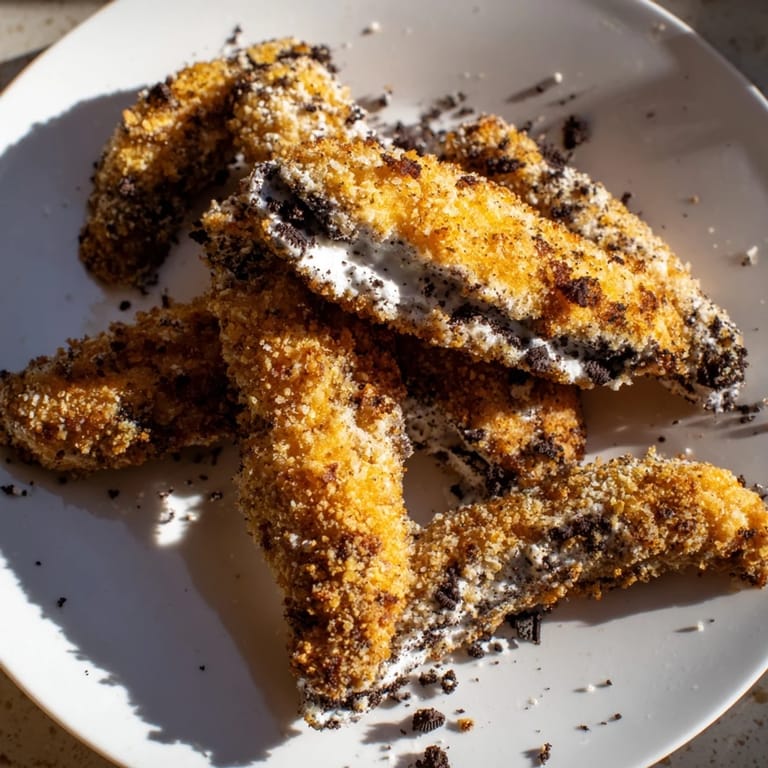
- Back into the hot oil for just 1 to 2 minutes until the Oreos turn dark and crispy but not blackened. You can smell when they're done—there's a toasted cookie aroma that hits right when they're perfect.
- Drain and serve:
- Lay them on fresh paper towels immediately and eat them while they're still crackling. The texture is the whole point here.
 Save to Pinterest
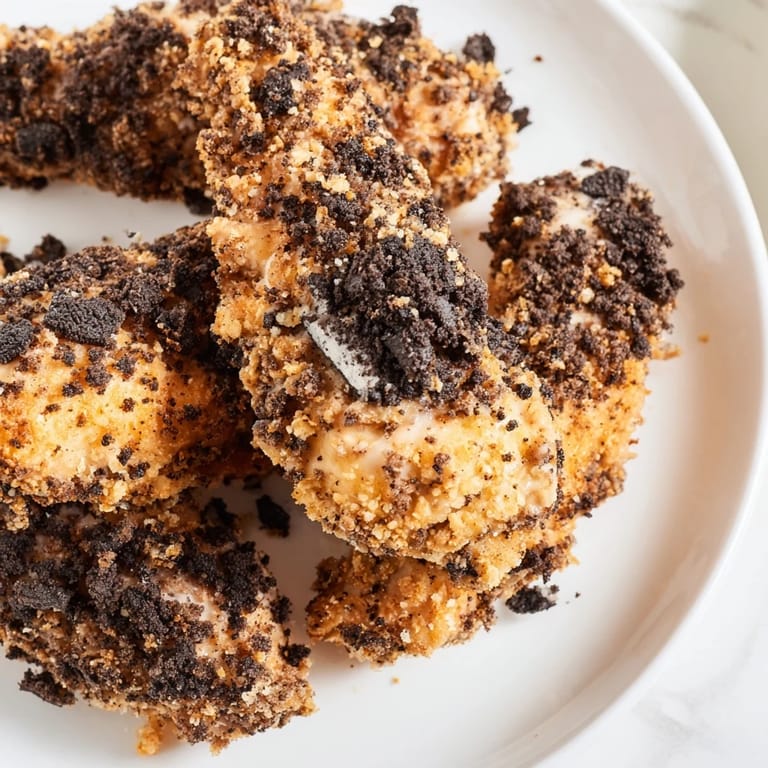
 There's a moment when you pull these out of the oil the second time and the Oreo crust is still crackling from the heat that you realize why people make comfort food in the first place. It's not just about eating; it's about creating something that makes people pause mid-conversation and just enjoy the moment.
Why the Double-Fry Actually Matters
The first fry cooks the chicken through and creates a sealed, crispy shell. The second fry is purely about texture and flavor—it toasts the Oreos, deepens their flavor, and creates that shattering crust that disappears on your tongue. I tried skipping the double-fry once and the result was limp Oreo cookies clinging to the chicken; never again.
Flavor Pairings That Work
These tenders are sweet enough on their own, but I've found that a salty-sweet contrast is where the magic lives. I usually serve them with a spicy sweet chili sauce because the heat cuts through the richness, or sometimes a simple vanilla cream dip if I'm leaning into the indulgence. Either way, the sauce is there to complement, not overpower.
Make It Your Own
This recipe is actually more forgiving than it looks—once you understand the mechanics, you can play with it. Different cookies work, spices can shift, and the serving situation changes the experience. What matters is respecting the oil temperature and the double-fry technique because those two things are what separate good homemade fried chicken from restaurant-quality.
- Add a quarter teaspoon of cayenne to the flour if you want heat alongside the sweetness.
- Crushed chocolate sandwich cookies work if you can't find Oreos, though the flavor will be slightly different.
- For gluten-free, swap the flour and use gluten-free cookies, though the texture won't be exactly the same.
 Save to Pinterest
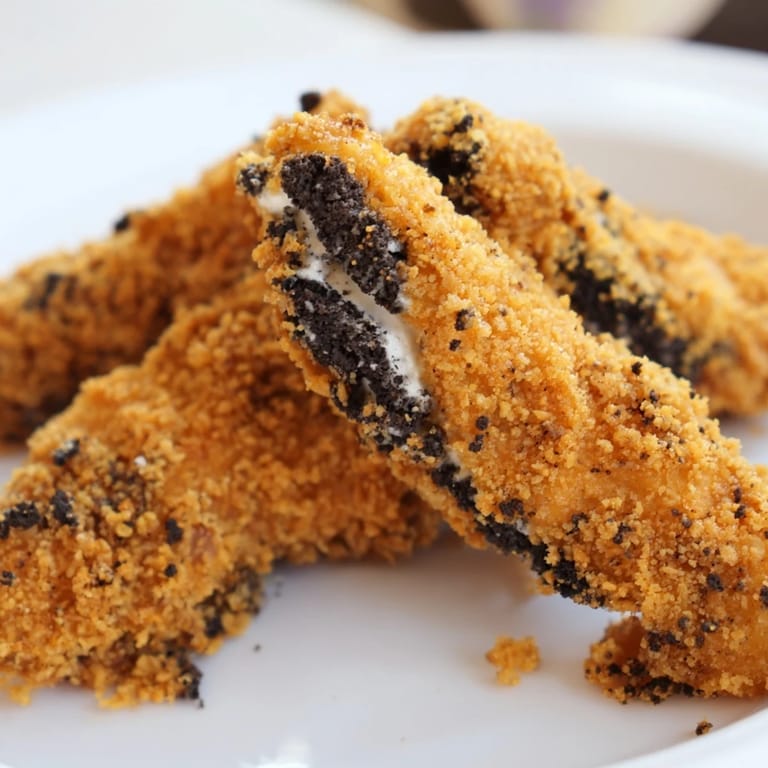
 These tenders won't last long, and honestly, that's how you know you've made something worth making. Eat them hot, share them if you can manage to, and don't overthink it—sometimes the best food is the kind that makes people smile without thinking.
Recipe FAQs
- → What type of chicken is best for this dish?
Chicken tenders or strips are ideal for their tender texture and quick cooking time.
- → How should I crush the Oreos for coating?
Use a food processor or place Oreos in a sealed bag and crush with a rolling pin until finely broken.
- → Can I adjust the spice level?
Yes, adding cayenne pepper to the flour mix adds a pleasant heat that complements the sweet coating.
- → What oil temperature is recommended for frying?
Maintain oil at around 175°C (350°F) for even frying and crispy results.
- → Are there alternatives for gluten-sensitive diets?
Substitute all-purpose flour with gluten-free flour and Oreo cookies with gluten-free chocolate sandwich cookies.
- → How do I ensure the coating sticks well?
Double dredging the chicken in flour and egg mixture before the Oreo coating helps it adhere during frying.