 Save to Pinterest
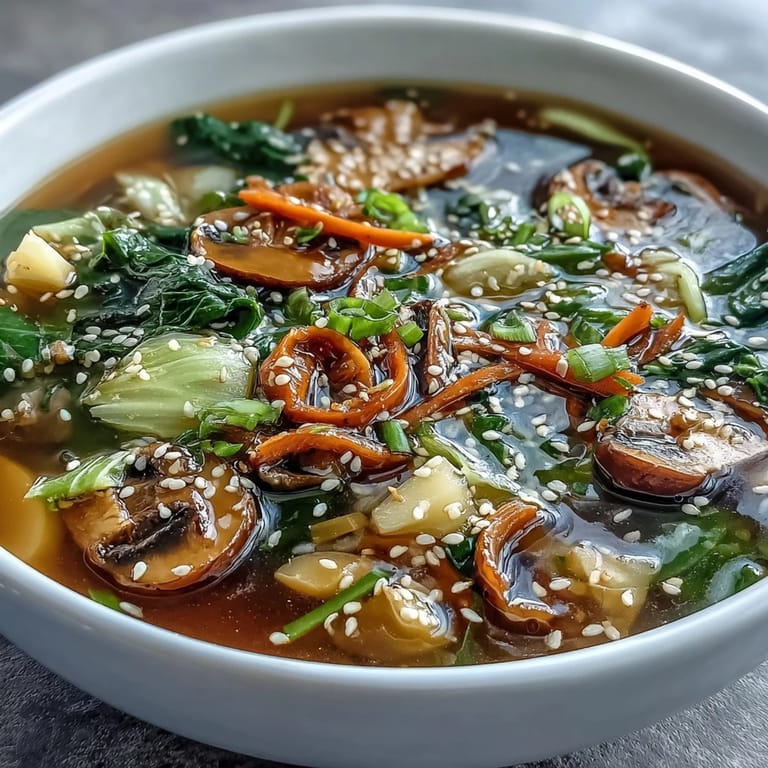
 There's something about a steaming bowl of ginger-miso soup that stops time on a gray afternoon. My neighbor brought me one during a particularly rough winter, and I remember being struck by how the steam rising from the bowl seemed to carry warmth into places a blanket couldn't reach. The broth was clean and honest, tasting of ginger and umami without any fussiness, and I knew immediately I had to learn how to make it myself. Now, whenever the temperature drops and my shoulders climb toward my ears, this soup is my quiet answer to the cold.
I made this for my partner during the first week they got sick last January, and watching them finish the entire bowl without prompting felt like a small victory. The ginger warmth and salty-savory broth seemed to settle something in them that medicine alone hadn't. Since then, it's become our unspoken language for care—when one of us is run down or the weather turns hostile, the other quietly pulls out a piece of fresh ginger.
Ingredients
- Water or low-sodium vegetable broth (6 cups): This is your foundation—use vegetable broth if you want deeper flavor, or water if you prefer the ginger and miso to be the stars.
- Fresh ginger (2-inch piece, thinly sliced): Don't peel it; the skin holds oils and texture that matter, and thin slicing releases the ginger's heat gradually into the broth.
- Garlic cloves (2, thinly sliced): Slicing rather than mincing keeps the garlic notes subtle and prevents any sharp, raw-tasting edges.
- White or yellow miso paste (2 tablespoons): This is your umami anchor—white miso is milder and slightly sweet, while yellow is deeper; choose based on your mood.
- Napa cabbage (1 cup, thinly sliced): It softens into silky strands and adds a gentle sweetness that balances the salty miso.
- Carrot (1 medium, julienned): The thin cut means it cooks in minutes while keeping a slight snap, adding color and natural sweetness.
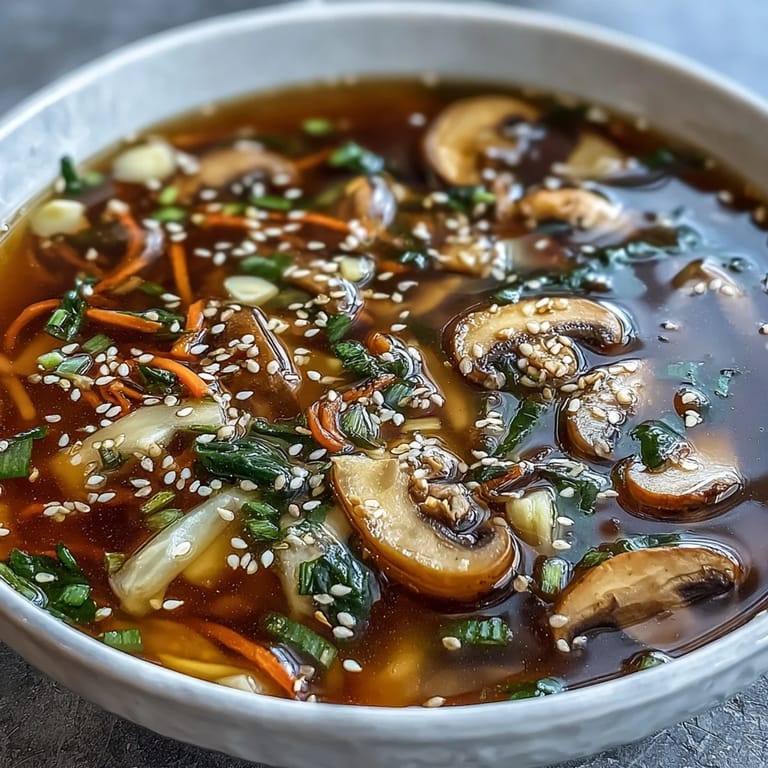
- Shiitake mushrooms (1 cup, stemmed and sliced): These bring earthiness and their own umami—don't skip them if you can help it, but other mushrooms work if that's what you have.
- Scallions (2, sliced): Keep these separate and add them at the end so they stay bright and fresh rather than wilting into oblivion.
- Toasted sesame seeds (1 tablespoon): The toasting step is worth it; it transforms them from bland to nutty and gives the bowl visual warmth.
- Fresh cilantro or parsley (1 tablespoon, chopped, optional): Cilantro adds a peppery freshness, while parsley is gentler—pick whichever speaks to you.
- Chili oil or chili flakes (1 teaspoon, optional): A whisper of heat lifts the whole bowl without overwhelming the delicate broth.
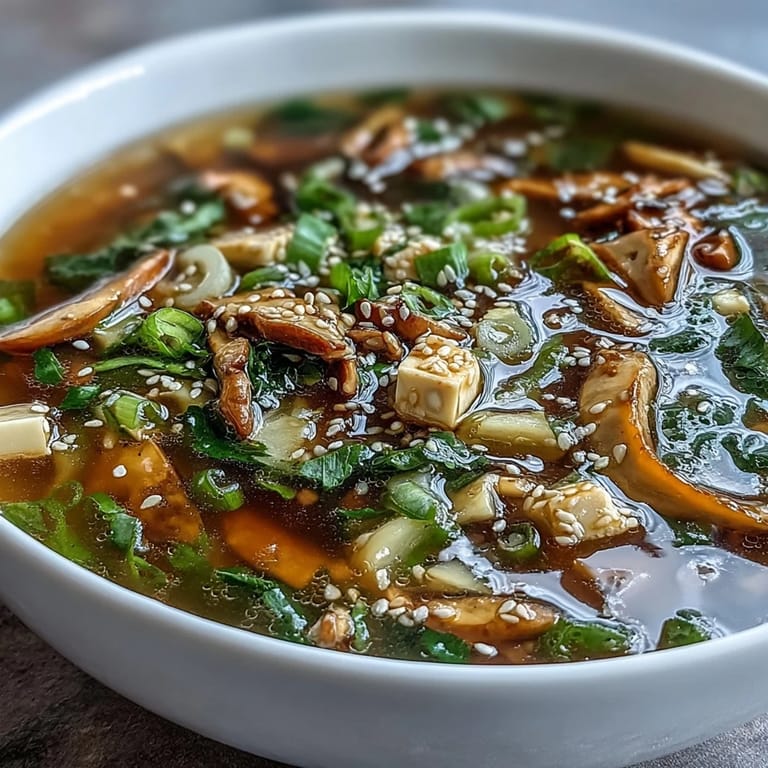
- Silken tofu (200 g, cubed, optional): It absorbs the broth's flavor and adds creamy texture without heaviness.
- Cooked soba or rice noodles (100 g, optional): These turn soup into a more substantial meal; cook them separately so they don't cloud the broth.
Tired of Takeout? 🥡
Get 10 meals you can make faster than delivery arrives. Seriously.
One email. No spam. Unsubscribe anytime.
Instructions
- Start the Broth Foundation:
- Pour water or vegetable broth into a large pot and bring it to a gentle simmer—you want small bubbles breaking the surface, not a rolling boil that will evaporate your liquid. This gentle approach is key to a clean-tasting broth.
- Infuse with Ginger and Garlic:
- Add the thinly sliced ginger and garlic to the simmering broth and let them float and soften for 10 minutes. The kitchen will smell incredible—that's the ginger releasing its oils and warming compounds into the liquid.
- Add the Vegetables:
- Slide in the napa cabbage, carrot, and shiitake mushrooms and simmer for 5 to 7 minutes until the vegetables are tender but not mushy. You're looking for that moment when they've given up their resistance but still hold their shape.
- Prepare the Miso:
- Remove the pot from heat—this step matters for protecting the miso's probiotics. Spoon some miso into a small bowl, then whisk in a ladle of hot broth until the paste dissolves completely and becomes smooth, with no lumps hiding at the bottom.
- Marry the Flavors:
- Pour the miso mixture back into the pot and stir gently to distribute it evenly throughout the broth. Keep the heat off; you're done cooking now.
- Warm Any Optional Additions:
- If you're using tofu or noodles, add them now and let them sit in the hot broth for about 2 minutes to warm through without any further cooking.
- Assemble and Serve:
- Ladle the soup into bowls and scatter scallions, sesame seeds, and any herbs or chili oil over the top. The garnishes should go on right before serving so they stay vibrant and textured.
 Save to Pinterest
 There was an evening last month when my teenage niece came home from school clearly carrying the weight of the day—you know that look—and she walked straight to the kitchen. Without asking, she started pulling out vegetables and ginger, and I realized this soup had become her own small ritual of self-care. We made it together in comfortable silence, and by the time we sat down to eat, something had shifted in her shoulders. That's when I understood this recipe was never really about nourishment alone.
Why This Soup Deserves a Spot in Your Regular Rotation
This soup bridges the gap between fast enough for a weeknight and thoughtful enough to feel like self-care. It's the kind of dish that asks nothing fancy of you—no specialty equipment, no rare ingredients—yet delivers the kind of comfort that feels intentional. The warmth works on multiple levels, from the ginger's gentle heat to the miso's savory depth, and somehow it tastes more substantial than the ingredient list suggests.
The Miso Paste Question: Which One Should You Choose
I spent an embarrassing amount of time standing in front of miso pastes at the Japanese market, comparing colors and prices, before I realized the difference was simpler than I thought. White and yellow misos are sweeter and milder, perfect for letting the ginger shine, while red and darker varieties taste more assertive and funky—beautiful in their own right but overpowering here. Start with white miso if you're nervous, and trust that you can experiment later once you know the baseline flavor.
Customization Is the Whole Point
This soup is less a rigid formula and more a template you're invited to play with. I've made it with bok choy instead of napa cabbage, added spinach at the end so it wilts into silky strands, and once threw in some thinly sliced daikon when I had nothing else. My friend swears by adding a splash of tamari for extra depth, and someone told me they stir in a teaspoon of mirin for subtle sweetness. The versatility is what keeps it from becoming boring, even when you're making it multiple times a month.
- Swap mushrooms freely—enoki, button, or even oyster mushrooms work if shiitake aren't available.
- Bok choy, spinach, or daikon radish add different textures and flavors without changing the soup's essential character.
- A dash of tamari or soy sauce deepens the broth, but taste before you add it since miso already carries salt.
 Save to Pinterest
 This soup has become my answer to too many things: cold weather, difficult days, wanting to feel like I'm taking care of myself, and times when someone I love needs quiet nourishment. It asks so little and gives back so much.
Recipe FAQs
- → Can I use red miso instead of white or yellow?
Red miso has a stronger, more intense flavor that will change the profile of this soup. If you prefer a bolder taste, it works well, though white or yellow miso provides the gentle, balanced sweetness intended for this light broth.
- → Why shouldn't I boil the soup after adding miso?
Boiling miso destroys the beneficial probiotics and can cause it to separate, creating an unpleasant texture. Always dissolve miso in a small amount of hot broth first, then stir it into the soup off the heat for the best results.
- → What vegetables work best in this soup?
Napa cabbage, carrots, and shiitake mushrooms are traditional choices, but you can easily add bok choy, spinach, daikon radish, or thinly sliced kale. Use vegetables that cook quickly and maintain their texture in broth.
- → Can I make this soup ahead of time?
Prepare the broth and vegetables in advance, but add the miso just before serving. Store the soup without miso in the refrigerator for up to 3 days, then reheat gently and stir in the miso at the end.
- → Is this soup suitable for gluten-free diets?
The base soup is naturally gluten-free if you use water or gluten-free vegetable broth and verify that your miso paste is certified gluten-free. Avoid soba noodles unless they are specifically labeled as 100% buckwheat.
- → How can I add more protein to this soup?
Cubed silken tofu is the simplest option, adding protein without altering the light character. You can also add edamame, cooked chickpeas, or even a poached egg for additional protein and richness.