 Save to Pinterest
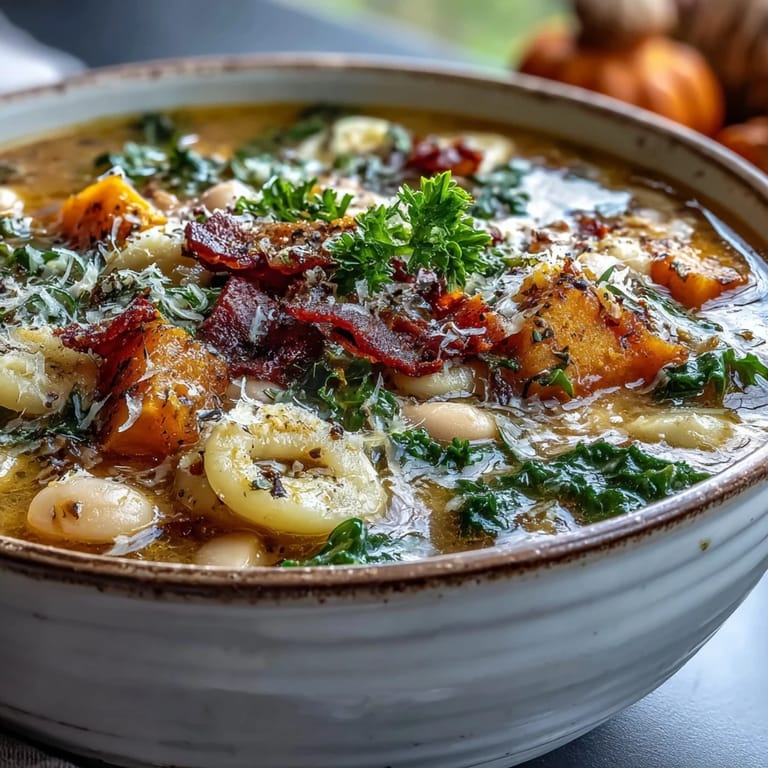
 Last October, I was standing in my kitchen on a gray afternoon when my neighbor stopped by with a basket of butternut squash from their garden. I had no grand plan, just leftover pancetta in the fridge and a craving for something warm. By the time they left, I'd simmered together this bowl of autumn comfort—golden squash, tender kale, and that smoky pancetta flavor threading through every spoonful. It became the soup I make every fall now, the one that tastes like the season itself.
I made this for my book club one November evening, and honestly, I was nervous about serving soup when everyone expected something more impressive. But halfway through the gathering, someone asked for seconds, and then a third person did too. By the end of the night, I was writing down the recipe on napkins. That's when I realized this wasn't just a weeknight dinner—it was the kind of dish that reminds people why home cooking matters.
Ingredients
- Pancetta, diced: The rendered fat becomes your flavor base, so don't skip it even if you're tempted to use bacon instead—pancetta has a subtler, meatier depth that builds the soup's backbone.
- Olive oil: A good quality one makes a difference here since you're using it to start the aromatics.
- Yellow onion, carrots, and celery: The holy trinity of soup building—dice them uniform so they cook evenly and give you that soft, nearly invisible foundation.
- Butternut squash: Cut it into small cubes so it softens completely and thickens the broth naturally as it breaks down.
- Garlic: Mince it fine and add it at the right moment so it perfumes the soup without turning bitter.
- Kale: Remove those tough stems—they're practically inedible—and chop the leaves loosely so they have room to wilt and soften.
- Diced tomatoes with juice: Canned is perfect here; the acid brightens the earthiness of the squash and beans.
- White beans: Drain and rinse them well to avoid a starchy, cloudy broth.
- Ditalini pasta: Small tubes cook quickly and catch the broth beautifully, but any small shape works—just watch the timing so it doesn't turn to mush.
- Chicken or vegetable broth: Use something you'd actually drink on its own; weak broth makes weak soup.
- Thyme and bay leaf: Fresh thyme is ideal, but dried works fine—these herbs tie the whole soup together with that classic Italian-American warmth.
- Salt and pepper: Taste as you go; soup seasons differently than you'd expect because the broth and squash both contribute their own flavors.
- Parmesan and parsley: The garnish matters—that sharp cheese and bright herb are the finishing note that makes people lean back and smile.
Tired of Takeout? 🥡
Get 10 meals you can make faster than delivery arrives. Seriously.
One email. No spam. Unsubscribe anytime.
Instructions
- Render the pancetta foundation:
- Heat olive oil in your pot over medium heat and let the pancetta cook down until it's crispy and golden, about five minutes. You'll hear it sizzle and smell something savory and inviting—that's your signal it's releasing all its fat into the oil. Scoop it out with a slotted spoon, leaving every bit of that rendered fat behind.
- Build the aromatic base:
- Add your onion, carrots, and celery to that pancetta-infused oil and let them soften for five minutes, stirring occasionally so they cook evenly. You're not looking for color here, just that moment when they start to lose their raw edges and the kitchen begins to smell like home cooking.
- Introduce the squash and garlic:
- Stir in your butternut squash cubes and minced garlic and cook for just two minutes until the garlic blooms and releases its fragrance. This quick step is important—it builds flavor without letting the garlic scorch.
- Build the broth and simmer:
- Pour in your tomatoes with their juice, add the drained white beans, broth, thyme, bay leaf, salt, and pepper. Stir everything together and bring it to a simmer, then cover the pot and let it cook gently for twenty minutes until the squash is completely tender and starting to break apart, which is exactly what you want.
- Finish with kale and pasta:
- Remove the lid and stir in your chopped kale and pasta, then simmer uncovered for eight to ten minutes until the pasta reaches that perfect al dente moment and the kale has wilted into tender ribbons. Taste as you go—this is when you adjust the seasoning to your preference.
- Final touches and serve:
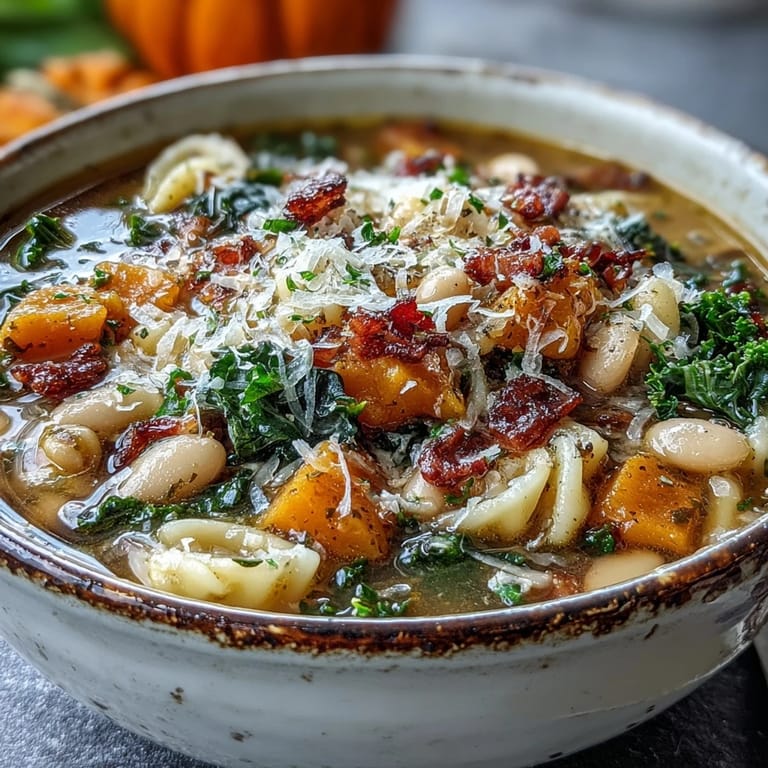
- Fish out the bay leaf, ladle the soup into bowls, and crown each one with some of that reserved crispy pancetta, a scatter of fresh parsley, and a generous handful of grated Parmesan. Serve it immediately while it's still steaming hot.
 Save to Pinterest
 My daughter came home from school one October afternoon and said the lunchroom smelled like someone else's mom's cooking, and she missed mine. I had a pot of this soup simmering on the stove that day, and watching her face light up when she smelled it made me understand that food like this is its own kind of love language.
Vegetarian & Dietary Variations
If you're cooking for vegetarians, simply leave out the pancetta and use vegetable broth instead—the soup doesn't suffer, it just becomes a different kind of satisfying. Add a pinch of smoked paprika to the broth to pick up some of that savory depth you'd otherwise get from the pancetta. Some people swear by a drizzle of truffle oil at the end, though that's more indulgence than necessity.
Pasta & Gluten-Free Adjustments
Any small pasta shape will work here—farfalle, orzo, even broken spaghetti if that's what you have on hand. If gluten is a concern, use gluten-free pasta and check the package timing because some brands cook faster than traditional ditalini. You can also skip the pasta entirely and add an extra half-cup of beans instead, which makes the soup heartier and starch-free.
Serving & Storing Tips
This soup is best served the day you make it while the pasta still has some texture, though it freezes beautifully if you cook the pasta just shy of al dente. Reheat it gently on the stovetop with a splash of broth to restore the consistency. I always make extra on purpose because somehow a second bowl tastes even better, and leftover minestrone is the kind of lunch that makes ordinary days feel a little special.
- Crusty bread alongside is non-negotiable—you'll want something to soak up every bit of broth.
- A light Pinot Noir or even a crisp white wine pairs beautifully if you're looking to make an evening of it.
- Store in an airtight container for up to three days in the refrigerator, or freeze for up to two months.
 Save to Pinterest
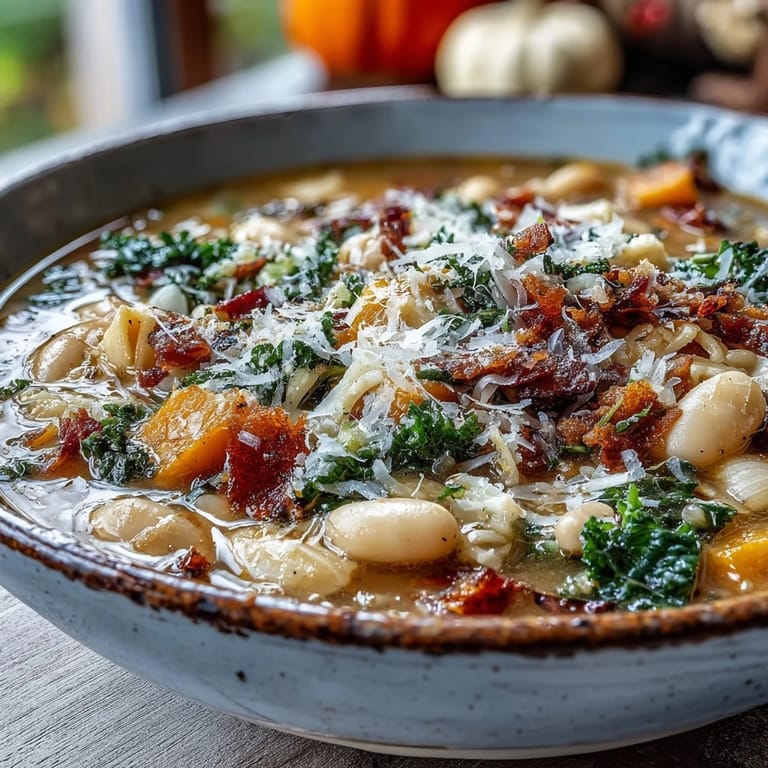
 This is the kind of soup that works on every kind of day—when you need comfort, when you want to feed people you love, when the weather turns cool and you remember why autumn matters. Make it often enough and it becomes your own.
Recipe FAQs
- → Can I make this vegetarian?
Yes, simply omit the pancetta and use vegetable broth instead of chicken broth. Add a pinch of smoked paprika to maintain some depth of flavor.
- → What other pasta shapes work well?
Small pasta shapes like shells, small elbows, orzo, or broken spaghetti work beautifully. Adjust cooking time based on package instructions.
- → How should I store leftovers?
Cool completely and refrigerate in an airtight container for up to 4 days. The pasta may absorb some liquid, so add a splash of broth when reheating.
- → Can I freeze this soup?
Freeze without the pasta for best results. The pasta can become mushy when frozen. Add fresh pasta when reheating or serve with crusty bread.
- → What can I substitute for butternut squash?
Delicata squash, acorn squash, or sweet potatoes work well as substitutes. Cut them into similar-sized cubes for even cooking.
- → Is the kale added at the right time?
Adding kale near the end prevents it from becoming overly mushy. It just needs a few minutes to wilt while the pasta finishes cooking.