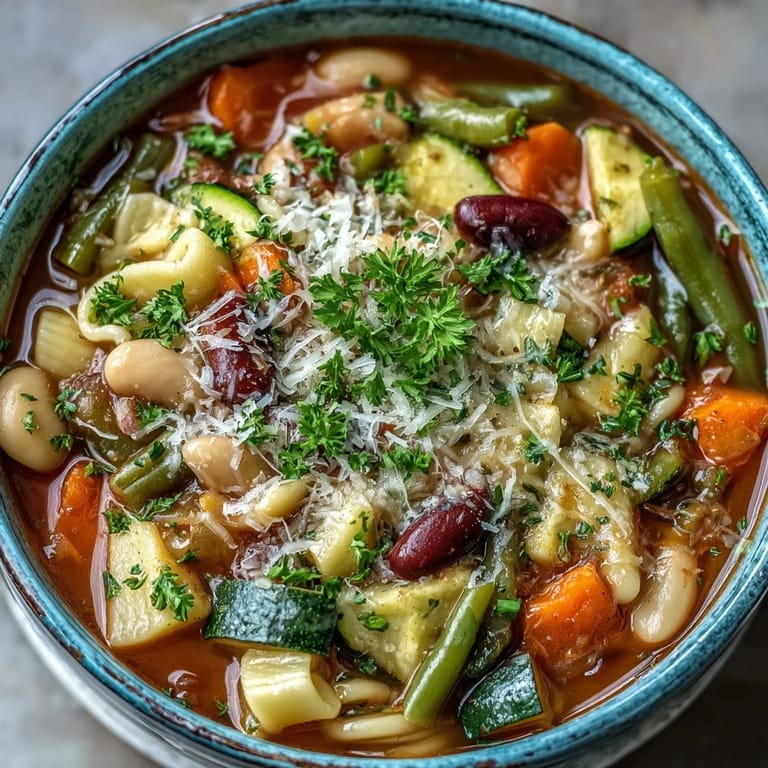
 Save to Pinterest
 My neighbor Maria taught me that minestrone isn't about following rules—it's about what's sitting in your vegetable drawer on a Wednesday afternoon. She'd throw open her pantry, grab whatever beans were there, and somehow create this soul-warming soup that tasted like it had been simmering for hours. That first bowl changed how I thought about Italian cooking, turning my kitchen into something less intimidating and infinitely more forgiving.
I made this for my roommate after she'd had a rough day at work, and watching her face soften over that first spoonful reminded me why cooking for people matters. She came back to the kitchen three times for more, each time asking what I'd put in it like it was some closely guarded secret. It wasn't—just vegetables, beans, and the kind of attention that says someone cares enough to feed you properly.
Ingredients
- Olive oil (2 tablespoons): Use good quality oil here—it's one of only a few ingredients, so it deserves to pull its weight in flavor.
- Onion, carrots, and celery (1 large onion, 2 carrots, 2 celery stalks, all diced): This is your aromatic foundation, the holy trinity that makes Italian food smell like home.
- Garlic (2 cloves, minced): Don't rush this—let it bloom in the oil for just a moment so it loses that raw edge and becomes sweet.
- Zucchini and green beans (1 medium zucchini, 1 cup green beans, both diced): These add texture and freshness without overpowering the broth.
- Spinach or kale (2 cups, chopped): Stir this in at the very end so it stays vibrant and doesn't turn to mush.
- Diced tomatoes (1 can, 14 oz): Canned tomatoes are your friend here—they're already at their peak and won't let you down.
- Vegetable broth (6 cups): This is the canvas everything else paints on, so use broth you actually like drinking on its own.
- Dried oregano, basil, and thyme (1 teaspoon each, plus 1/2 teaspoon thyme): These herbs are what make it taste unmistakably Italian without fussing.
- Bay leaf (1): Add it, then remember to fish it out before serving—trust me on this one.
- Cannellini and kidney beans (1 can each, drained and rinsed): Rinsing matters because it removes the starchy liquid and lets the beans taste like themselves.
- Small pasta (3/4 cup ditalini or similar): Small shapes work best so you get pasta in every spoonful, not clumps at the bottom.
- Parmesan cheese, fresh parsley, and extra virgin olive oil (for finishing): These garnishes are where you remind everyone that you care about how your soup tastes and looks.
Tired of Takeout? 🥡
Get 10 meals you can make faster than delivery arrives. Seriously.
One email. No spam. Unsubscribe anytime.
Instructions
- Build your base with a gentle sauté:
- Heat the olive oil in a large pot over medium heat and add your diced onion, carrots, and celery. Let them soften for 5 to 6 minutes, stirring occasionally—you're not looking for color here, just a gentle surrender of their raw edges.
- Welcome the next layer of vegetables:
- Stir in the minced garlic, diced zucchini, and green beans, cooking for another 3 to 4 minutes until you can smell the garlic sweetening and the zucchini begins to soften. This is when your kitchen starts to feel alive.
- Pour in the tomatoes and broth:
- Add your canned tomatoes, vegetable broth, oregano, basil, thyme, and bay leaf, then season with salt and pepper. Bring everything to a boil, letting the heat wake up all those herbs.
- Let it simmer and become something better:
- Once it's boiling, reduce the heat to medium-low, cover the pot, and let it simmer for 15 minutes. This is when you can step away, pour yourself something warm, and let the flavors find each other.
- Introduce the pasta and beans:
- Stir in your small pasta and both types of beans, then simmer uncovered for 10 to 12 minutes until the pasta reaches that perfect al dente texture. The pasta will release starch into the broth, making it silkier without any cream.
- Finish with the greens:
- Add your chopped spinach or kale and cook for just 2 to 3 minutes—long enough to wilt but not so long that it loses its color. Remove the bay leaf before anyone bites down on it.
- Taste and trust yourself:
- Taste the soup and adjust the salt and pepper to your preference—this is the moment where it becomes your version, not mine.
- Serve with intention:
- Ladle it into bowls, top with freshly grated Parmesan, a sprinkle of fresh parsley, and a small drizzle of excellent olive oil. This final touch isn't just garnish; it's a promise that you made something worth tasting slowly.
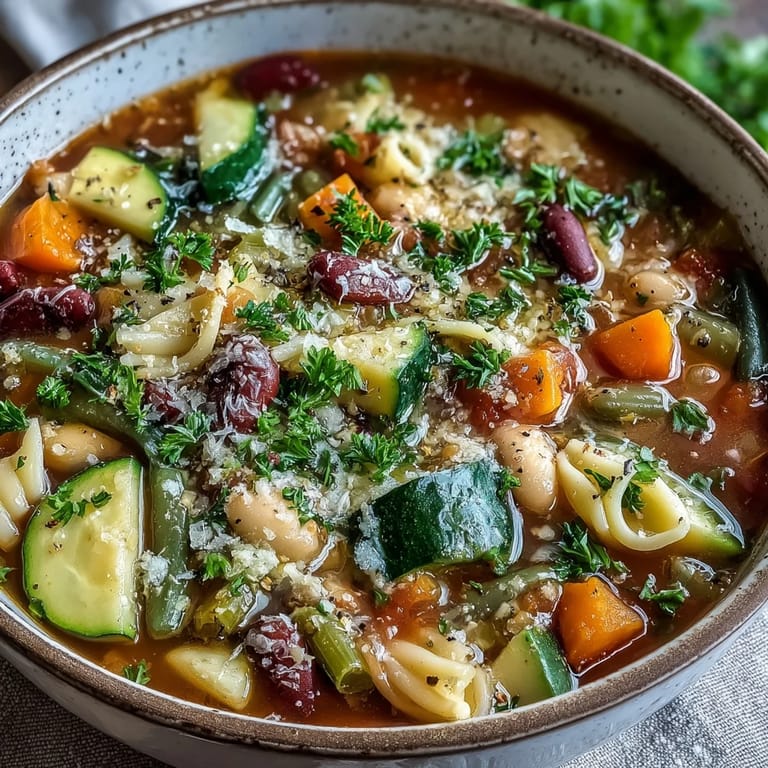 Save to Pinterest
 There's a moment in cooking minestrone when everything stops being separate ingredients and becomes something whole, something that smells like care and tastes like history. My grandmother said every Italian nonna has a different minestrone, and that's the whole point—it's a canvas for whatever you have and whoever you're feeding.
The Beauty of Flexibility
This soup thrives on adaptation in a way that rigid recipes don't. If you don't have zucchini, use potatoes or cabbage; if green beans feel out of season, swap in peas or diced bell peppers. I've made this soup four different ways depending on what farmers market trips yielded, and every single version felt right for its moment.
Why Canned Tomatoes Win Here
Fresh tomatoes are precious and seasonal, but canned tomatoes are dependable year-round and often picked and preserved at peak ripeness. In a soup like this where they're simmering and blending with everything else, canned tomatoes deliver better flavor than mediocre fresh ones ever could. I learned this the hard way after trying to make minestrone in March with sad, pale tomatoes from the grocery store bin.
Storage and Reheating Wisdom
This soup improves as it sits, the flavors deepening and becoming more integrated, almost like it's learning how to be itself. Store it in the refrigerator for up to 4 days, or freeze it in portions and reheat gently on the stove, adding a splash of broth if it's thickened too much. One thing I've discovered: don't add the fresh parsley garnish until you're ready to serve, or it'll wilt into invisibility.
- If you're freezing it, leave out the pasta and beans, then add fresh ones when you reheat—this prevents mushiness.
- A drizzle of olive oil stirred in just before serving changes everything, adding richness that feels almost luxurious.
- This soup tastes even better the next day, so there's no shame in making it ahead when life feels manageable.
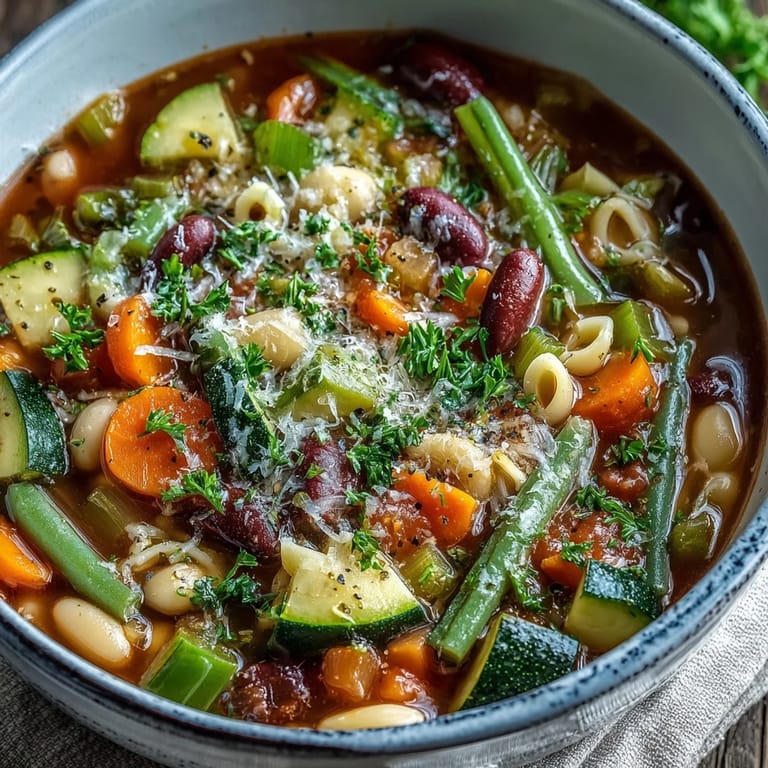 Save to Pinterest
 Minestrone taught me that the best dishes aren't the ones with the most ingredients or the most complicated steps—they're the ones made with a clear head and an open heart. This soup is here waiting for you to make it your own, to taste it and know that you made something good.
Recipe FAQs
- → What vegetables work best in minestrone?
Traditional minestrone includes onions, carrots, celery, zucchini, green beans, and leafy greens like spinach or kale. You can also add potatoes, cabbage, or peas depending on seasonal availability and personal preference.
- → Can I make minestrone gluten-free?
Yes, simply substitute regular pasta with gluten-free pasta alternatives like rice pasta, corn pasta, or quinoa pasta. The rest of the ingredients are naturally gluten-free.
- → How should I store leftover minestrone?
Store cooled soup in an airtight container in the refrigerator for up to 4 days. The pasta will absorb more liquid over time, so you may need to add extra broth when reheating. It also freezes well for up to 3 months.
- → What pasta shape is ideal for minestrone?
Small pasta shapes like ditalini, elbow macaroni, or small shells work perfectly because they're easy to scoop with a spoon and hold onto the flavorful broth. Avoid large shapes that would be difficult to eat in a soup.
- → Can I use dried beans instead of canned?
Absolutely. Soak dried beans overnight, then cook them separately until tender before adding to the soup. You'll need about 1.5 cups of cooked beans to replace each can. This method takes longer but can enhance flavor.
- → What can I serve with minestrone soup?
Crusty Italian bread or garlic bread pairs wonderfully for soaking up the broth. A light green salad with vinaigrette makes a nice starter. For wine, try a light red like Chianti or a crisp white Pinot Grigio.