 Save to Pinterest
 My first bowl of pho was supposed to be a weekend project, but I made it on a random Tuesday after work when the kitchen felt cold and my mood needed warming. What struck me wasn't the complexity—it was how quickly the broth came alive with just onion, ginger, and those star anise pods that perfumed the whole apartment. That night, I realized this Vietnamese classic didn't need hours of fussing to taste authentic. This express version proved that good pho is more about respecting simple ingredients than grinding through labor.
I made this for friends who'd been complaining about takeout prices, and watching them add their own toppings while the broth steamed between us felt like we were all in on a secret. Someone said it tasted like the pho place downtown, and I didn't correct them—I just let them enjoy the moment. That meal turned into a regular Tuesday thing, each person arriving with their own preferred herb ratio and heat tolerance.
Ingredients
- Low-sodium beef or chicken broth: Start with 8 cups of quality broth; the spices build from this foundation, so bland broth means a flat bowl no matter what you add.
- Small onion, halved: Don't peel it away entirely—the papery skin can stay if you're in a rush, but charring the cut side briefly adds a subtle sweetness.
- Fresh ginger, 2-inch piece, sliced: Slice with the grain so pieces stay intact during simmering and release their warmth gradually into the broth.
- Star anise, cinnamon stick, and cloves: These three do the heavy lifting for authentic aroma; measure them seriously because too much clove overpowers everything else.
- Fish sauce and soy sauce: These are your umami anchor; fish sauce smells aggressive in the bottle but becomes almost invisible in the finished broth, adding depth you can't quite name.
- Dried or fresh flat rice noodles: Fresh noodles cook in 2 minutes, dried ones in 5 to 8 depending on thickness; taste them slightly firm since they'll soften from the hot broth.
- Beef sirloin or eye round: Slice it paper-thin against the grain; partially freezing the meat for 30 minutes makes this easier than struggling with room-temperature beef.
- Fresh herbs and lime: Thai basil, cilantro, and scallions aren't optional—they're the brightness that makes pho feel alive rather than heavy.
Tired of Takeout? 🥡
Get 10 meals you can make faster than delivery arrives. Seriously.
One email. No spam. Unsubscribe anytime.
Instructions
- Toast your spices and build the broth:
- Combine broth with onion, ginger, star anise, cinnamon, and cloves in your pot. The moment it hits a boil, the whole kitchen fills with this warm, slightly sweet perfume that means you're on the right track. Reduce heat and let it simmer uncovered for 20 minutes while the flavors get to know each other.
- Season and finish the broth:
- Stir in fish sauce, soy sauce, sugar, and salt to taste—the soy adds color and body, the fish sauce adds that savory roundness you can't quite identify. Simmer 5 more minutes, then strain out all the solids through a fine-mesh strainer, pushing gently on the soft pieces to release their essence.
- Cook noodles while broth settles:
- Follow package instructions for your rice noodles, which typically means boiling water and a 5 to 8 minute wait depending on thickness. Drain them well and divide among your bowls while they're still steaming.
- Arrange your beef:
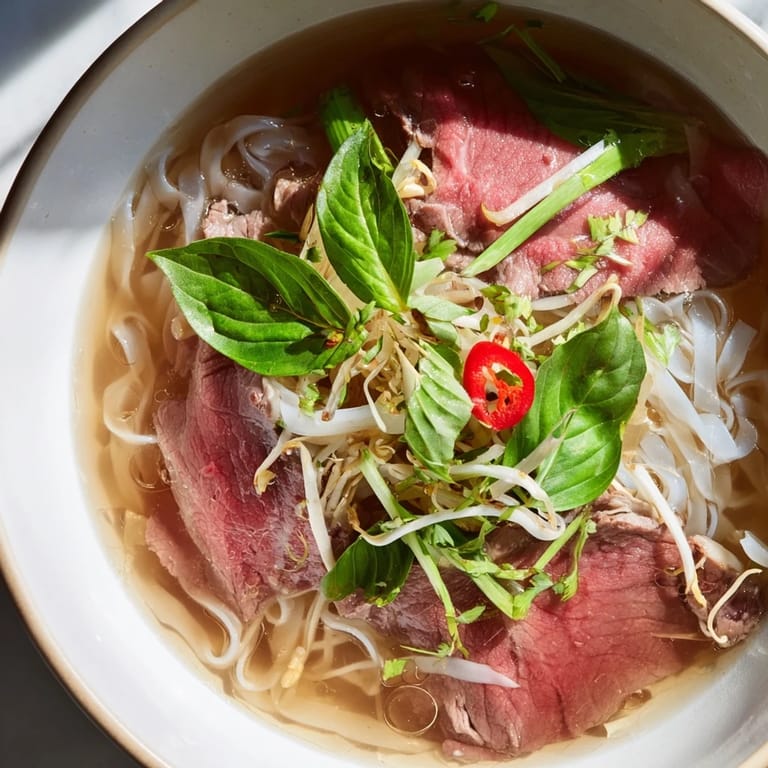
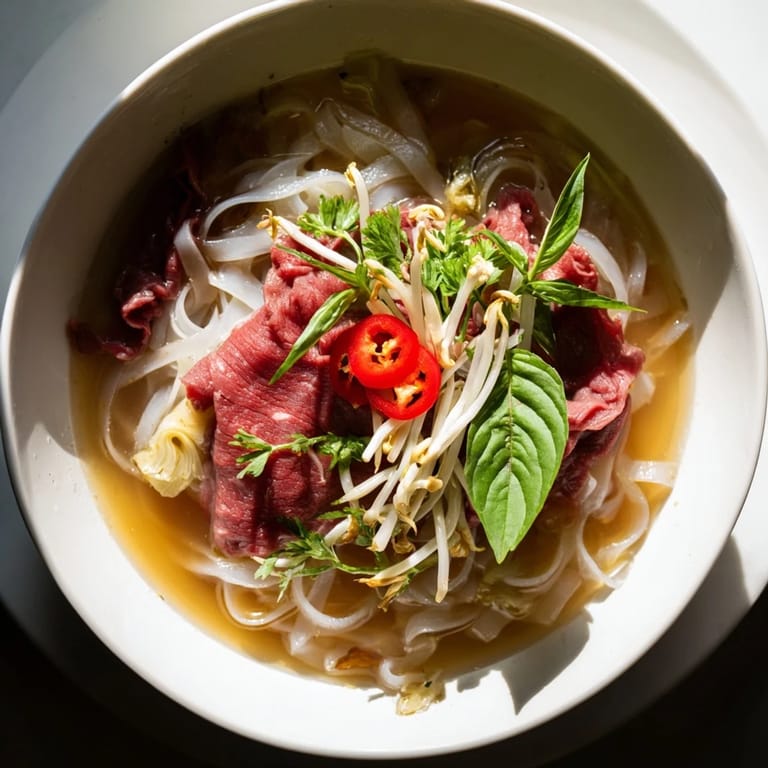
- Drape the paper-thin beef slices over the noodles in each bowl—they'll look fragile and raw, which is exactly right. This is where the magic happens next.
- Pour and watch the transformation:
- Ladle the hot broth directly over the beef and noodles; you'll see the beef turn opaque and tender in seconds as the heat does the cooking. The broth temperature is your timer—if it's properly hot, the beef goes from raw to perfect in the time it takes to add toppings.
- Top and serve immediately:
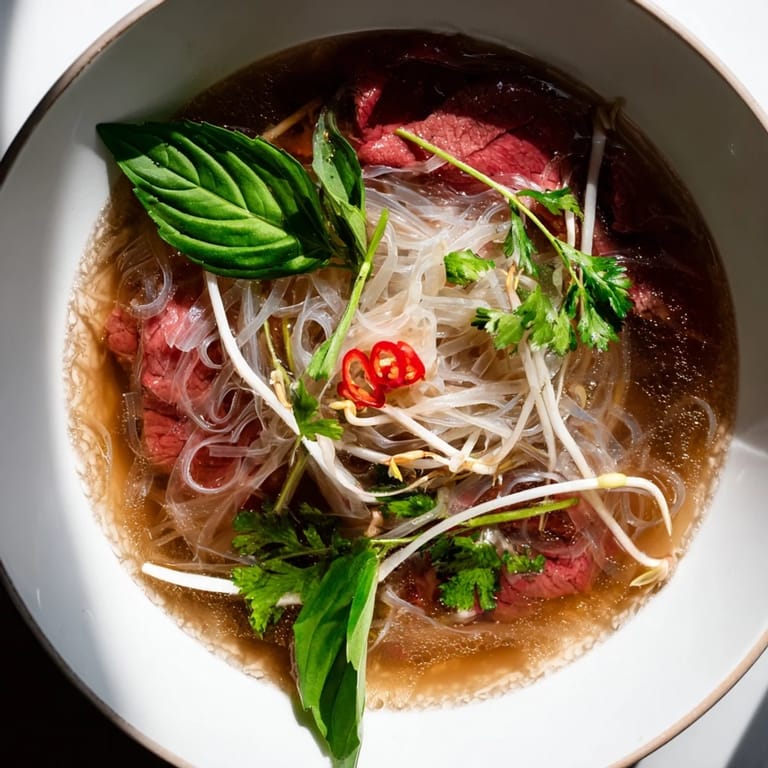
- Scatter bean sprouts, basil, cilantro, scallions, and chili over each bowl, then place lime wedges and sauce bottles on the table. Squeeze lime and drizzle sauce to your taste, then eat right away before anything cools.
 Save to Pinterest
 I learned the hard way that pho is a participatory meal—the best bowl is the one someone builds while sitting down, adding herbs and heat and lime according to their exact mood that day. It's the opposite of food that demands to be eaten one specific way.
The Charring Shortcut
The first time I charred the onion and ginger directly over my gas flame before adding them to the broth, I felt like I'd discovered a cheat code. Those blackened spots caramelize and add a subtle smokiness that makes people pause and ask what you did differently. It takes an extra 2 minutes but rewires the entire bowl's personality.
Building Your Topping Station
Set up all your herbs and garnishes on the table before anyone sits down; pho is interactive, and half the pleasure is people reaching for what they want. I learned this when someone's kid discovered they actually liked cilantro in exactly this context—surrounded by other options and in control of their own bowl. Fresh herbs in pho aren't decoration; they're the point.
Flexibility and Variations
This recipe bends without breaking—use chicken instead of beef if that's what you have, swap vegetable broth and tofu for a vegetarian version, or add fried shallots and crispy garlic if you want textural contrast. The structure stays the same; the flavors just shift. I've made batches with mint instead of basil when that's what grew in the garden, and no one complained.
- Partially freeze beef for 30 minutes before slicing so your knife glides through instead of tearing the meat.
- Taste the broth before serving and adjust salt and fish sauce—these two ingredients hide in the background but make or break the whole thing.
- Serve immediately and eat fast; the magic of pho is fleeting, and a lukewarm bowl loses its charm.
 Save to Pinterest
 Pho stops being just dinner when someone you care about leans over their bowl and says it tastes like home. This express version proves that comfort food doesn't demand sacrifice.
Recipe FAQs
- → How do I achieve a rich, aromatic broth quickly?
Simmer broth with star anise, cinnamon, cloves, ginger, and onion for 25 minutes for a deeply layered flavor without long cooking times.
- → Can I substitute beef with other proteins?
Yes, chicken breast works well and cooks quickly when ladled with hot broth, maintaining tender texture and flavor.
- → What toppings enhance the dish's freshness?
Fresh Thai basil, cilantro, bean sprouts, scallions, and a squeeze of lime add bright, herbal notes and crunch.
- → How should rice noodles be prepared for optimal texture?
Cook noodles according to package directions and drain well to prevent sogginess while maintaining a chewy bite.
- → Are there recommendations for vegetarian variations?
Use vegetable broth and substitute beef with tofu while keeping the fresh herb toppings for a vibrant, meat-free option.