 Save to Pinterest
 I discovered this bowl on a quiet Tuesday evening, scrolling through my phone while waiting for water to boil. The combination of sticky-sweet gochujang and bright orange juice felt impossibly simple yet sophisticated, and I was curious enough to stop everything and cook. Twenty minutes later, the salmon was caramelizing under the broiler, filling my tiny kitchen with the kind of aroma that makes you understand why people get excited about cooking. It became the meal I make when I want to feel like I'm taking care of myself without spending hours in the kitchen.
I made this for a friend who'd been going through a rough month, and watching her light up at the first bite reminded me that food is how we say "I see you" without words. She kept asking for the recipe, but honestly, I think the care that went into it mattered more than the ingredients. Now whenever she mentions wanting something energizing and comforting, this is what I make.
Ingredients
- Salmon fillets: Look for fillets that are a rosy pink color and smell like the ocean, not fishy—that freshness makes all the difference in how tender the final result will be.
- Gochujang: This Korean chili paste is the backbone of the whole glaze, delivering depth and gentle heat without overwhelming the dish.
- Fresh orange juice: Freshly squeezed tastes brighter than bottled and actually balances the spice in a way that feels intentional.
- Soy sauce: Use a good quality one if you can—it rounds out the flavors with umami that transforms the glaze from one-dimensional to complex.
- Honey: The sweetness cuts through the saltiness and helps the glaze stick to the salmon as it broils, creating those gorgeous caramelized edges.
- Rice vinegar: Just a teaspoon brings brightness and prevents the glaze from feeling heavy or cloying.
- Sesame oil: Toasted sesame oil is worth seeking out—it adds a toasty, nutty finish that regular sesame oil can't quite match.
- Ginger and garlic: These aromatics wake up your palate and make the whole dish feel alive and present.
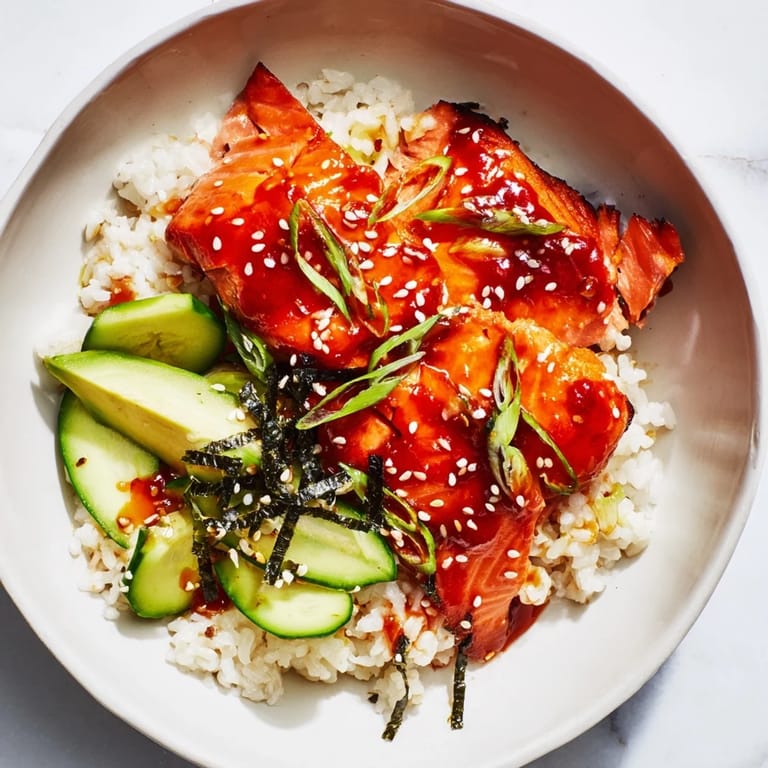
- Short-grain rice: The slightly sticky texture of short-grain rice cradles the glaze and toppings beautifully, creating pockets of flavor in each spoonful.
- Cucumber: Cool, crisp, and refreshing—it's the counterpoint to the warm, sticky salmon and keeps the bowl from feeling too heavy.
- Avocado: Creamy and buttery, it adds richness and a luxurious texture that makes this feel special.
- Nori: The umami and slight briny taste ground the bowl and add an element of visual drama with those dark green strips.
- Sesame seeds and scallions: These finishing touches add crunch and freshness that make every bite feel intentional.
Tired of Takeout? 🥡
Get 10 meals you can make faster than delivery arrives. Seriously.
One email. No spam. Unsubscribe anytime.
Instructions
- Heat and prepare:
- Preheat your oven to 200°C and line a baking tray with parchment paper—this small step prevents sticking and cleanup headaches later. Your kitchen should start to feel warm and ready, like you're about to make something good.
- Season the salmon:
- Pat the salmon dry with a paper towel, then season both sides generously with salt and pepper. Place the fillets on your prepared tray, leaving a little space between them so heat circulates evenly.
- Make the glaze:
- In a bowl, whisk together the gochujang, fresh orange juice, soy sauce, honey, rice vinegar, sesame oil, ginger, and garlic until the mixture is smooth and unified. You'll know it's ready when there are no streaks of gochujang remaining and the glaze smells both savory and bright.
- First glaze and bake:
- Brush half of your glaze over the salmon fillets using a pastry brush or the back of a spoon. Slide the tray into the oven for 12 to 14 minutes—the salmon is done when it flakes easily when you test it with a fork and has turned opaque throughout.
- Prepare the components:
- While the salmon bakes, warm your rice if needed and slice your cucumber and avocado. The rhythm of these small tasks keeps you engaged without overwhelm.
- Broil for shine:
- Once the salmon is cooked, brush it with the remaining glaze and pop it under the broiler for just 1 to 2 minutes—watch it carefully because this is where the glaze caramelizes and becomes sticky and gorgeous. Your kitchen will smell incredible.
- Assemble the bowls:
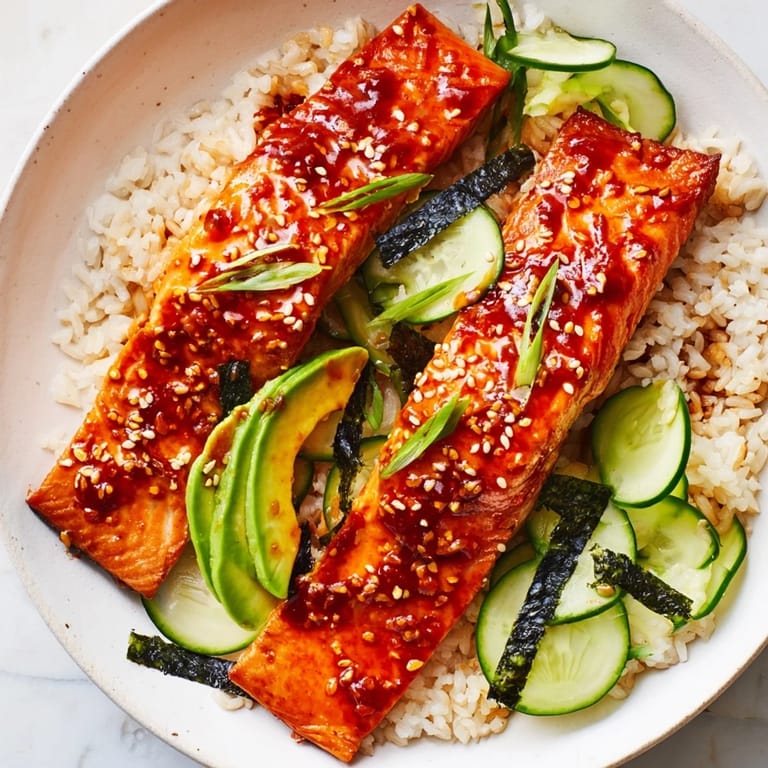
- Divide your warm rice between two bowls, creating a small nest for the salmon. Top each with a fillet, then arrange cucumber slices, avocado, and nori strips around it like you're plating something beautiful.
- Final touch:
- Sprinkle sesame seeds and scallions over the top, then serve immediately while everything is still warm and the textures are at their best.
 Save to Pinterest
 There's a moment when you pull the broiled salmon out and see those burnished, sticky edges that feels like a small victory. It's the kind of meal that makes you feel capable and grounded, like you've done something right for yourself or someone you care about.
Building Your Perfect Bowl
The beauty of a bowl meal is that it's as customizable as you want it to be. Some nights I add shredded carrots for extra crunch, other times I toss in edamame for protein. I've learned that the warm rice is what ties everything together—it softens slightly where it touches the cool avocado and lets the glaze seep in, creating layers of flavor that a cold salad just doesn't achieve.
Timing and Make-Ahead Strategy
I cook the rice first thing so it's ready when the salmon comes out, but you could also prepare rice ahead of time and reheat it gently. The glaze can be mixed together hours in advance and stored in the refrigerator—I often do this on Sunday and pull it out whenever I'm craving this bowl during the week. What can't be rushed is the final assembly because cold avocado against warm rice is part of what makes this work so beautifully.
Variations and Swaps
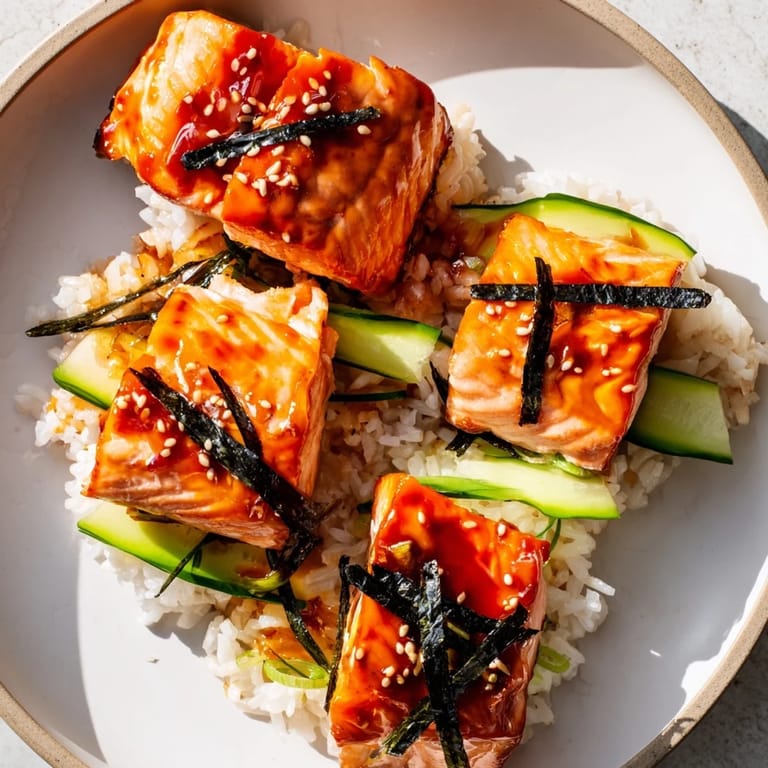
This recipe is forgiving enough to adapt to what you have on hand. If salmon feels too precious or you're in the mood for something lighter, the glaze works wonderfully on tofu or white fish. I've also played with the toppings—adding pickled ginger for tang, shredded daikon for crunch, or even a soft-boiled egg for richness when I want the meal to feel more indulgent.
- Swap salmon for firm tofu, white fish, or even chicken breast if that's what you're craving.
- Layer in pickled ginger, shredded carrots, or steamed edamame to personalize each bowl to your taste.
- Pairs beautifully with a crisp Sauvignon Blanc or a light green tea if you're not drinking wine.
 Save to Pinterest
 This bowl became one of those meals I make when I want to feel nourished and energized, when I want to taste something that feels both comforting and exciting. It's the kind of food that reminds you why you love cooking in the first place.
Recipe FAQs
- → What is the best type of salmon for this dish?
Use skinless fillets of fresh, wild-caught salmon for optimal flavor and texture.
- → How can I achieve a sticky glaze on the salmon?
Brush the glaze halfway through baking, then broil for 1-2 minutes at the end to caramelize it slightly.
- → Can I prepare the rice ahead of time?
Yes, cook the rice in advance and warm it before assembling the bowl for convenience.
- → What are good alternatives to gochujang?
You can substitute with a mix of chili paste and a touch of miso for similar depth and heat.
- → How do the toppings enhance the dish?
Crisp cucumbers add freshness, creamy avocado offers richness, and nori provides a subtle sea flavor that complements the salmon.