 Save to Pinterest
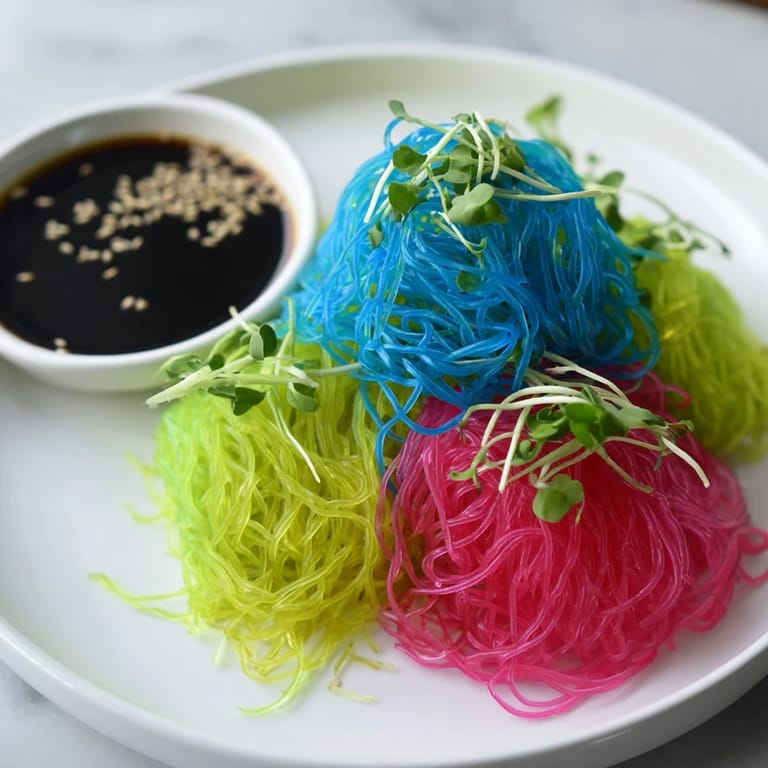
 The first time I experimented with agar-agar, I was mesmerized by how it transformed from a simple powder into something almost magical—a gel that wobbled and bounced like edible clouds. I'd seen photos of neon ramen online and thought, why not try something delightfully absurd in my own kitchen? That afternoon, I ended up with strands of brilliant pink, electric blue, and lime green pooling in ice water, and I couldn't stop grinning at the sheer playfulness of it all.
I served these at a dinner party thinking my friends might find them gimmicky, but watching their faces light up as they lifted the first strands with chopsticks—that moment made me realize playful food has real power. One guest actually asked for the recipe before dessert arrived, which almost never happens.
Ingredients
- Water: The base for your gel; room temperature matters less than you'd think, but filtered water keeps colors true.
- Agar-agar powder: This seaweed derivative sets firmly without refrigeration and has a springy texture regular gelatin can't match—it's the secret to the whole dish.
- Sugar: A tablespoon balances the slight ocean-like undertone of agar and brightens the dipping sauce when combined.
- Food coloring: Gel colors are more vibrant than liquid, and neon shades look almost unreal—the whole point of this dish is the visual surprise.
- Soy sauce or tamari: Use whichever matches your dietary needs; tamari tastes slightly richer if you're already gluten-free.
- Rice vinegar: Just enough to cut through the salty sauce without making it sharp or aggressive.
- Mirin: Adds a subtle sweetness and glossy finish that makes the sauce feel intentional, not an afterthought.
- Sesame oil: A teaspoon is plenty; too much overpowers everything else and turns the sauce greasy.
- Fresh ginger: Grated fine, not minced—it dissolves slightly into the sauce and gives warmth without chunks.
- Scallion: Finely sliced for brightness and a whisper of onion flavor that makes people wonder what you did differently.
- Sesame seeds: Toasted versions have real nutty depth; raw ones work but taste flatter and less intentional.
- Microgreens or edible flowers: Optional but they bridge the gap between whimsy and elegance, keeping the dish from feeling too novelty.
Tired of Takeout? 🥡
Get 10 meals you can make faster than delivery arrives. Seriously.
One email. No spam. Unsubscribe anytime.
Instructions
- Dissolve the agar-agar base:
- Pour water into a saucepan with the agar-agar powder and sugar, then bring it all to a rolling boil over medium heat, stirring constantly. You'll notice the powder transforms into a clear liquid in about two to three minutes—that's when you know it's truly dissolved and ready to set properly.
- Divide and color your strands:
- Remove from heat and carefully pour the mixture into separate bowls, adding just a drop or two of food coloring to each. Mix thoroughly so the color spreads evenly without streaks—rushing this step leaves you with muddy, dull shades instead of the brilliant neon effect.
- Shape the noodles:
- Using a syringe or squeeze bottle, pipe the colored agar directly into a bowl of ice water where it sets almost instantly, forming delicate noodle-like strands. If you don't have piping tools, pour the mixture into a shallow tray, let it cool completely, then slice it into thin noodles with a very sharp knife—the knife makes all the difference between clean cuts and ragged edges.
- Chill and drain:
- Gently rinse your noodles under cold water to remove any excess gel, then drain them completely and refrigerate until you're ready to serve. They can sit in the fridge for a couple of hours without losing their bounce or texture.
- Build the dipping sauce:
- In a small bowl, whisk together the soy sauce, rice vinegar, mirin, sesame oil, grated ginger, and sugar until the sugar fully dissolves. Stir in the scallion and sesame seeds just before serving so they stay fresh and don't lose their texture sitting in liquid.
- Plate and present:
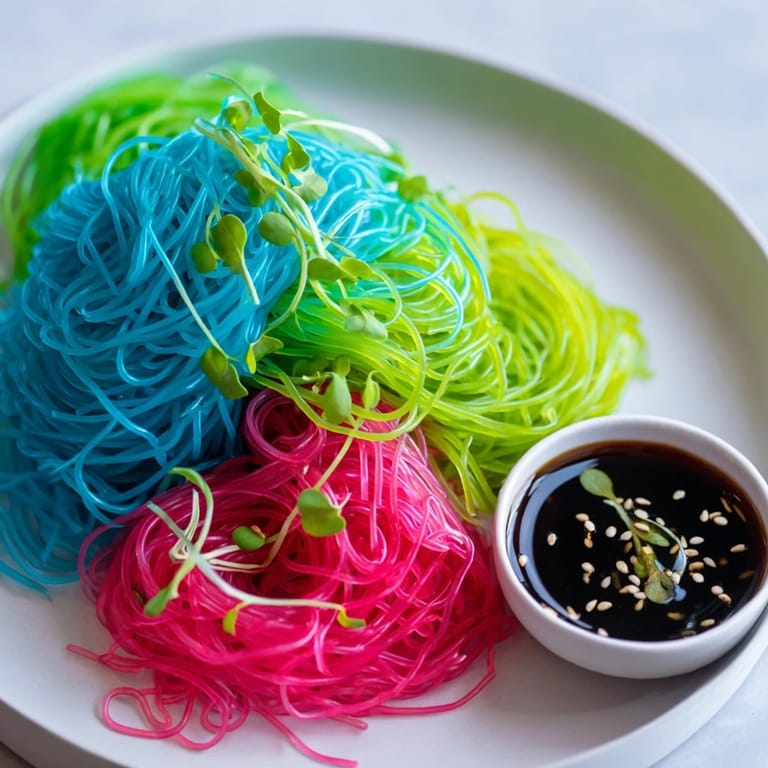
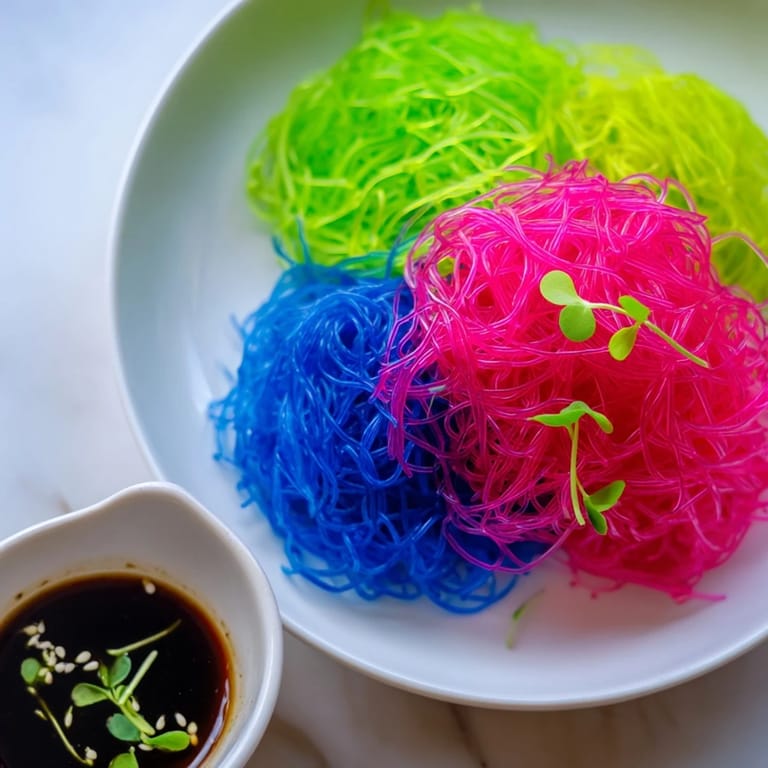
- Arrange the chilled noodles in small, playful bundles on serving plates, garnish with microgreens or flowers if you have them, and set out small bowls of the dipping sauce alongside. The colors should pop against the plate, so choose your dishware thoughtfully—white or dark backgrounds make the neon really sing.
 Save to Pinterest
 The night I first made this, my partner walked in mid-prep and just stared at the neon pink liquid in the saucepan like I'd accidentally created something alien. By the time the sauce was ready, he was already dipping noodles and laughing at how strange and wonderful it all felt—that's when I knew the recipe worked not because it tasted incredible, but because it created a moment of genuine play in the kitchen.
The Science Behind the Bounce
Agar-agar is harvested from red seaweed and works completely differently than gelatin—it's more forgiving and holds its shape better, especially at room temperature. The moment you pour boiling agar into ice water, the outer layer solidifies instantly while the inside stays just slightly liquid, creating that characteristic bouncy texture that's almost rubbery but in the best way. Understanding this helped me stop worrying about timing and instead focus on enjoying the process.
Playing With Color and Natural Alternatives
While neon gel food coloring creates that jaw-dropping effect, there's something equally satisfying about using natural alternatives if you're avoiding artificial dyes. Spirulina gives you a deep blue-green, butterfly pea flower creates a stunning electric purple that shifts slightly with pH, and beet juice yields a warm magenta that feels earthy rather than artificial. I've made batches with all three, and each version tells a different story—the neon version feels playful and bold, while the natural-dye version feels more intentional and garden-inspired.
Serving Suggestions and Occasions
This dish shines brightest when you lean into its theatrical nature—serve it as an unexpected appetizer that breaks the ice at dinner parties, or use it as a palate cleanser between heavy courses when you want to surprise your guests. I've also served it as a light lunch on hot summer days when the heat makes normal noodles feel too heavy, and the cold, bouncy texture feels genuinely refreshing rather than just cold for the sake of it.
- Pair it with sparkling water or light sake to echo the delicate, refreshing quality of the dish.
- Add a tiny drizzle of chili oil or yuzu juice to the sauce if you want subtle heat or citrus brightness.
- Make extra sauce because people always want more once they taste how balanced it is.
 Save to Pinterest
 This recipe taught me that food doesn't always need to be serious to be satisfying—sometimes the most memorable meals are the ones that make you smile before you even taste them. Once you master the basic technique, the noodles become a canvas for your own experimentation and storytelling.
Recipe FAQs
- → What gives the noodles their vibrant colors?
Food-safe neon gel or liquid coloring is added to the agar-agar mixture before setting to create bright, playful noodle strands.
- → How is the bouncy texture achieved?
The bouncy, firm texture comes from agar-agar powder, which gels the noodles when cooled, giving them a chewy bite.
- → Can the dipping sauce be adapted for gluten-free diets?
Yes, substituting tamari for soy sauce ensures the dipping sauce remains gluten-free without sacrificing flavor.
- → What’s the best way to shape the noodles?
A syringe or squeeze bottle can be used to pipe strands into ice water, forming noodle shapes that set quickly and retain form.
- → Are there natural alternatives to artificial food coloring?
Natural colorings like spirulina, butterfly pea, or beet juice can be used to add vibrant hues while keeping ingredients natural.
- → Can this dish be prepared ahead of time?
Yes, the noodles and sauce can be prepared in advance and chilled separately, then combined just before serving for fresh presentation.