 Save to Pinterest
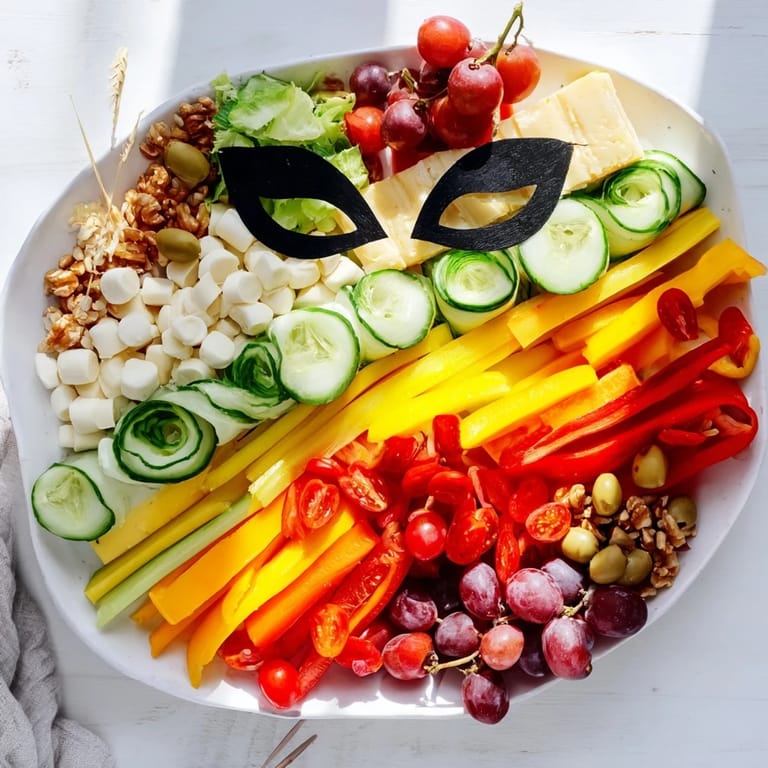
 I'll never forget the moment my friend Sarah walked into the New Year's Eve party with this stunning masquerade mask platter, and the entire room gasped. It wasn't just food—it was wearable art on a board. That night, I realized that sometimes the most memorable dishes are the ones that make people pause and actually look before they eat. Since then, I've made this platter for every celebration, and watching guests' faces light up as they approach never gets old. It's become my signature move, the appetizer that says I care enough to make something beautiful.
I remember my sister's masquerade-themed birthday party last year, and I created this platter as the centerpiece. She placed it on the dining table during cocktail hour, and within minutes, it became the focal point of the entire party. People kept coming back not just for the food, but because they loved the theatrical presentation—it felt like the mask was watching them, keeping secrets, playing along with the evening's elegance.
Ingredients
- Large green or black olives or cheese cubes: These become the mesmerizing eyes of your mask, so choose ones that are visually striking and proportionate to your board—they're the anchor point everything else revolves around
- Cucumber slices: Thin them consistently so they fan beautifully and catch the light; they're your clean, crisp foundation
- Colorful bell pepper strips: The reds, yellows, and oranges create those ornate feathered edges that make this look like an actual masquerade mask—use a sharp knife to cut them into thin, dramatic strips
- Cherry tomatoes: Halve them to show off their jewel-like interiors, and they add just enough sweetness to balance the savory elements
- Red radish slices: These add a peppery crunch and shocking pink color that photograph beautifully
- Baby carrots: The natural golden-orange hue is essential to the mask's warmth and visual interest
- Seedless grapes: Choose the color that complements your other ingredients; they roll slightly when you arrange them, creating delightful movement
- Assorted cheeses: The cubes add substantial texture and pockets of richness throughout the design
- Mini mozzarella balls: Their round shape and delicate white color create visual contrast and dotted accents
- Nuts: They nestle into gaps and add that satisfying crunch; toast them lightly if you have time for extra depth
- Dried fruits: These jewel-toned additions bring sophistication and a subtle sweetness that surprises the palate
- Fresh herbs and edible flowers: The final flourish that transforms dinner platter into high art—parsley's dark green creates definition, basil brings herbaceous freshness, and edible flowers add that extra touch of celebration
Tired of Takeout? 🥡
Get 10 meals you can make faster than delivery arrives. Seriously.
One email. No spam. Unsubscribe anytime.
Instructions
- Prep your canvas:
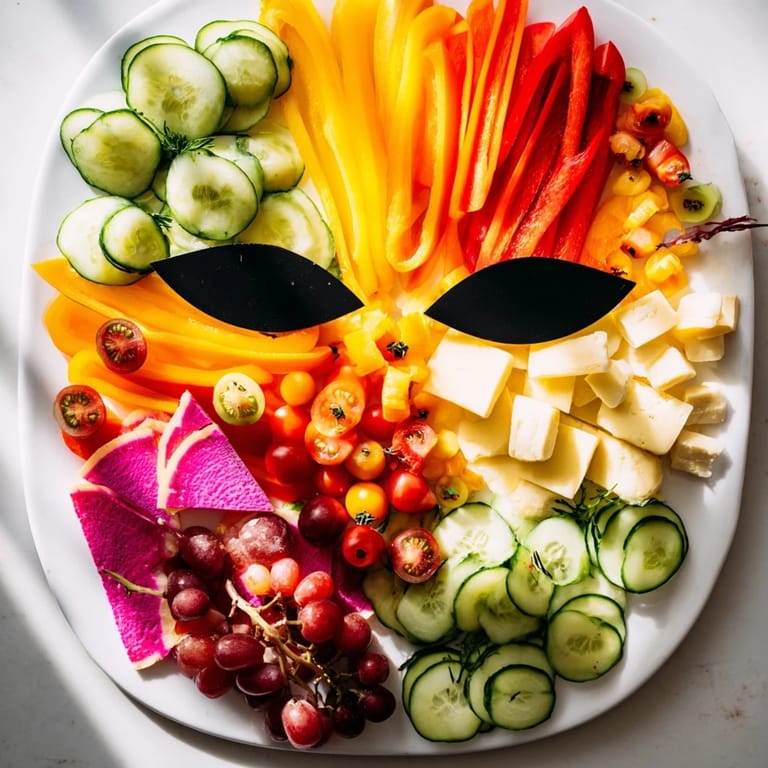
- Choose your largest, most beautiful board—this is where the magic happens. An oval or rectangular shape works best because it elongates like an actual mask. Take a moment to visualize where those olives will sit as the eyes, leaving breathing room on either side.
- Position the eyes:
- Place your olives or cheese cubes near the center top, spaced apart horizontally about where actual eyes would be on a masquerade mask. Step back and look at them—they should feel balanced and slightly mysterious, like they're watching you arrange the rest.
- Create the feathered edges:
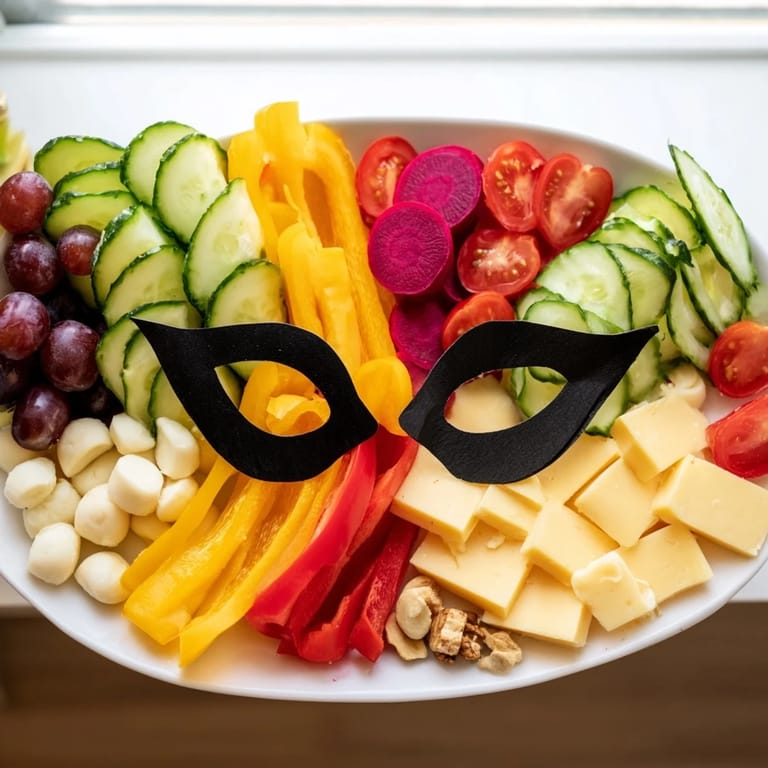
- This is where the artistry lives. Starting above and around those eye openings, begin fanning your bell pepper strips, cucumber slices, and other vegetables in wide, symmetrical arcs outward. Overlap them slightly as if they're feathers catching light. Work slowly here—the arrangement is everything, and this is where your platter transforms from a vegetable board into a wearable work of art.
- Nestle the treasures:
- Tuck your cheese cubes and mozzarella balls throughout the vegetables and fruits, creating pockets of creaminess and visual surprise. They should feel intentionally placed, not randomly scattered—like you're hiding little delights for people to discover as they eat.
- Fill the gaps with personality:
- Scatter your nuts and dried fruits into any spaces that feel empty. These add warmth, texture, and that sophisticated touch that says you've thought about every element. Let them catch light and create dimension.
- Add the supporting players:
- If you're using crackers or breadsticks, arrange them at the lower edge or sides—they frame the mask and give people something sturdy to build bites upon.
- The grand finale:
- Scatter fresh herbs and any edible flowers as your final garnish. This is where the platter goes from beautiful to breathtaking. The fresh green of parsley, the delicate petals, the hint of basil—these finishing touches are the celebration itself.
- Serve with ceremony:
- Bring it out when people are gathered, when the lighting is good, when you can see their faces light up. Serve immediately while everything is crisp and the presentation is pristine.
 Save to Pinterest
 There was one moment during my friend's party when an elderly guest leaned in close to the platter and said, 'This is almost too beautiful to eat.' We ended up taking a photo together with the mask between us, and she told me it reminded her of masquerade balls she attended decades ago. That's when I understood—sometimes food becomes a time machine, a way to celebrate not just the occasion but all the occasions it reminds us of.
The Art of Arrangement
The secret to making this platter feel genuinely elegant rather than just colorful is understanding proportion and movement. I learned this by watching how professional chefs plate dishes, and it changed everything. Think of your board as having a focal point (the eyes), a dramatic arc (the feathered edges), and supporting elements that create rhythm rather than chaos. The vegetables should fan like they're moving outward from the center, as if energy is radiating from those mysterious eyes. When colors repeat at different points across the board, the eye travels and the entire design feels intentional. It's less about having the most ingredients and more about placing them with intention and space.
Adaptations for Every Celebration
One of the best parts about this platter is how it transforms depending on your dietary needs and your crowd. For a New Year's Eve party with mixed diets, I've created versions that include smoked salmon and shrimp on one side while keeping the other entirely vegan with marinated tofu cubes replacing cheese. I've even created autumn versions with roasted seeds instead of nuts and winter versions with pomegranate arils and candied cranberries. The mask concept is so versatile that you can swap ingredients based on what's seasonal, what your guests can eat, and what colors speak to you in that moment. The structure remains elegant regardless of what fills it.
Serving and Pairing Strategies
I've learned through many gatherings that how you serve this platter matters as much as how you arrange it. Setting out small bowls of herbed cream cheese, hummus, or a simple balsamic reduction on the side transforms it from a visual appetizer into a complete experience. People use the crackers or breadsticks as vehicles for combinations they create themselves, and suddenly everyone becomes a chef. The platter works best as a cocktail hour centerpiece where people can graze, returning again and again as they notice new flavor combinations or when they want to admire the artistry once more. I always position it where the light hits it—evening sun or warm lamp light makes all those colors absolutely glow.
- Pair with herbed cream cheese, hummus, or a light vinaigrette for dipping
- Set this out during cocktail hour rather than as a sit-down course for maximum grazing and admiration
- Position it where it catches good light so the colors truly shine
 Save to Pinterest
 This platter has become my signature move because it proves that the most memorable food moments don't require cooking—they require intention, beauty, and a willingness to make something that feels like a celebration before anyone takes a single bite. Every time someone stops to admire it before eating, I remember why I love cooking for others.
Recipe FAQs
- → What ingredients create the mask's eye openings?
Two large olives or small cubes of firm cheese such as cheddar or gouda are placed to form elegant eye openings.
- → Can this platter accommodate dietary restrictions?
Yes, it can be adapted for vegetarian or gluten-free diets by omitting cheese or replacing crackers accordingly.
- → How do you arrange the vegetables and fruits?
Thin slices of cucumber, bell peppers, cherry tomatoes, radishes, carrots, and seedless grapes fan out symmetrically to mimic ornate, feathered edges.
- → What garnishes enhance the platter’s appearance?
Fresh herbs like parsley, basil, and dill, along with edible flowers, add a festive touch and visual appeal.
- → Are there suggestions for non-vegetarian guests?
Adding cooked shrimp, smoked salmon, or cured meats can tailor the platter to non-vegetarian preferences.
- → What tools are recommended for preparation?
A large serving board, sharp knife, and small bowls for nuts or dips help with assembly and presentation.