 Save to Pinterest
 The first time I encountered a proper Malaysian laksa, I was standing in a bustling hawker stall in Kuala Lumpur, mesmerized by the way the cook moved between pots with such practiced ease. One spoonful of that aromatic, creamy broth and I understood why people queue for hours—it's not just a noodle soup, it's a symphony of spice, richness, and brightness that somehow feels both comforting and exciting at once. Years later, I finally worked up the courage to recreate it at home, and what surprised me most was how forgiving and rewarding the process turned out to be.
I made this for my neighbor one rainy afternoon when she mentioned missing Malaysian food from her travels, and watching her close her eyes after that first slurp reminded me why I love cooking for people. The aroma alone—that heady blend of lemongrass, coconut, and spice—had her asking for the recipe before she'd even finished her bowl, and that's when I knew I'd gotten it right.
Ingredients
- Vegetable oil: Just enough to coat the pan and bring out the natural sweetness of the aromatics without overwhelming them.
- Onion, garlic, ginger, and lemongrass: This fragrant quartet is the soul of the broth—don't skip the fresh ginger or lemongrass, as they're what make it taste authentic rather than generic.
- Laksa paste: The real MVP; it carries all the complex spice and depth, so choose a good quality one or make your own if you're feeling ambitious.
- Coconut milk: Full-fat is non-negotiable here—it creates that silky, luxurious texture that makes the dish memorable.
- Vegetable broth: A good quality broth makes a noticeable difference; I use low-sodium so I can control the salt level myself.
- Soy sauce and sugar: The soy adds umami and the sugar balances the heat and spice with just a whisper of sweetness.
- Rice noodles: Thick or vermicelli both work beautifully; just soak them properly so they don't turn mushy in the hot broth.
- Firm tofu: The key word here is firm—silken tofu will fall apart when you try to fry it, and you want those golden, slightly crispy edges.
- Fresh vegetables and herbs: Bean sprouts, carrots, bell pepper, and cilantro add brightness and texture; they're what prevent the dish from feeling heavy despite the coconut milk.
Tired of Takeout? 🥡
Get 10 meals you can make faster than delivery arrives. Seriously.
One email. No spam. Unsubscribe anytime.
Instructions
- Wake up the aromatics:
- Heat your oil over medium heat and add the onion, garlic, ginger, and lemongrass all at once—you'll notice the kitchen immediately fills with that unmistakable laksa fragrance. Let them sauté for 3 to 4 minutes, stirring occasionally, until the onions become translucent and soft; this is when you know the flavor foundation is ready.
- Deepen the spice:
- Stir in the laksa paste and let it cook undisturbed for about 2 minutes—this allows the spices to bloom and releases their essential oils. You'll see the oil begin to glisten around the paste, which is exactly what you want.
- Build the broth:
- Pour in the coconut milk first, stirring gently to combine with the paste, then add the vegetable broth. Bring the whole thing to a simmer, stirring occasionally, and you'll see it transform into a glossy, coral-colored liquid that looks far more impressive than the effort it took.
- Season and simmer:
- Add the soy sauce, sugar, and salt, then let the broth bubble gently for 10 minutes—this resting time allows all the flavors to marry together and develop depth. Taste it as it simmers and adjust seasoning to your preference; this is the moment where you're really making it your own.
- Prepare your noodles and tofu:
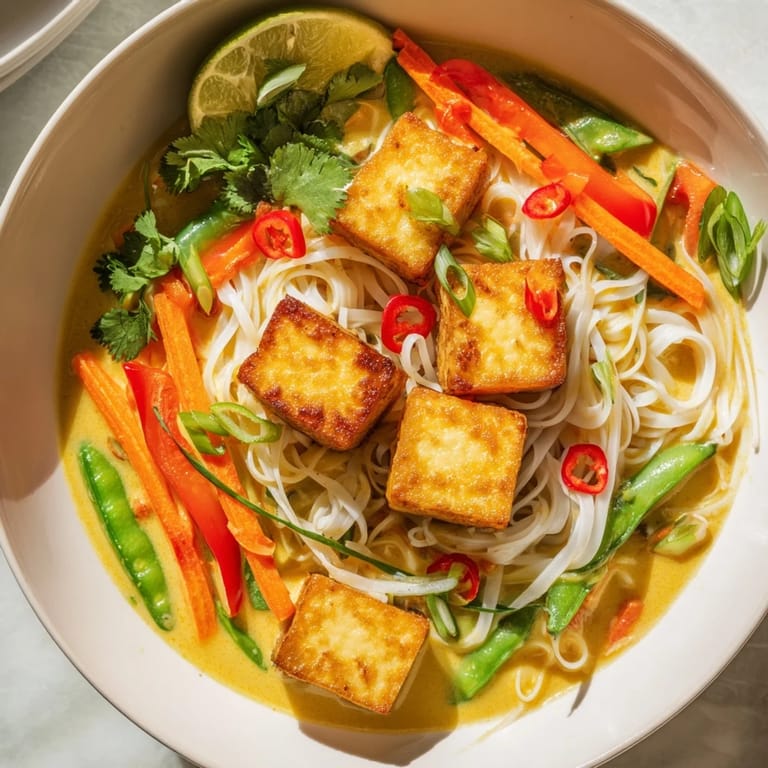
- While the broth simmers, soak or cook your rice noodles according to package directions and drain them well—you don't want excess water diluting your beautiful broth. In a separate nonstick skillet, pan-fry the tofu cubes over medium-high heat until they're golden and slightly crispy on all sides, which takes about 5 to 7 minutes total; this gives them texture and helps them absorb the broth's flavors.
- Add the vegetables:
- Add the carrots, bell pepper, and snow peas directly to the simmering broth and let them cook for 3 to 4 minutes until they're tender but still have a slight firmness to them. You want them to soften just enough to be pleasant to eat but retain their vibrant color and texture.
- Assemble your bowls:
- Divide the drained noodles among your serving bowls, then ladle the hot, fragrant broth and vegetables generously over them. Top each bowl with the golden fried tofu, a handful of fresh bean sprouts, sliced spring onions, a scatter of cilantro, and a few red chili slices if you like heat, then serve immediately with lime wedges on the side for squeezing.
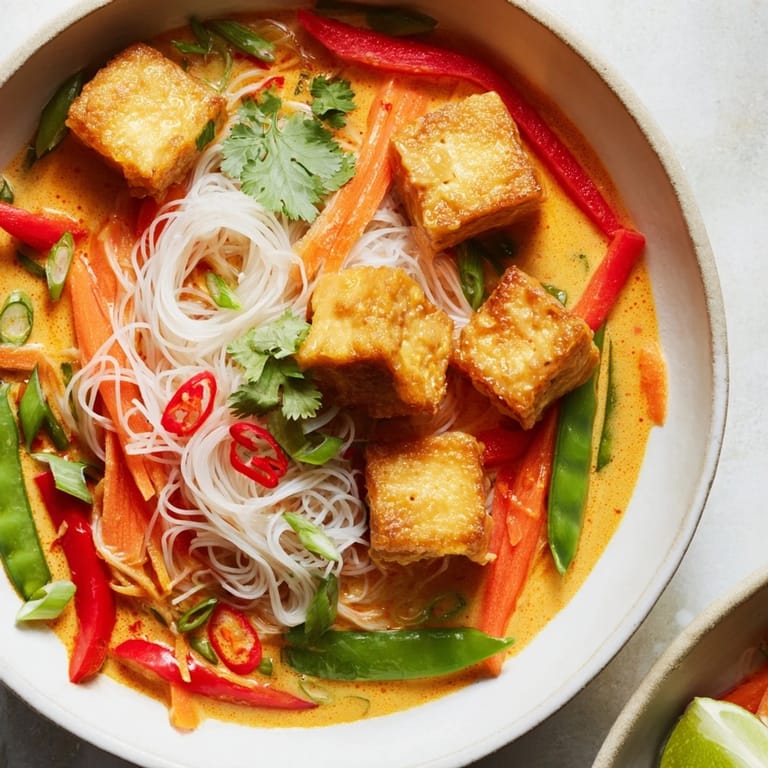 Save to Pinterest
 There's something about laksa that transforms a simple dinner into an occasion—maybe it's the way the steam rises from the bowl, or how the colors of the toppings create such a beautiful contrast, but serving this to someone always feels like you've done something meaningful in the kitchen.
Variations and Flexibility
One of the reasons I love this recipe is how easily it adapts to what you have on hand or what you're craving that day. I've added mushrooms, baby corn, and bok choy with excellent results, and once when I was out of tofu, I scrambled an egg directly into the broth just before serving, which created a silky texture that was equally delicious. The laksa paste itself is flexible too—if you find one with shrimp or fish in it and you want to keep it vegetarian, there are several good plant-based versions available now, or you can make your own paste if you're feeling adventurous.
The Importance of Quality Ingredients
I learned this lesson the hard way when I once tried to save money by using a generic laksa paste and watered-down coconut milk, thinking the rest of the ingredients would compensate—they didn't. Now I spend a little more on a paste I actually like and full-fat coconut milk, and it shows immediately in the final result. The lemongrass is another place where fresh makes a world of difference; the frozen version works in a pinch, but fresh lemongrass brings a brightness that feels essential to the dish.
Serving and Pairing Suggestions
Laksa is wonderful served as a standalone meal, but I've found that offering lime wedges, extra fresh herbs, and chili slices on the side lets everyone customize their bowl to their preference. A crisp white wine like Riesling or a cold jasmine tea pairs beautifully with the heat and richness, and if you're serving this to guests, setting everything out family-style with the broth in a large pot and letting people assemble their own bowls always feels more special than plating individual servings.
- Let your guests squeeze their own lime and adjust the heat level with chili slices to taste.
- Have extra cilantro and spring onions at the table because people will want more than you initially provided.
- If anyone's still hungry, serve crusty bread or Malaysian roti on the side for dipping into the broth.
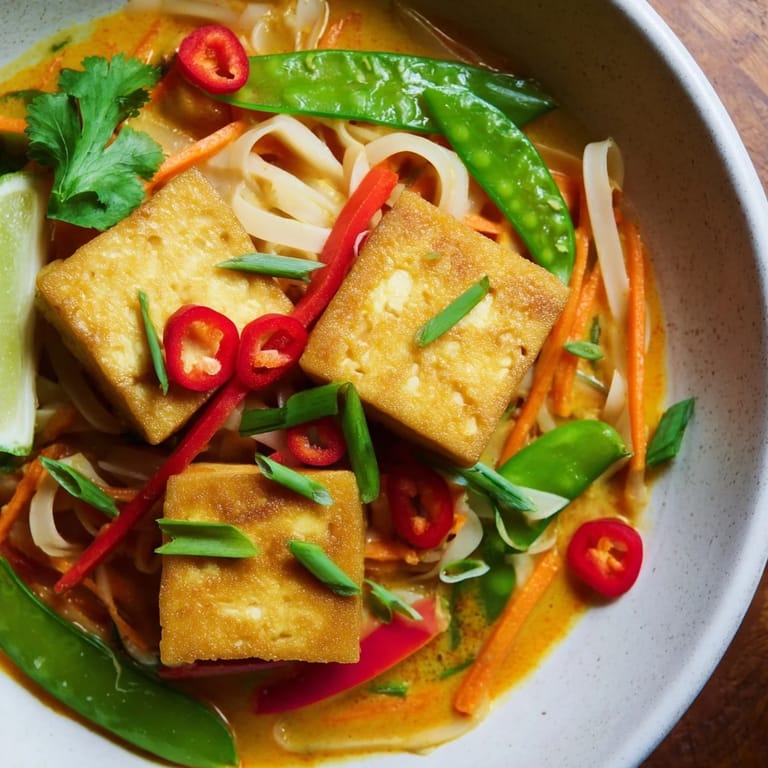 Save to Pinterest
 Every time I make this laksa, I'm reminded that the most satisfying meals are often the ones that feel effortless to eat but just complex enough in flavor that you find yourself lost in each spoonful. It's the kind of dish that deserves to be made again and again.
Recipe FAQs
- → What type of noodles work best for this laksa?
Rice noodles, either thick or vermicelli, are ideal as they absorb the flavorful broth without becoming mushy.
- → Can I make this dish vegan-friendly?
Yes, use a laksa paste free of shrimp paste or fish sauce and ensure all ingredients are plant-based.
- → How do I balance the spiciness in the broth?
Adjust the amount of laksa paste and optionally omit chili slices to control heat according to taste.
- → What vegetables complement the laksa broth well?
Carrots, bell peppers, snow peas, and bean sprouts add freshness and texture to complement the rich broth.
- → Is tofu suitable in this dish?
Firm tofu cubes, lightly fried, absorb flavors well and provide a satisfying protein component.