 Save to Pinterest
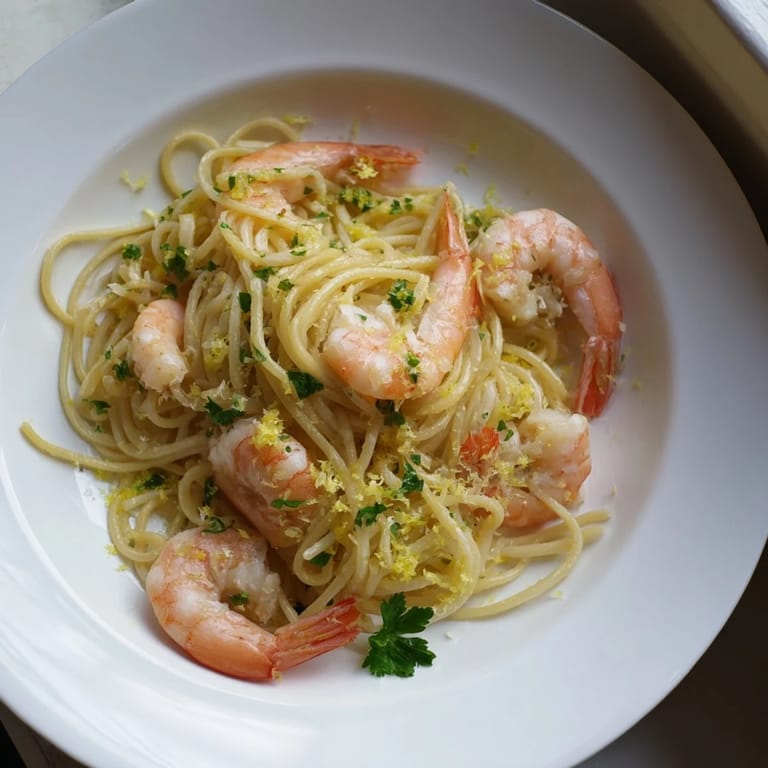
 My neighbor knocked on my door one Tuesday evening holding a bag of frozen shrimp and asked if I knew what to do with them. Twenty minutes later, we were sitting at my kitchen table twirling forks through buttery lemon-scented pasta, laughing about how something this good could come together so fast. That night taught me that the best dinners don't need elaborate plans, just a handful of bright flavors and someone to share them with.
I started making this for my partner on nights when we both came home exhausted, too tired to think but too hungry to settle for anything boring. The smell of garlic hitting hot butter always perked us up, and by the time the lemon juice hit the pan, we'd be standing side by side at the stove, stealing shrimp before they even made it to the pasta. It became our unofficial Wednesday tradition without us ever planning it.
Ingredients
- Large shrimp (450 g): Look for shrimp that are already peeled and deveined to save time, and pat them completely dry so they sear instead of steam in the pan.
- Spaghetti (340 g): Any long pasta works beautifully here, but spaghetti holds onto the garlicky butter sauce in every twirl.
- Unsalted butter (60 g): Using unsalted lets you control the seasoning, and the richness balances the acidity of the lemon perfectly.
- Extra-virgin olive oil (2 tbsp): Mixing olive oil with butter raises the smoke point and adds a fruity depth that butter alone can't achieve.
- Garlic cloves (4, minced): Fresh garlic is non-negotiable here, it blooms in the hot fat and becomes sweet and fragrant without any harshness.
- Lemon zest and juice (1 large lemon): The zest carries essential oils that make the whole dish smell incredible, while the juice brings the brightness that makes you want another bite.
- Dry white wine (60 ml, optional): A splash of wine adds acidity and complexity, but chicken broth works just as well if you'd rather skip it.
- Crushed red pepper flakes (1/4 tsp): Just a pinch gives a gentle warmth in the background without making the dish spicy.
- Salt and black pepper: Season at every stage, tasting as you go, because properly seasoned shrimp and pasta make all the difference.
- Fresh parsley (2 tbsp, chopped): The green flecks add a fresh, herbal note that cuts through the richness right before serving.
- Parmesan cheese (optional): A light grating adds a salty, nutty finish, though some purists skip cheese with seafood.
Tired of Takeout? 🥡
Get 10 meals you can make faster than delivery arrives. Seriously.
One email. No spam. Unsubscribe anytime.
Instructions
- Boil the pasta:
- Bring a large pot of well-salted water to a rolling boil and cook the spaghetti until it still has a slight bite in the center. Before draining, scoop out half a cup of the starchy pasta water, it's liquid gold for binding the sauce later.
- Prep the shrimp:
- While the water heats, pat the shrimp completely dry with paper towels and season them lightly with salt and pepper. Dry shrimp will sear and caramelize instead of steaming in their own moisture.
- Sear the shrimp:
- Heat a large skillet over medium-high with a tablespoon each of olive oil and butter until shimmering. Lay the shrimp in a single layer without crowding and let them cook undisturbed for one to two minutes per side until they turn pink and opaque, then transfer them to a plate.
- Build the garlic base:
- Lower the heat to medium and add the remaining oil and butter to the same skillet. Stir in the minced garlic and cook just until it releases its aroma, about a minute, watching carefully so it doesn't brown and turn bitter.
- Create the lemon sauce:
- Add the lemon zest, lemon juice, white wine if using, and red pepper flakes to the garlic. Let it simmer gently for two to three minutes, reducing slightly and concentrating the flavors into a tangy, aromatic base.
- Reintroduce the shrimp:
- Return the cooked shrimp and any juices from the plate back into the skillet. Toss them through the sauce so every piece gets coated in that lemony, garlicky goodness.
- Toss with pasta:
- Add the drained spaghetti directly into the skillet and toss everything together with tongs. Drizzle in the reserved pasta water a little at a time, tossing constantly, until the sauce clings to each strand in a silky embrace.
- Adjust and finish:
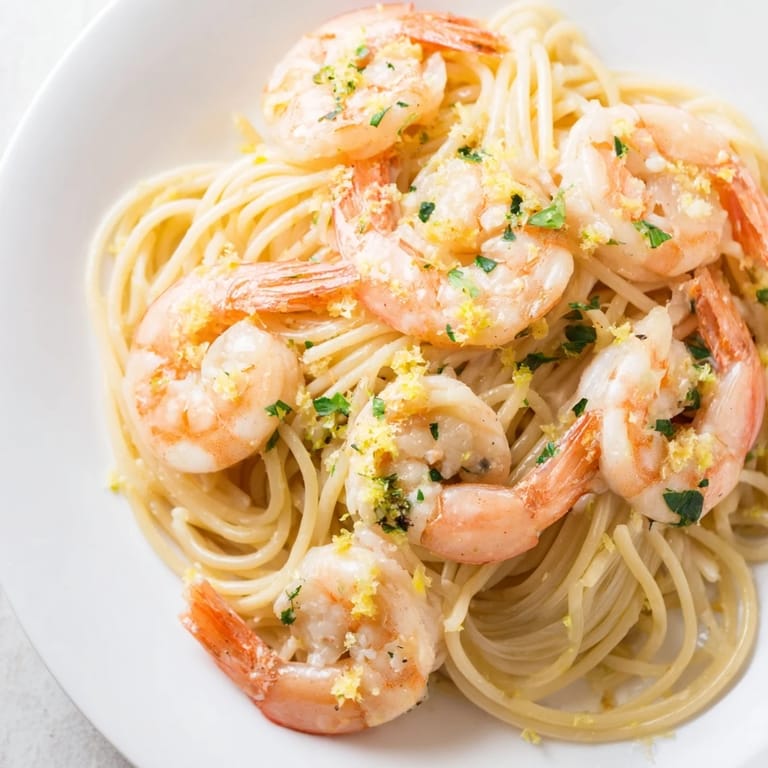
- Taste and add more salt or black pepper if needed. Remove from the heat, shower with chopped parsley and a handful of Parmesan if you like, and serve immediately with lemon wedges on the side for an extra squeeze of brightness.
 Save to Pinterest
 One summer evening, I made this for a small group of friends on my tiny balcony with string lights overhead and a bottle of cold white wine. We ate straight from the skillet, passing it around with forks, and someone said it tasted like vacation. That's when I realized food doesn't need to be complicated to feel like a celebration.
Making It Your Own
This recipe is forgiving and loves improvisation. I've stirred in handfuls of baby spinach during the last minute of cooking, watched it wilt into the pasta, and loved the pop of green against the pink shrimp. Halved cherry tomatoes also work beautifully, their juices bursting into the sauce and adding little pockets of sweetness. If you want more heft, toss in a few spoonfuls of heavy cream after the lemon juice to create a richer, more indulgent sauce that clings even thicker to the noodles.
Choosing Your Shrimp
I've learned that frozen shrimp are often fresher than what sits in the seafood case, since they're frozen right on the boat. Look for shrimp labeled wild-caught if possible, and avoid anything that smells too fishy or has black spots. Thaw them overnight in the fridge or run them under cold water for a few minutes, then dry them thoroughly before they hit the pan. Size matters less than you'd think, but larger shrimp are easier to flip without overcooking.
Serving and Storing
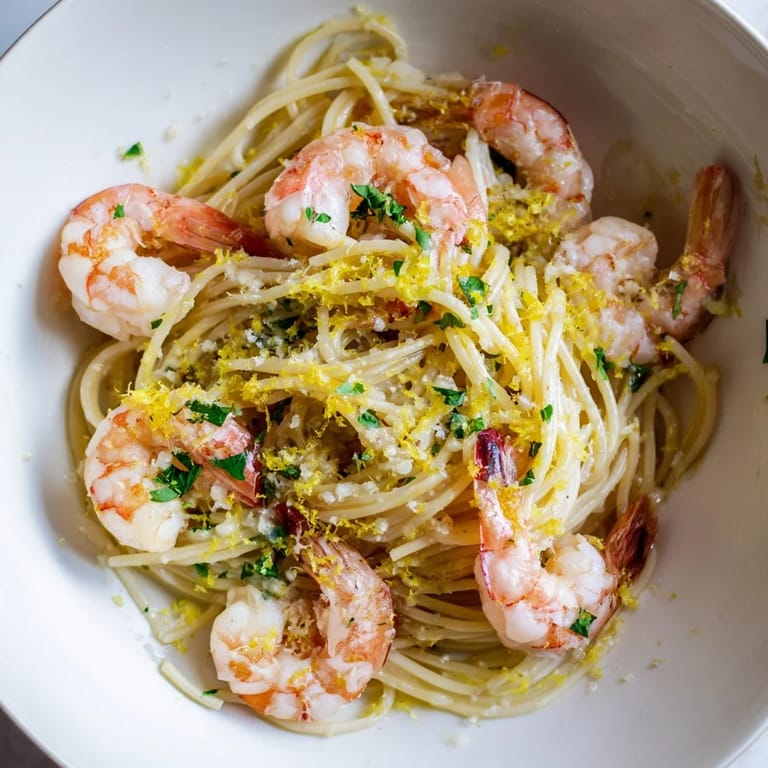
This dish is best enjoyed immediately while the pasta is still slick with sauce and the shrimp are tender. If you do have leftovers, store them in an airtight container in the fridge for up to two days, but know that reheating shrimp can make them a bit tough. I like to add a splash of water or broth when reheating gently in a skillet over low heat, stirring constantly to revive the sauce.
- Pair this with a simple arugula salad dressed in olive oil and lemon to keep the meal light and cohesive.
- A crusty baguette is non-negotiable for mopping up every last bit of sauce from your bowl.
- Serve with chilled Sauvignon Blanc or Pinot Grigio to echo the citrus notes and cleanse your palate between bites.
 Save to Pinterest
 Every time I make this, I'm reminded that the simplest meals often become the most memorable. I hope this one finds a place in your kitchen the way it has in mine.
Recipe FAQs
- → How do I ensure the shrimp stays tender and doesn't become rubbery?
Pat the shrimp dry before cooking and cook them for only 1–2 minutes per side over medium-high heat. The shrimp will continue cooking slightly after being removed from heat, so it's better to undercook them slightly than overcook. They're done when they turn pink and opaque.
- → Can I use frozen shrimp for this dish?
Yes, frozen shrimp works well. Thaw them completely under cold running water, then pat them dry before cooking. This ensures even cooking and prevents excess moisture from affecting the sauce.
- → What can I substitute for white wine?
You can use chicken or vegetable broth for a lighter option, or omit it entirely. The wine adds acidity and depth, but the lemon juice provides sufficient brightness. If substituting, use the same quantity (1/4 cup).
- → How does pasta water help the sauce?
Pasta water contains starch from the cooked pasta, which helps the sauce cling to the noodles and creates a silky, cohesive texture. Start with a small amount and add more as needed until you achieve your desired consistency.
- → How can I make this dish dairy-free?
Replace the butter with extra-virgin olive oil (use about 5 tablespoons total) and omit the Parmesan cheese. The olive oil will create a rich, flavorful sauce while keeping the dish dairy-free. The lemon and garlic will remain prominent.
- → What wine pairs best with this dish?
Crisp white wines like Sauvignon Blanc or Pinot Grigio complement the bright, citrusy flavors beautifully. Both wines have acidity and minerality that echo the lemon in the dish and pair naturally with seafood.