 Save to Pinterest
 The first time I made okonomiyaki, I was standing in a cramped Tokyo kitchen during a cooking class, watching the instructor flip a pancake with such casual confidence that it made me nervous. She laughed when she saw my hesitation and told me that okonomiyaki means "grilled as you like it"—which somehow made the whole thing feel less intimidating and more like an invitation. Back home, I realized these savory pancakes could become my answer to those moments when I wanted something hearty but still felt light, something that turned simple cabbage into pure comfort.
I made a batch of these for a small dinner party last spring, and I watched my usually quiet friend literally close her eyes while eating hers—the bonito flakes were dancing from the heat, and she kept saying the sauce-to-cabbage ratio was exactly what she didn't know she needed. That moment reminded me that okonomiyaki isn't just food; it's an experience that makes people slow down and actually taste what's in front of them.
Ingredients
- All-purpose flour: Use about 1 cup; it's the backbone that holds everything together without being heavy.
- Dashi stock: This is where the magic lives—use real dashi if you can find it, as it adds a subtle umami depth that water simply cannot match.
- Eggs: 2 large ones bind everything and create those little pockets of richness in each bite.
- Baking powder: Just 1/2 teaspoon makes these airy in the center, never dense.
- Finely shredded cabbage: 3 cups is the star ingredient; shred it yourself rather than buying pre-shredded, as it holds moisture better and tastes fresher.
- Green onions: Slice about 1/2 cup thin; they add a bright, fresh note that cuts through the richness.
- Carrot: 1/2 cup julienned is optional but adds a subtle sweetness and beautiful color specks.
- Protein add-in: Cooked shrimp or bacon (1/2 cup chopped) is optional—I often skip it and let the vegetables be the main event.
- Okonomiyaki sauce: Buy it if you can find it, or make your own by mixing Worcestershire, ketchup, and soy sauce.
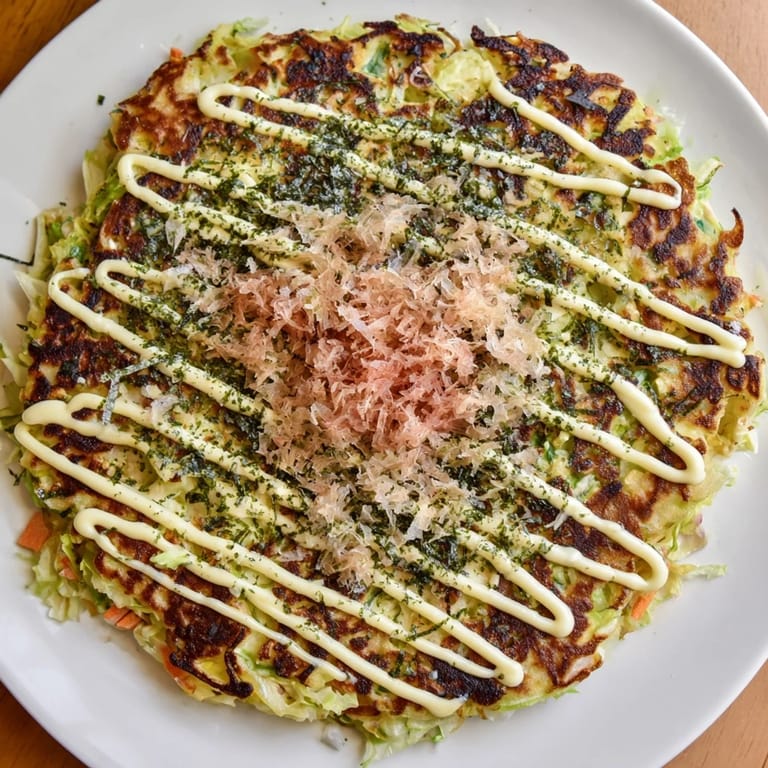
- Japanese mayonnaise: Kewpie is the classic; it's tangier and richer than regular mayo, and honestly transforms the whole dish.
- Bonito flakes: These paper-thin dried fish shavings dance when they hit the warm pancake—don't skip this magic.
- Aonori: The powdered seaweed brings an oceanic, umami whisper that ties everything together.
- Oil for cooking: Use something neutral like vegetable oil; butter will brown too quickly here.
Tired of Takeout? 🥡
Get 10 meals you can make faster than delivery arrives. Seriously.
One email. No spam. Unsubscribe anytime.
Instructions
- Build the batter:
- Whisk your flour, dashi stock, eggs, salt, and baking powder in a large bowl until smooth, like you're making pancake batter for breakfast. Don't overmix; a few small lumps are fine and actually keep things tender.
- Fold in the vegetables:
- Gently fold in your shredded cabbage, green onions, carrot, and any shrimp or bacon until everything is evenly distributed. The mixture will be thicker than regular pancake batter, almost chunky—that's exactly right.
- Heat your pan:
- Use a nonstick skillet over medium heat and add about 1/2 tablespoon of oil, swirling to coat. Let it get hot enough that a tiny drop of batter sizzles immediately.
- Shape and cook:
- Scoop about 1 cup of batter onto the skillet and use the back of a spatula to gently press it into a thick round pancake about 6 inches wide. You want it to be sturdy enough to flip, not thin like a crepe.
- First side:
- Cook for 4 to 5 minutes until the bottom turns a deep golden brown and sounds crispy when you tap it with your spatula. Resist the urge to move it around; let it sit and develop that crust.
- The flip:
- Take a breath, slide your spatula underneath, and flip in one confident motion. The second side will cook a bit faster, about 4 to 5 minutes, because the inside is already warm.
- Repeat with care:
- Transfer the finished pancake to a plate and repeat with the remaining batter, adding a tiny bit more oil to the pan between pancakes. Keep cooked ones warm while you finish the batch.
- Sauce and top:
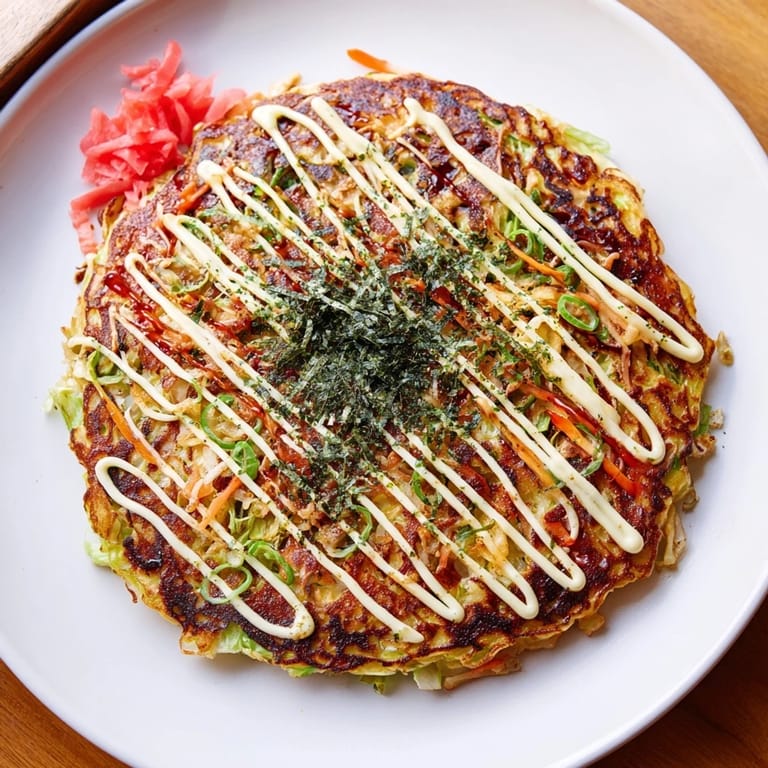
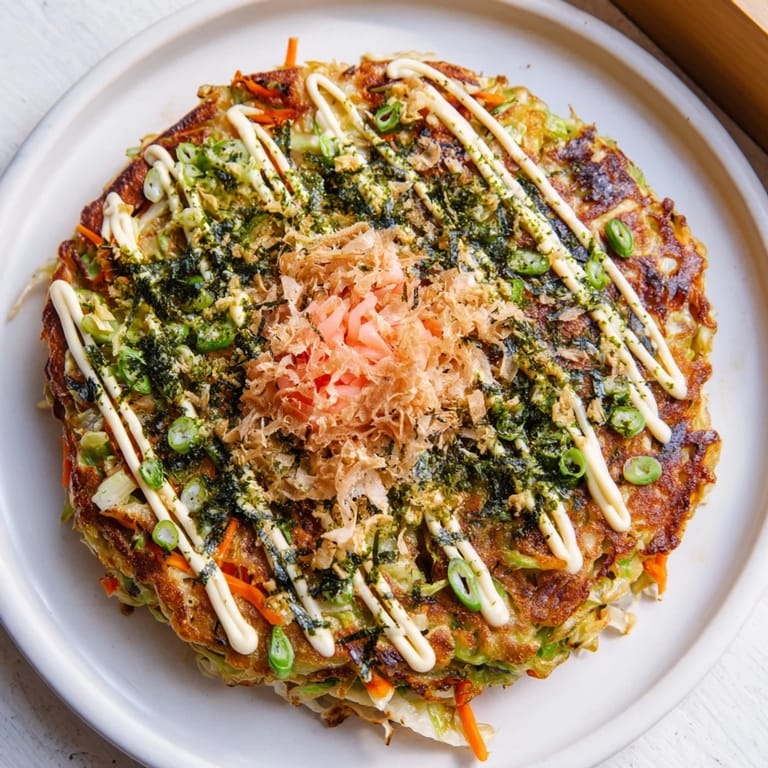
- Drizzle each warm pancake generously with okonomiyaki sauce and Japanese mayo in a zigzag pattern using a squeeze bottle if you have one. Top immediately with bonito flakes (they'll dance from the warmth), a pinch of aonori, and pickled ginger if you like that sharp tang.
 Save to Pinterest
 There's something almost meditative about watching a fresh okonomiyaki pancake develop that burnished golden crust, knowing that in a few minutes you'll be eating something warm and a little bit fancy without having tried very hard at all. These pancakes taught me that sometimes the best comfort foods are the ones that feel like you're sharing a secret with your guests.
The Secret of Dashi
Real dashi stock is what separates an okay okonomiyaki from one that makes you wonder why more people don't eat this regularly. It adds a subtle, almost invisible depth that makes people say "what is that flavor?" without being able to name it. If you can't find dashi or don't want to make it, instant dashi powder works beautifully and takes the mystery out of sourcing.
Building Layers of Flavor
The beauty of okonomiyaki is that every element—the batter, the vegetables, the sauce, the toppings—plays a role in the final experience. Nothing is redundant or just for show, which is why even small choices like fresh versus jarred pickled ginger actually matter. I've learned to taste as I prep, adjusting the salt in the batter slightly if my cabbage feels particularly wet that day, because cooking is about responding to what's in front of you.
Making It Your Own
Once you understand the formula—a savory batter, shredded vegetables, heat, and toppings—you're free to play. I've made versions with roasted mushrooms, cooked corn, even leftover roasted potato. The core stays the same, but the possibilities expand every time I cook it. Think of this recipe as a template, not a rigid rule.
- Try adding finely minced garlic or ginger to the batter for extra depth.
- Experiment with different vegetables based on what's fresh and in your kitchen.
- Make extra sauce or mayo on the side so everyone can customize to their taste.
 Save to Pinterest
 Okonomiyaki has become my go-to when I want to cook something that feels both comforting and a little bit exciting. These pancakes remind me why I fell in love with cooking in the first place—it's the best excuse to bring people together.
Recipe FAQs
- → What makes okonomiyaki unique?
Its combination of shredded cabbage, savory batter, and signature toppings like okonomiyaki sauce and bonito flakes creates a distinct layered flavor.
- → Can I substitute ingredients in this dish?
Yes, shrimp or bacon can be swapped out or omitted, and okonomiyaki sauce can be replaced with a mix of Worcestershire sauce, ketchup, and soy sauce.
- → How do I get the perfect pancake texture?
Use a smooth batter with dashi stock, cook over medium heat, and flip carefully when the bottom turns golden brown.
- → What toppings enhance the flavor?
Tangy okonomiyaki sauce, creamy Japanese mayonnaise, smoky bonito flakes, dried seaweed flakes, and pickled ginger add depth and balance.
- → Is there a vegetarian option?
Yes, omit shrimp, bacon, and bonito flakes, and increase vegetables to maintain flavor and texture.