 Save to Pinterest
 The first time I made satay sauce wasn't actually for satay at all—I was standing in my kitchen with a jar of peanut butter, some coconut milk that needed using, and a craving for something warm and deeply savory. I combined them almost on a whim, added spices I had lying around, and suddenly the whole kitchen smelled like I'd traveled somewhere. That casual experiment became the sauce I now reach for whenever I want to turn simple grilled vegetables or leftover chicken into something that tastes intentional and special.
I remember serving this sauce at a small dinner where everyone brought something to grill. A friend who'd lived in Indonesia took a taste and smiled—not the polite smile, but the kind that means you've landed somewhere close to right. That moment made me realize sauce isn't just a supporting player; when it's this good, it becomes the reason people come back to the table.
Ingredients
- Creamy peanut butter: Use unsweetened and unsalted if you can; it lets the other flavors lead without fighting for attention.
- Coconut milk: Full-fat is non-negotiable here—it's what makes this sauce silky rather than thin.
- Soy sauce: The salt and umami backbone; use tamari if you need gluten-free.
- Fresh lime juice: Don't use bottled if you can help it; the acidity should taste bright, not dusty.
- Brown sugar or palm sugar: Palm sugar has a deeper, almost molasses-like sweetness that feels more authentic, but brown sugar works beautifully too.
- Garlic: Minced fresh, not powdered—one clove is enough, and too much will overpower the rest.
- Ground coriander and cumin: These two are the quiet architects of the whole flavor profile; they're what make it taste Indonesian rather than just peanutty.
- Chili flakes: Start with a quarter teaspoon and adjust; you're aiming for warmth, not a fire alarm.
- Fish sauce: Optional, but if you use it, add it at the very end after tasting; one teaspoon is enough to deepen everything without making it obviously fishy.
- Water: Keep it nearby for thinning if the sauce gets thicker than you'd like as it cools.
Tired of Takeout? 🥡
Get 10 meals you can make faster than delivery arrives. Seriously.
One email. No spam. Unsubscribe anytime.
Instructions
- Bring together the creamy base:
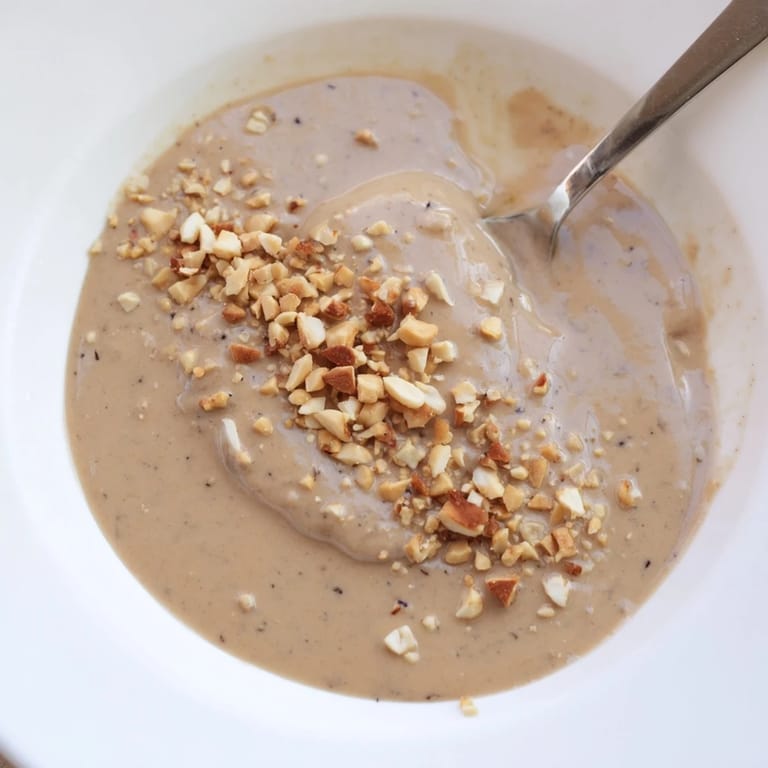
- In a small saucepan over medium heat, whisk the peanut butter and coconut milk until they're smooth and have no lumps. This takes about a minute, and the mixture should go from separated-looking to silky.
- Build the flavor:
- Add the soy sauce, lime juice, brown sugar, minced garlic, coriander, cumin, chili flakes, and salt all at once, and stir until everything is evenly distributed. You're not looking for a recipe—you're building balance, so notice how the spices smell as they hit the warmth.
- Let it simmer gently:
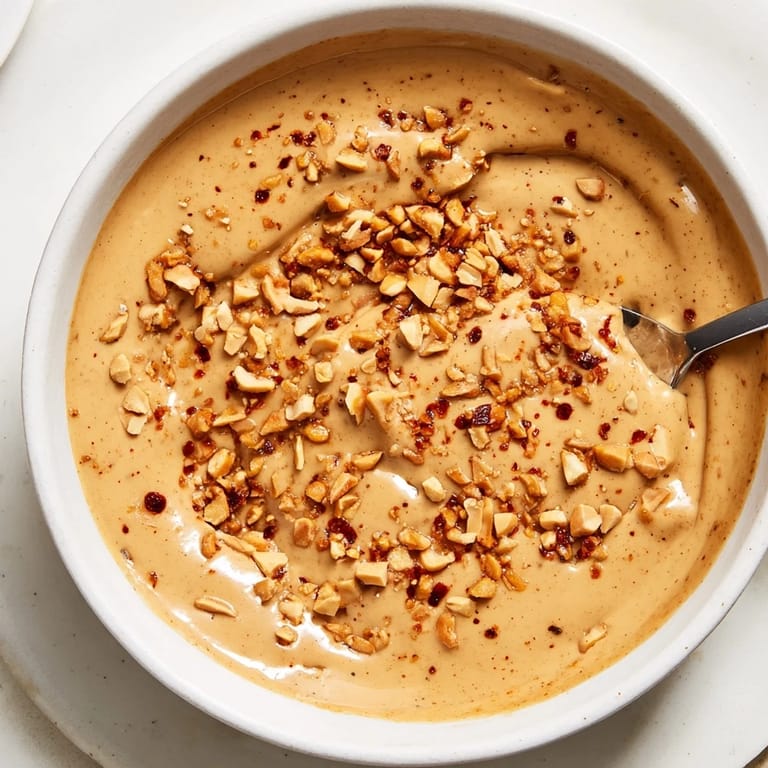
- Bring the sauce to a gentle simmer over medium heat, stirring often so nothing sticks to the bottom. After 3 to 5 minutes, the sauce will thicken slightly and take on a glossy sheen that means the flavors have started to hold hands.
- Taste and adjust:
- This is the most important step—actually taste it and trust yourself. More lime if it needs brightness, more sugar if it's too sharp, more chili if you want more heat, more salt if it's tasting flat.
- Reach the right thickness:
- If the sauce is thicker than you want, whisk in water a tablespoon at a time until it coats the back of a spoon the way you like.
- Finish and cool:
- Remove from heat, stir in the fish sauce if you're using it, and let the pan sit for a few minutes before using or storing. The sauce will thicken a bit more as it cools.
 Save to Pinterest
 I once made this sauce for a cooking session with my niece, and she tasted it, then asked why I didn't just open a jar from the store. When I told her it took twenty minutes, she looked shocked—it tasted too good, too considered, to be so fast. That's when I knew I'd gotten it right.
When to Serve It and Why
This sauce was born for satay skewers, but it's become my secret weapon for so much more. Drizzle it over grilled chicken, toss it with warm noodles, dip roasted vegetables into it, or use it as a base for a creamy salad dressing. The point is: once you have it on hand, you'll find reasons to use it almost every time you're cooking something that could use a little richness and warmth.
Making It Your Own
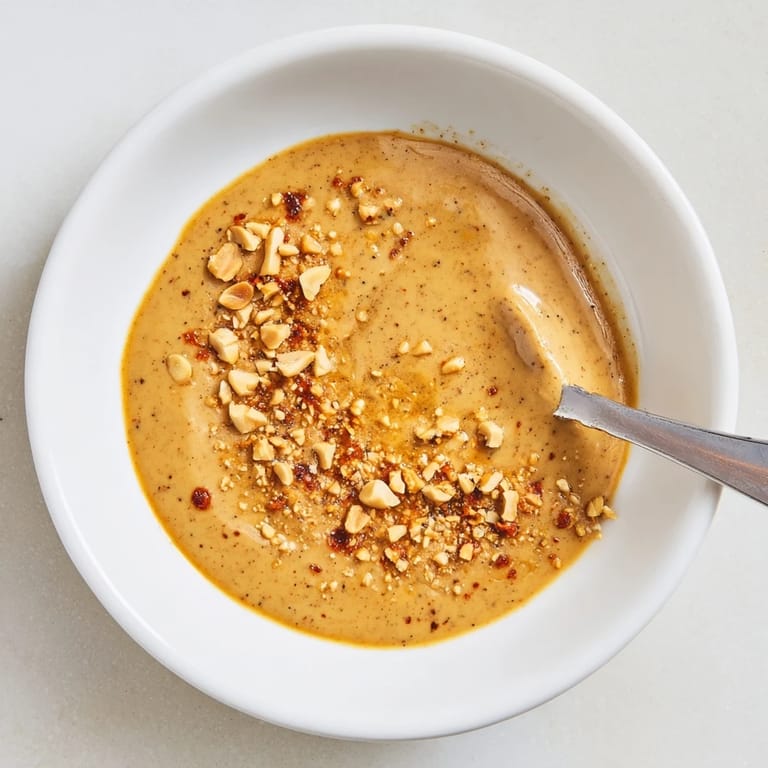
The beauty of satay sauce is that it's flexible enough to follow your tastes and what you have in the kitchen. Don't have palm sugar? Brown sugar is fine. Want it chunkier? Stir in some crushed roasted peanuts at the end and it becomes almost textured, almost more like a spread. If you're serving vegetarians alongside meat-eaters, just leave the fish sauce out for half the batch—you won't miss it, and everyone stays happy.
Storage and Second Life
Refrigerated, this sauce keeps for about five days, and it actually gets better as the flavors settle into each other. When you're ready to use it again, warm it gently over low heat or even just in the microwave with a splash of water stirred in, and it comes back to life without losing any of its character. This is a sauce that rewards being made ahead, that tastes just as good on Tuesday as it did on Sunday.
- Always reheat gently so the coconut milk doesn't split.
- If it's thickened too much in the fridge, thin it with warm water or fresh coconut milk a little at a time.
- Keep it covered in an airtight container so it doesn't absorb flavors from other foods.
 Save to Pinterest
 Satay sauce is proof that the best food moments come from simple things brought together with intention. Make it, taste it, trust it, and let it become your own.
Recipe FAQs
- → What ingredients give the sauce its creamy texture?
The creamy texture comes primarily from smooth peanut butter combined with full-fat coconut milk, creating a rich base.
- → Can the sauce be made gluten-free?
Yes, by using gluten-free soy sauce alternatives like tamari or coconut aminos, the sauce remains gluten-free.
- → How can the sauce be adjusted for spiciness?
Adjust chili flakes quantity to taste. Increase for more heat or reduce for a milder flavor.
- → What is the best way to store leftovers?
Refrigerate in a sealed container for up to 5 days and gently rewarm before serving to preserve flavor and texture.
- → Is fish sauce required in the sauce?
Fish sauce is optional and adds a savory depth, but the sauce is flavorful and satisfying without it, especially for vegetarians.
- → Can the sauce be thinned if too thick?
Yes, whisk in small amounts of water until the desired consistency is reached without diluting the flavor.