 Save to Pinterest
 I discovered this salad while standing in my kitchen on a lazy afternoon, scrolling through design blogs instead of planning dinner. A photograph of a spiraling arrangement stopped me cold—something about the way the colors curved inward felt both mathematical and organic, like nature had decided to show off. I realized I had every ingredient already, and what started as an idle curiosity became an obsession with balancing beauty and flavor on a single plate. That evening, my family gathered around not because they were hungry, but because they couldn't look away.
I made this for a dinner party where someone had just moved into a new apartment with an open kitchen, and I wanted to give them a meal that proved their space was meant for gathering. When I finished arranging the salad, my friend stood silently for a moment, then grabbed her phone—not to check a message, but to photograph what we'd made together. That's when I knew this recipe was more than food.
Ingredients
- Mixed baby greens (arugula, spinach, watercress): Use 4 cups as your foundation—the peppery bite from arugula keeps this from feeling one-note.
- Cherry tomatoes: Halve 1 cup; they're your anchor points of color and should be the ripest you can find.
- Ripe avocado: Slice just before assembly—one avocado, cut lengthwise and fanned slightly, adds that creamy visual drama.
- Yellow bell pepper: Slice 1 pepper thin enough to catch light; the sweetness balances the greens' sharpness.
- Cucumber: Slice 1 small one paper-thin with a mandoline if you have one—thickness matters for that delicate appearance.
- Pomegranate seeds: Measure 1/2 cup; they're your jewels, so scatter them with intention.
- Feta cheese: Crumble 1/2 cup by hand so the pieces vary in size—unevenness looks more natural.
- Toasted pine nuts: Toast 1/4 cup in a dry pan until fragrant, about three minutes; they add both crunch and sophistication.
- Extra-virgin olive oil: Use 3 tablespoons of the good stuff—this dressing is simple enough that quality matters.
- Lemon juice: Squeeze 1 tablespoon fresh; bottled misses the brightness this needs.
- Honey: Just 1 teaspoon, enough to soften the mustard's edge without sweetening.
- Dijon mustard: 1/2 teaspoon binds everything and adds subtle depth.
- Salt and black pepper: Taste as you go—the feta is already salty, so go gentle.
Tired of Takeout? 🥡
Get 10 meals you can make faster than delivery arrives. Seriously.
One email. No spam. Unsubscribe anytime.
Instructions
- Build your base:
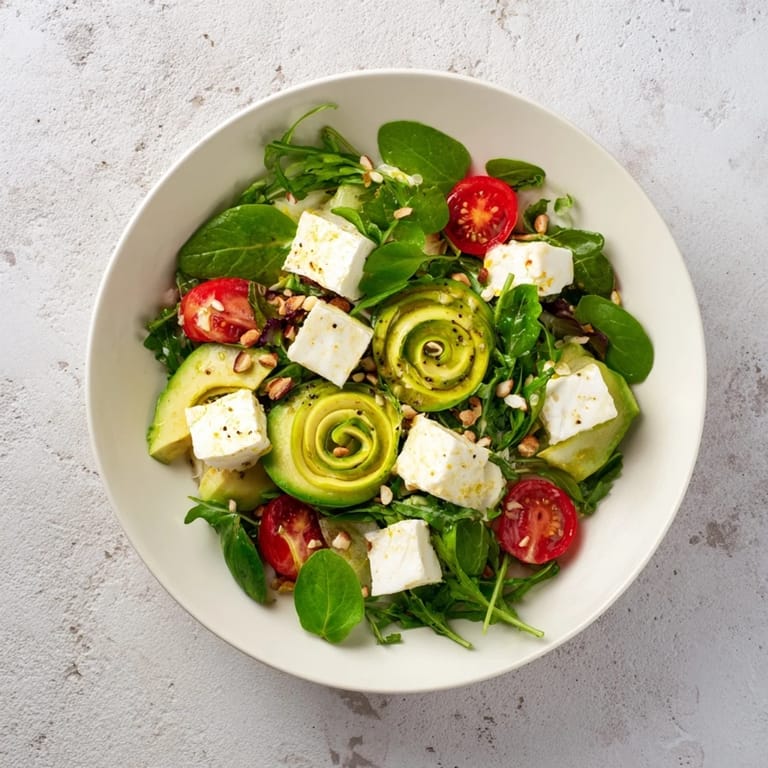
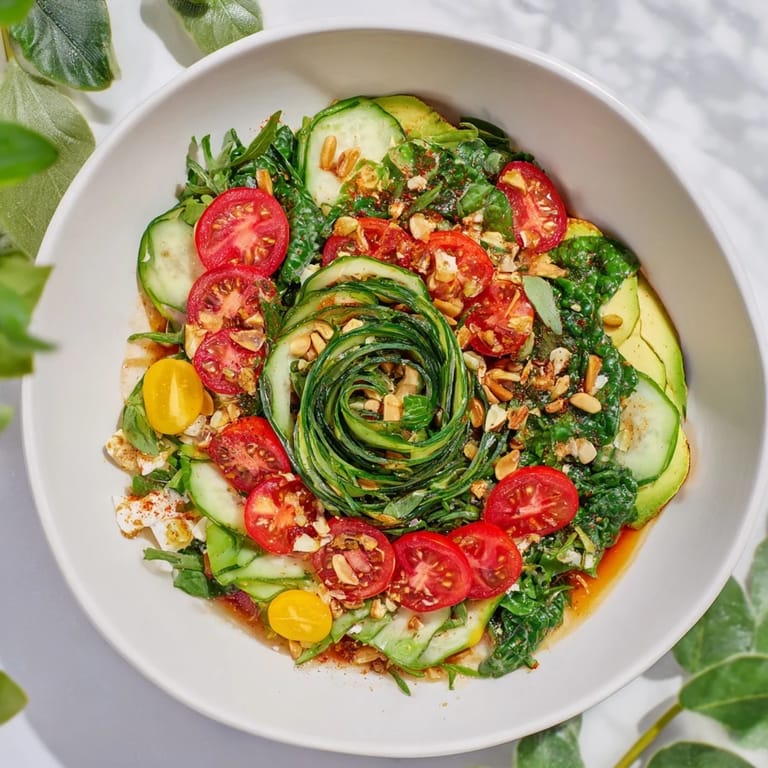
- Spread the mixed greens across your largest platter in a gentle spiral or sweeping curve, as if you're creating a soft landscape. This isn't about precision—let the greens mound naturally, leaving some white plate visible at the edges.
- Place your focal point:
- Starting about two-thirds of the way along your spiral's length, begin arranging tomatoes, avocado, and bell pepper in clusters. Imagine you're drawing the viewer's eye inward, so the largest or brightest elements go where you'd want someone to look first.
- Layer your colors:
- Add cucumber slices between the tomatoes and peppers, letting them overlap slightly like scales. This creates rhythm and prevents the salad from feeling chaotic.
- Crown with brightness:
- Scatter pomegranate seeds and feta across the arrangement, concentrating them slightly toward your focal point. The seeds catch light and draw attention exactly where you want it.
- Finish with texture:
- Sprinkle toasted pine nuts over everything, letting some tumble into the greens where they'll glint unexpectedly. This is your final touch of sophistication.
- Dress and serve:
- Whisk oil, lemon juice, honey, mustard, salt, and pepper together until the dressing looks glossy and emulsified. Drizzle it gently over the salad just before serving, and bring it straight to the table before anything wilts.
 Save to Pinterest
 Someone once told me that we eat with our eyes first, and this salad proved it. A guest pushed their plate away after eating, not because they were full, but because they wanted to sit with the experience for a moment longer—that perfect convergence of hunger, beauty, and satisfaction.
The Golden Ratio, Explained Simply
The Golden Ratio (approximately 1.618 to 1) appears everywhere in nature—spiraling shells, branching trees, the proportions of faces we find beautiful. When you apply it to a salad, you're not just arranging food; you're tapping into something our eyes recognize as inherently pleasing. The focal point at 61.8% along your platter's axis isn't magic, but it might feel like it when you see people lean in closer to look before eating.
Why Color Contrast Matters Here
The magic of this salad lives in its colors working against each other—the pomegranate seeds glow like rubies against the greens, the yellow pepper brightens the entire plate, and the white feta and pale cucumber prevent any single color from dominating. I learned this by accident when I forgot to halve the tomatoes once and served whole ones; it didn't look wrong, but it looked heavier, less elegant. The arrangement teaches you something about design just by eating it.
Timing, Presentation, and Wine Pairings
This salad is best served on a large white or neutral platter so the colors really sing—choose your serving vessel as carefully as you choose your ingredients. A crisp Sauvignon Blanc cuts through the richness of the avocado and feta, while a light sparkling wine adds celebration if this is a special occasion. Bring the salad to the table before plating individual servings; let people admire it whole first, because that moment of appreciation is part of the meal.
- If you're making this ahead, keep the greens and dressing separate, then compose everything within minutes of serving.
- For extra protein, top with grilled chicken, chickpeas, or even a soft-boiled egg to maintain the aesthetic.
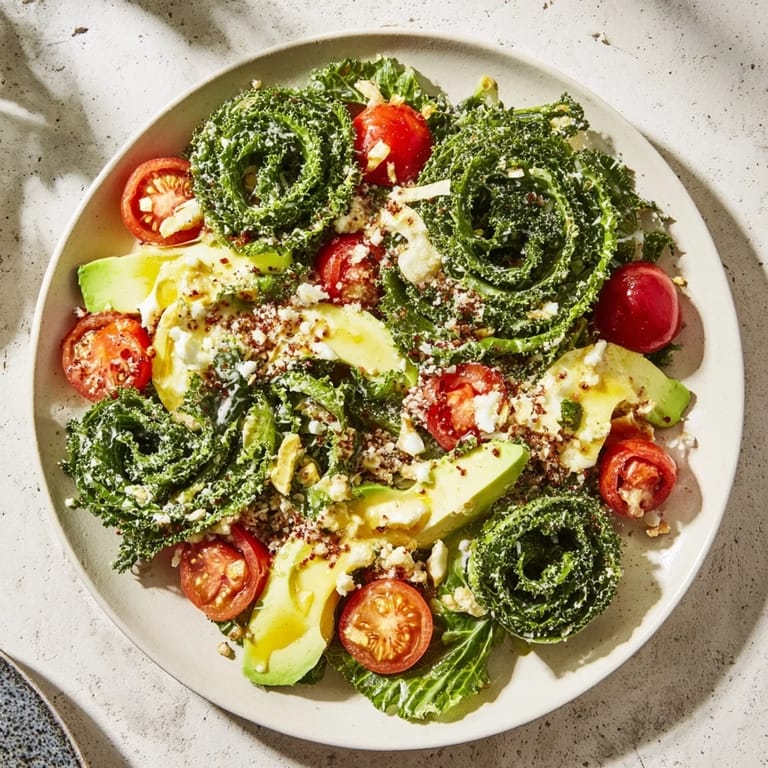
- Trust that imperfection is part of the charm—a salad that looks almost too perfect to eat is exactly the point.
 Save to Pinterest
 This salad reminds me that cooking isn't always about feeding hunger—sometimes it's about creating a moment where beauty and nourishment are one and the same. Serve it and watch what happens.
Recipe FAQs
- → What greens work best for this salad?
Mixed baby greens like arugula, spinach, and watercress bring a mix of peppery and mild flavors and fresh textures.
- → Can I substitute the feta cheese?
Yes, goat cheese is a great alternative for a creamy, tangy component.
- → How should the dressing be prepared?
Whisk olive oil, lemon juice, honey, Dijon mustard, salt, and pepper until emulsified for a bright, balanced flavor.
- → What is the purpose of arranging the ingredients by the Golden Ratio?
It creates a visually stunning presentation where flavors and colors flow harmoniously on the platter.
- → Can I add protein to this dish?
Adding grilled chicken or chickpeas can boost protein and make it more filling.