 Save to Pinterest
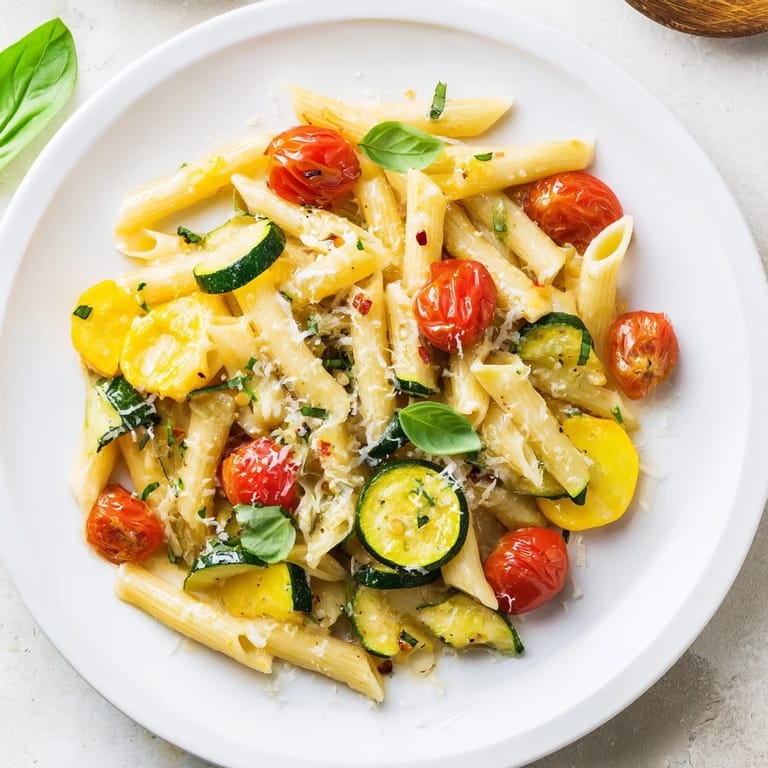
 The smell of garlic hitting warm olive oil always pulls me back into the moment, no matter how distracted I am. I made this pasta on a Tuesday night when I had too many squash from a neighbor and no plan for dinner. It came together so fast that I actually sat down to eat before the sun went down, which felt like a small miracle. The tomatoes burst in the pan and created their own sauce, something I didn't expect but loved immediately. Now it's my go-to when the farmers market haul gets out of hand.
I served this to friends who claimed they didn't like zucchini, and they went back for seconds without realizing what they were eating. The key was slicing everything thin enough to cook quickly but thick enough to hold some texture. One of them asked if I'd added butter, and I hadn't, it was just the starchy pasta water doing its job. That night taught me that good vegetables don't need much convincing. They were skeptical until they weren't.
Ingredients
- Penne or fusilli pasta: The ridges and shapes catch the olive oil and bits of tomato, making every bite flavorful instead of letting the sauce pool at the bottom of the bowl.
- Zucchini: Slice it into half-moons so it cooks evenly and doesn't turn to mush, and try to keep the pieces about the same size.
- Yellow squash: It adds a sweeter, more delicate flavor than zucchini alone, and the color contrast makes the dish look alive.
- Cherry or grape tomatoes: Halving them lets their juices release quickly and form a light, naturally sweet sauce that clings to the pasta.
- Extra virgin olive oil: Use something you'd actually want to taste, since it's not hidden here, it's part of the flavor.
- Garlic: Mince it fine and don't let it brown, or it'll turn bitter and take over the whole dish.
- Kosher salt: Salt the pasta water generously, it's your only chance to season the pasta itself from the inside out.
- Black pepper: Freshly ground makes a difference, it's sharper and more aromatic than the pre-ground stuff.
- Fresh basil leaves: Slice them just before adding so they stay bright green and fragrant, and save a few whole leaves for the top.
- Red pepper flakes: A small pinch adds warmth without heat, but you can skip it if you're serving kids.
- Parmesan cheese: It melts into the pasta and adds a salty, nutty finish, but the dish is still good without it.
- Lemon zest: A little grated over the top at the end wakes everything up and adds a fresh, unexpected brightness.
Tired of Takeout? 🥡
Get 10 meals you can make faster than delivery arrives. Seriously.
One email. No spam. Unsubscribe anytime.
Instructions
- Boil the pasta:
- Bring a large pot of salted water to a rolling boil and cook the pasta until it's al dente, with a slight bite in the center. Before draining, scoop out half a cup of the starchy pasta water and set it aside, it's your secret weapon for bringing everything together.
- Sauté the garlic:
- Heat olive oil in a large skillet over medium heat, then add the minced garlic and stir it around for about a minute until it smells amazing but hasn't started to brown. If it browns, it'll taste bitter, so keep an eye on it.
- Cook the squash:
- Toss in the zucchini and yellow squash, stirring occasionally so they cook evenly and start to soften without turning mushy. This should take about four to five minutes, and you'll see them just begin to get tender and a little golden at the edges.
- Add the tomatoes:
- Stir in the halved tomatoes along with salt, black pepper, and red pepper flakes if you're using them. Let everything cook together for three to four minutes until the tomatoes break down slightly and release their juices into the pan.
- Combine with pasta:
- Lower the heat and add the drained pasta directly to the skillet with the vegetables, tossing everything together. Add splashes of the reserved pasta water a little at a time until the sauce coats the pasta in a silky, cohesive way.
- Finish and serve:
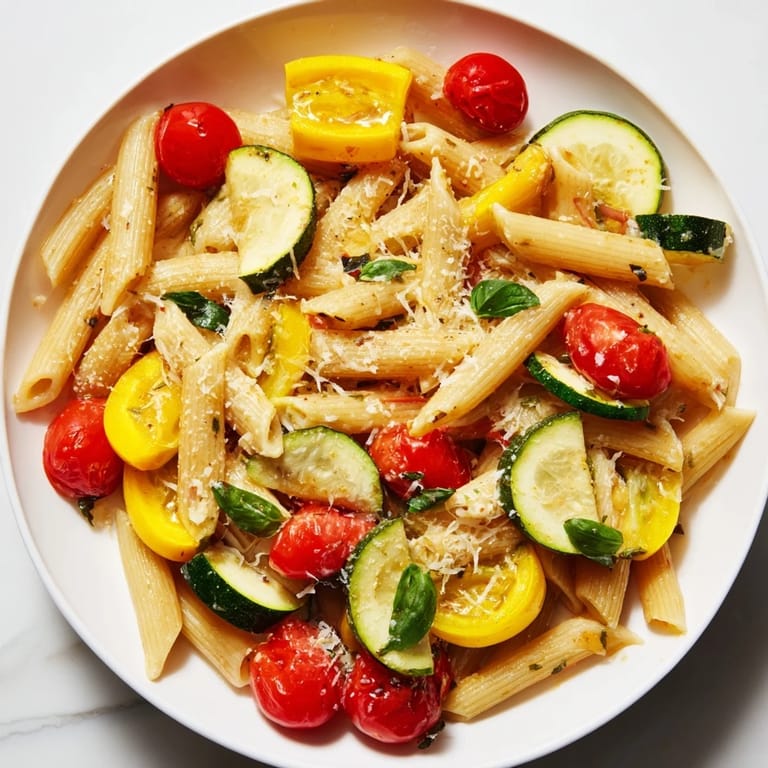
- Stir in the fresh basil and Parmesan cheese, then taste and adjust the seasoning if needed. Divide into bowls and top with extra basil and a sprinkle of lemon zest if you want a little extra brightness.
 Save to Pinterest
 One evening I made this for my mom, who's usually skeptical of anything without meat. She finished her bowl and said it didn't feel like something was missing, which is high praise coming from her. I think it was the Parmesan and the way the vegetables became part of the sauce instead of just sitting on top of the pasta. It reminded me that a dish doesn't need to be complicated to feel complete. Sometimes the simplest combinations are the ones that stick with you.
Choosing Your Vegetables
Use whatever looks best at the market or in your garden, because this recipe is really just a template for celebrating fresh produce. I've added bell peppers, spinach, and even green beans when I had them on hand, and it always worked. The key is to cut everything into similar-sized pieces so they cook at the same rate. If you use something watery like spinach, add it at the very end so it wilts without making the dish soggy. Trust your instincts and don't overthink it.
Making It Ahead
This pasta reheats surprisingly well, which makes it great for meal prep or next-day lunches. Store it in an airtight container in the fridge for up to three days, and when you reheat it, add a splash of water or olive oil to loosen the sauce. I sometimes make a double batch on Sunday and eat it throughout the week, and it never gets boring. The flavors actually deepen a little after a day in the fridge. Just keep the fresh basil and lemon zest separate and add them right before serving.
Serving Suggestions
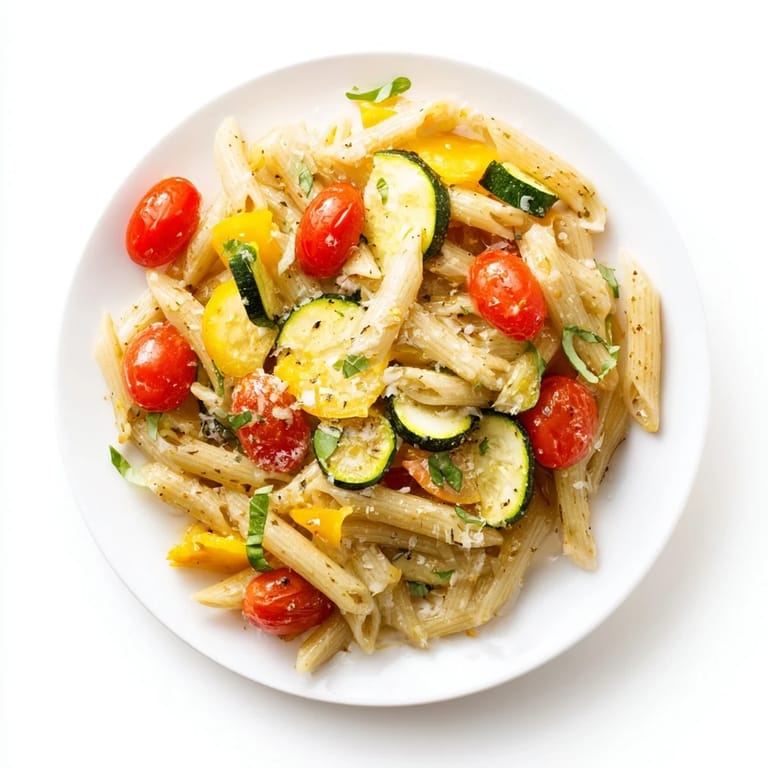
This dish is light enough to serve as a side with grilled chicken or fish, but hearty enough to stand alone as a main course. I like to pair it with a crisp white wine like Sauvignon Blanc or Pinot Grigio, something that doesn't compete with the fresh vegetable flavors. A simple green salad with lemon vinaigrette and some crusty bread for mopping up any leftover sauce round out the meal perfectly. If you want to make it more filling, toss in some white beans or chickpeas.
- Serve with garlic bread or focaccia for a more substantial meal.
- Top with toasted pine nuts or slivered almonds for extra texture and richness.
- Drizzle with a little balsamic glaze if you want a touch of sweetness and acidity.
 Save to Pinterest
 This is the kind of recipe that makes you feel good about cooking, because it's fast, forgiving, and always tastes like summer no matter when you make it. I hope it becomes one of those dishes you reach for without thinking, the way I do now.
Recipe FAQs
- → Can I prepare this dish ahead of time?
This pasta is best served fresh, but you can prepare the vegetable mixture up to 4 hours ahead. Store it in the refrigerator and gently reheat before tossing with freshly cooked pasta. Add pasta water as needed to achieve the desired consistency.
- → What pasta shapes work best?
Penne and fusilli are ideal choices as their ridged surfaces and shapes catch the sauce beautifully. Farfalle (bow-tie), rigatoni, or even spaghetti work well too—choose based on your preference.
- → How do I make this vegan?
Omit the Parmesan cheese entirely, or substitute with a high-quality vegan Parmesan alternative. All other ingredients are naturally plant-based, making this an excellent vegan main course.
- → Can I add protein to this dish?
Absolutely. Consider adding grilled chicken, crispy chickpeas, white beans, or crumbled tofu for extra protein. You could also finish with a drizzle of pesto or a poached egg for richness.
- → What wines pair well with this pasta?
Crisp, light white wines complement the fresh vegetables beautifully. Sauvignon Blanc, Pinot Grigio, or Vermentino are excellent choices. Avoid heavy reds that would overpower the delicate flavors.
- → How do I prevent mushy vegetables?
Cook zucchini and squash for only 4–5 minutes until slightly tender, and add tomatoes toward the end. Slice vegetables uniformly so they cook evenly. Avoid overcrowding the skillet to ensure proper heat distribution.