 Save to Pinterest
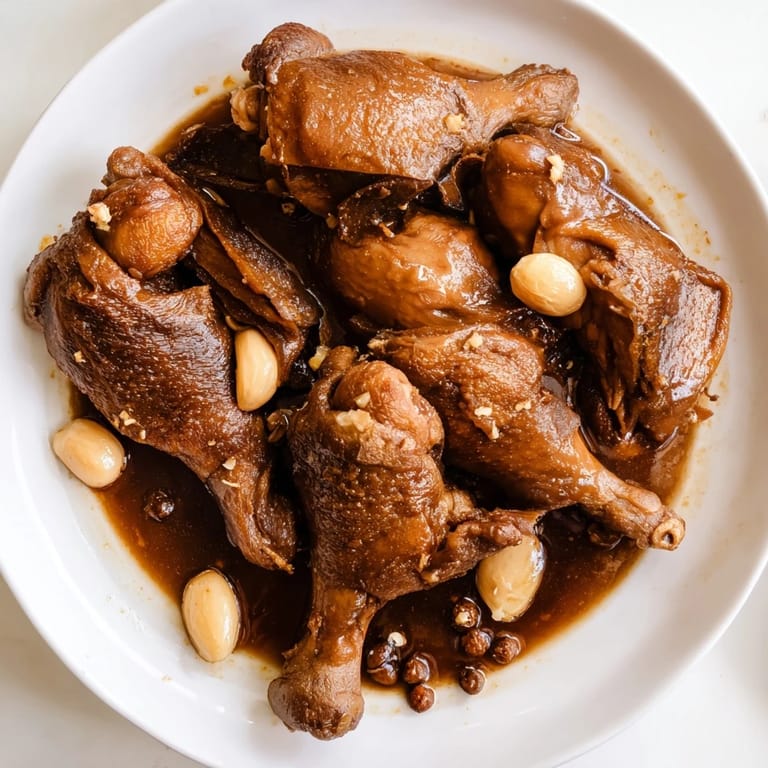
 My tita taught me chicken adobo during a sweltering afternoon in her kitchen, the kind where your clothes stick to you and the smell of vinegar and garlic makes you understand why this dish matters so much. She moved through the steps like she was having a conversation with the food itself, never rushing, letting the chicken tell her when it was ready. I've made it countless times since, and it's become the dish I turn to when I want something that feels like home, even if home is just a weeknight dinner.
I made this for a friend who'd never had adobo before, and I watched her take that first bite and just go quiet—not because something was wrong, but because she was experiencing that moment where acidity and umami and savory depth all click together at once. She asked for the recipe before she'd even finished eating, which is always the best compliment in this house.
Ingredients
- Bone-in, skin-on chicken thighs and drumsticks (1.5 lbs): The bones dissolve flavor into the braising liquid, and the skin crisps up just enough when you brown the meat—don't skip this part or substitute with boneless chicken, which turns stringy and sad.
- Soy sauce (1/3 cup): This is your salt and your umami backbone; use something decent, not the thin stuff that tastes like salt water, because you'll taste every choice you make here.
- Cane vinegar or white vinegar (1/3 cup): The vinegar is what makes this adobo sing—it's tart without being aggressive, and it keeps the rich sauce from feeling heavy.
- Garlic cloves, smashed (6): Smashing them instead of mincing means they soften into the sauce and you get these tender bits to bite into, rather than sharp garlic pieces.
- Bay leaves (2): They dissolve their gentle herbal note into the background without announcing themselves—remove them before serving so nobody's surprised by a leaf on their fork.
- Black peppercorns (1 teaspoon whole): Whole peppercorns toast as the sauce bubbles and release their warmth slowly; if you use ground pepper it gets dusty-tasting and disappears.
- Brown sugar (1 tablespoon, optional): This is not for sweetness exactly, but for balance—a tiny amount rounds out the sharp edges without making it dessert.
- Water (1/2 cup): This dilutes the braise just enough so the chicken doesn't end up in concentrated brine; too little and it seizes up, too much and you're waiting forever for reduction.
- Cooking oil (2 tablespoons): Use something neutral like canola or vegetable oil for browning—it won't interfere with the flavors you're building.
- Steamed white rice: This catches the sauce and becomes the real prize on your plate; jasmine or plain long-grain both work beautifully.
- Scallions, chopped (optional): A bright garnish that cuts through richness and adds a fresh note right at the end.
Tired of Takeout? 🥡
Get 10 meals you can make faster than delivery arrives. Seriously.
One email. No spam. Unsubscribe anytime.
Instructions
- Combine and marinate:
- Toss chicken with soy sauce, vinegar, smashed garlic, bay leaves, peppercorns, and brown sugar in a large bowl until everything is coated. Let it sit in the fridge for at least 30 minutes (or overnight if you have time)—the chicken relaxes and the flavors begin their conversation before heat even enters the picture.
- Pat and brown:
- Pull the chicken out, reserve every drop of that marinade, and pat the chicken completely dry—this is how you get golden skin that actually has some texture. Heat oil in a large skillet over medium-high heat and brown the chicken skin-side down for 3–4 minutes, then flip and brown the other side; you're not cooking it through, just sealing in that savory crust.
- Braise low and slow:
- Pour in the reserved marinade and water, bring it to a boil so you see it actually bubbling, then lower the heat immediately and cover. Simmer for 25 minutes, turning the chicken once halfway through so it braises evenly in that tangy liquid.
- Reduce the sauce:
- Uncover and let it bubble gently for another 10–15 minutes—you're watching for the liquid to thicken and concentrate, and for the chicken to be so tender it nearly falls off the bone. Skim off excess fat from the surface if you want it lighter, though that fat carries flavor so it's up to you.
- Taste and finish:
- Remove from heat, discard the bay leaves, taste the sauce and adjust salt if needed. Serve over steamed rice with scallions scattered on top if you have them.
 Save to Pinterest
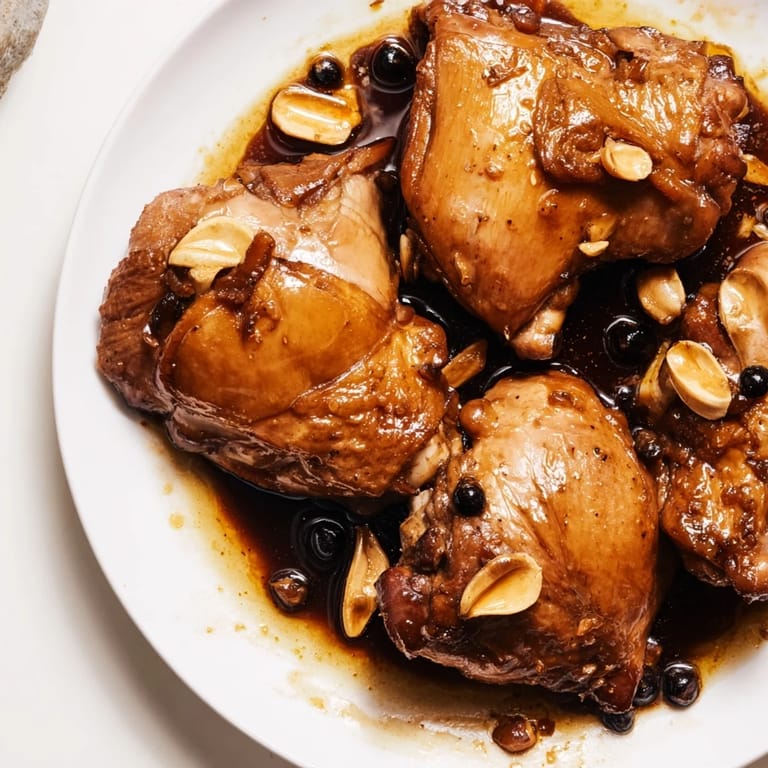
 There's a moment when adobo stops being just a meal and becomes a ritual, when you realize this is what people have been making in kitchens across the islands for generations, each version slightly different but always built on the same bones of vinegar and soy and patience. Making it feels like joining something bigger than just dinner.
Why This Dish Endures
Adobo survives because it works backwards from most cooking—it gets better as it cools and sits, the flavors marrying overnight in the fridge. I often make a double batch specifically so I have leftovers, and those reheated portions the next day taste deeper, more complex, like the dish had time to think about itself. It's the opposite of flash cooking; it's patient and forgiving.
Building Your Own Adobo Instincts
Once you understand the structure of adobo, you can adjust it without losing the plot. Too tangy? Add a bit more brown sugar or soy sauce. Too salty? More vinegar and water bring it back into balance. The beauty is that vinegar and soy are playing against each other, and as long as you respect that tension, you can shift the ratios based on what you've got in the pantry.
Small Changes That Matter
Some of my favorite versions come from tiny deviations—a splash of coconut milk swirled in at the end makes it feel luxurious, or a few dried chilies simmered in the sauce add a warmth that sneaks up on you. My neighbor makes hers with a spoon of fish sauce and a touch of honey, and it's different but still recognizably adobo, still that same comfort in a bowl.
- If you want extra richness, finish with a splash of coconut milk right before serving and let it warm through gently.
- For heat, add a few dried chilies to the braise or pass fresh chili on the side for people to customize.
- Substitute pork shoulder or beef chuck if you want variety, though timing will shift slightly depending on cut and size.
 Save to Pinterest
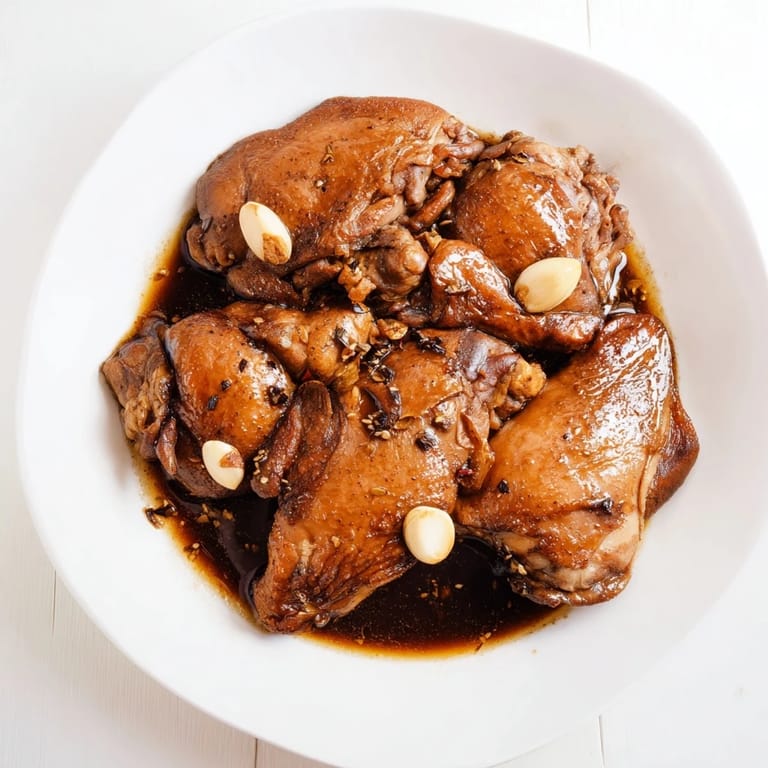
 This dish is proof that sometimes the best meals come from simple ingredients that know how to talk to each other. Make it once and it becomes something you'll come back to.
Recipe FAQs
- → What cuts of chicken work best?
Bone-in, skin-on chicken thighs and drumsticks provide ideal flavor and tenderness for this dish.
- → Can I adjust the tanginess level?
Yes, varying the amount of vinegar controls the tanginess; less vinegar softens the sharpness.
- → Is marinating necessary?
Marinating for at least 30 minutes allows the flavors to deeply penetrate the chicken, enhancing taste.
- → What rice pairs well with this dish?
Steamed white rice is traditionally served to complement and absorb the flavorful cooking sauce.
- → Can this dish be made spicier?
Adding dried chilies during braising introduces a subtle heat while maintaining the original flavor profile.