 Save to Pinterest
 There's something almost meditative about standing over a Dutch oven watching onions transform from sharp and papery to glossy ribbons of pure sweetness. I discovered this soup on a gray November afternoon when a friend mentioned she'd been craving the real deal—the kind that takes time, the kind that fills your kitchen with a smell so good you almost don't want to eat it. That first batch taught me that patience with onions isn't boring; it's the whole point.
I made this for my sister during a particularly brutal winter, and I watched her face go quiet the moment she tasted it—that specific kind of quiet that means comfort food has done its job. She sat at my kitchen counter, spoon in hand, not talking much, just present with the bowl. That's when I understood this soup isn't really about the ingredients; it's about creating a moment where someone feels taken care of.
Ingredients
- Yellow onions, thinly sliced: The foundation of everything—five large ones might seem like a lot until they shrink down to pure gold, and using a sharp knife makes the slicing almost meditative.
- Unsalted butter and olive oil: The combo prevents the butter from burning while it coaxes out those deep, sweet onion notes that make people ask what your secret is.
- Garlic cloves, minced: Just two, added near the end so they stay fresh and don't overwhelm the delicate caramel you've built.
- Sugar: A teaspoon might sound strange, but it jumpstarts the caramelization process and brings out what's already there.
- Beef broth: Eight cups of quality broth matters here—it's the stage where your caramelized onions become something greater than themselves.
- Dry white wine: Half a cup of something you'd actually drink makes all the difference, cutting through richness and adding brightness.
- Fresh thyme and bay leaves: These herbs anchor the flavor without competing; dried thyme works if fresh isn't available, just use less.
- Worcestershire sauce: One tablespoon adds umami depth that makes people lean in for another spoonful.
- Baguette slices: Half-inch rounds toast quickly and hold up to the hot broth without dissolving into mush.
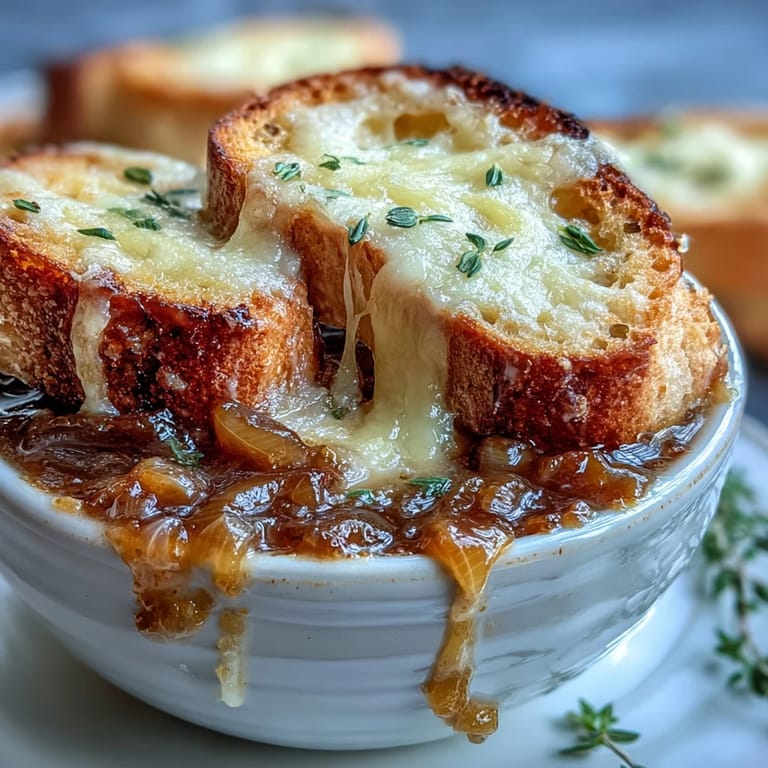
- Gruyère cheese, grated: The star of the topping—its nutty sweetness melts into silky pools, and room-temperature grating prevents clumping.
- Parmesan cheese: Optional but worth it, adding a sharp note that balances Gruyère's richness.
Tired of Takeout? 🥡
Get 10 meals you can make faster than delivery arrives. Seriously.
One email. No spam. Unsubscribe anytime.
Instructions
- Melt butter and oil, then add onions and sugar:
- The pot should be warm enough that the butter foams immediately and the onions begin releasing their moisture. Stir them every few minutes so they caramelize evenly rather than burning on the bottom.
- Cook until deeply golden, about 40 to 45 minutes:
- This isn't a race—low and steady heat transforms them into something sticky and sweet that smells like caramel. When you lift the spoon, the onions should cling together in glossy strands.
- Add minced garlic and cook briefly:
- One minute is all you need; the garlic should just become fragrant without browning. If it starts to color, you've gone too far.
- Pour in wine and scrape the bottom:
- The wooden spoon will pick up all those caramelized bits stuck to the pan—that's flavor you don't want to waste. Let it simmer for a few minutes until the raw wine edge softens.
- Add broth, thyme, bay leaves, and Worcestershire sauce:
- Bring it to a gentle simmer, then reduce heat and let it cook uncovered for 20 to 30 minutes. The soup deepens in color and flavor as it sits, so don't rush this part.
- Season and remove bay leaves:
- Taste as you go, adding salt and pepper in small amounts. Bay leaves should come out before serving so no one bites into one.
- Toast baguette slices under the broiler:
- One to two minutes per side gives you golden, crispy rounds that won't instantly dissolve. Watch them—they can go from perfect to burnt faster than you'd think.
- Ladle soup into oven-safe bowls and top with bread and cheese:
- Be generous with the Gruyère; it should pile up in a proper handful. If using Parmesan, sprinkle it over the Gruyère for extra depth.
- Broil until cheese melts and bubbles:
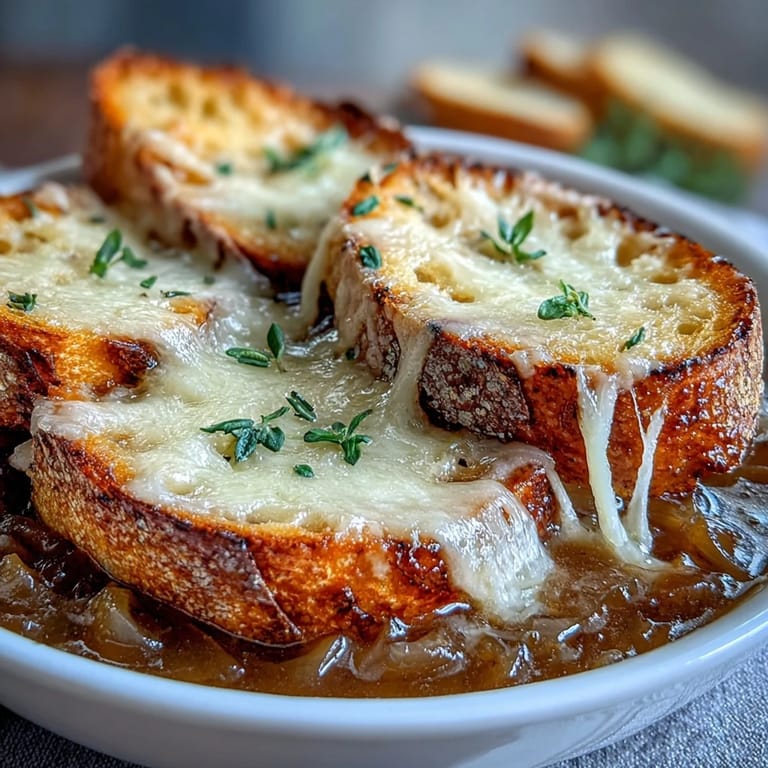
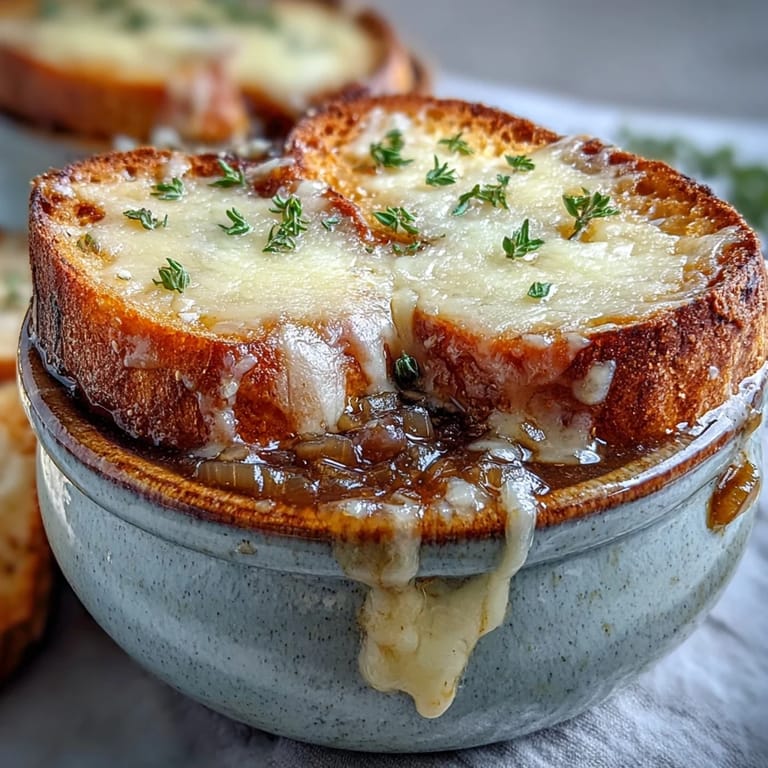
- Two to four minutes and you'll hear it sizzle before you see it bubble; that's the moment to pull it out. The cheese should be golden at the edges and completely melted through.
 Save to Pinterest
 My neighbor once knocked on the door because the smell coming through the vents had her convinced something incredible was happening in my kitchen. When I offered her a bowl, she sat in my living room and didn't say much, just ate slowly and asked for the recipe. Sometimes the best meals are the ones that make you want to be generous with the people around you.
The Art of Patience with Onions
The first time I made French onion soup, I expected it to be difficult, but it's really just about showing up and stirring. Onions teach you something about cooking that you can't learn from faster recipes—they teach you that sometimes the best transformations happen slowly, that heat and time are all you need. Standing at the stove watching them go from raw to golden to almost mahogany-brown becomes its own kind of meditation, especially on days when the kitchen is your quiet place.
Why This Works as Comfort Food
There's a reason French onion soup shows up in bistros across the world; it hits every note of comfort without being complicated. The broth is warming, the cheese is indulgent, and the texture—that combination of bread softening into broth and cheese stretching on your spoon—makes you want to go back for more. It's the kind of dish that works equally well after a long day or as the centerpiece of something special.
Making It Your Own
Once you understand the bones of this recipe, it becomes a canvas for your own preferences and what's in your kitchen. Some people add a splash of sherry or brandy for deeper complexity, while others swear by Swiss cheese instead of Gruyère. The beautiful thing about onion soup is that it's forgiving enough to adapt while being classic enough to never feel wrong.
- For vegetarian versions, vegetable broth and a splash of balsamic vinegar replace the beef broth and Worcestershire sauce beautifully.
- If Gruyère isn't available, Emmental or even a sharp white cheddar can stand in, though the flavor profile shifts slightly.
- Make the soup a day ahead and reheat gently; the flavors actually deepen overnight, then add the toasts and cheese just before serving.
 Save to Pinterest
 This soup has a way of making you feel like you've done something worthwhile in the kitchen, even though it's mostly just onions and patience. Serve it with a green salad and a glass of crisp white wine, and you've created something that tastes like care.
Recipe FAQs
- → Why does caramelizing onions take so long?
Caramelization is a chemical transformation that requires time. Onions contain natural sugars that need to break down and brown slowly over medium-low heat. Rushing this process over high heat will burn the onions rather than caramelize them, resulting in a bitter taste rather than sweet depth.
- → Can I make this ahead of time?
Absolutely. The soup actually develops more flavor when made ahead and refrigerated overnight. Store the soup and the toasted baguette slices separately. When ready to serve, reheat the soup, assemble with bread and cheese, then broil until melted and bubbly.
- → What's the best cheese for French onion soup?
Gruyère is the traditional choice because of its excellent melting properties and nutty, complex flavor that pairs beautifully with sweet onions. Swiss, Emmental, or Comté make fine substitutes. For the ultimate experience, use mostly Gruyère with a sprinkle of Parmesan added for extra savory depth.
- → How do I know when onions are properly caramelized?
Properly caramelized onions will be a deep amber-brown color, significantly reduced in volume, and have a jam-like consistency. They should taste naturally sweet with rich, savory notes. This typically takes 40-45 minutes of patient cooking and frequent stirring.
- → Can I freeze this soup?
The soup base freezes beautifully for up to 3 months. Freeze without the bread and cheese toppings. Thaw overnight in the refrigerator, reheat gently on the stovetop, then finish with fresh toasted baguette and cheese under the broiler.