 Save to Pinterest
 There was something quietly joyful about the first time I made these Communion cupcakes—the kitchen perfumed with vanilla, parchment crackling as I filled each cup, and gentle anticipation in the air as the oven warmed. It’s a meditative sort of baking, where you hear the light whir of the mixer and the softest patter of powdered sugar as it falls. While assembling fondant crosses, I caught myself humming the same tune my grandmother would when she decorated wedding cakes, though she never saw me rolling fondant. These cupcakes aren’t just pretty, they carry a feeling of festivity and reflection. Their simplicity is intentional, letting tender crumb and decorative touches shine without overwhelming the moment.
I remember making these for my niece’s First Communion, balanced on a wobbly kitchen stool, piping perfect swirls and nervously hoping each topper would hold. There was laughter over imperfect crosses, and the inevitable sneak of a cupcake ‘just to test’ before guests arrived. That afternoon, small hands clapped for the delicate decorations and the grown-ups asked for seconds. It felt like celebration in miniature form—each cupcake a sweet little ceremony of its own.
Ingredients
- All-purpose flour: Use a light hand when measuring and sifting prevents dense cupcakes.
- Baking powder: Lends a gentle rise for a softly domed top—don’t skip fresh powder for best results.
- Salt: Enhances flavor but dissolves quickly, so whisk it in with the dry ingredients.
- Unsalted butter (for cupcakes and frosting): Room temperature is the secret for effortless mixing and fluffy texture.
- Granulated sugar: Cream until pale for the airiest batter and fine crumb.
- Eggs: Let them reach room temp for smooth incorporation and even rise.
- Vanilla extract: Pure vanilla transforms both cake and frosting—don’t settle for imitation.
- Whole milk: Adds richness; gently warm if your kitchen is chilly to keep batter fluid.
- Powdered sugar (for frosting): Sift to avoid lumps and ensure silkiness.
- Milk (for frosting): Adjust for a spreadable yet pipable texture.
- White fondant: Knead before rolling for pliability and smooth crosses.
- Cornstarch (for dusting): Stops fondant from sticking without toughening the decorations.
Tired of Takeout? 🥡
Get 10 meals you can make faster than delivery arrives. Seriously.
One email. No spam. Unsubscribe anytime.
Instructions
- Prep the pan and preheat:
- Line a standard muffin tin with paper liners and preheat your oven to 350°F as the butter softens on the counter.
- Combine dry ingredients:
- Whisk flour, baking powder, and salt in a bowl until you can no longer see streaks of white powder—the kitchen will already start to feel calm.
- Cream butter and sugar:
- Beat softened butter with sugar until light and fluffy, listening for the shift in pitch as the mixture go from gritty to pillowy.
- Add eggs and vanilla:
- Drop in the eggs one at a time, blending each before adding the next and pausing to breathe in the heady scent of vanilla.
- Combine wet and dry:
- Add flour mixture in three parts, alternating with milk, gently beating after each—don’t overmix, or you’ll lose the cupcake’s tenderness.
- Fill and bake:
- Scoop batter evenly into liners, about two-thirds full, and bake until the tops spring back to the touch, usually 18–20 minutes.
- Cool:
- Let cupcakes rest in the pan five minutes, then transfer to a wire rack where you’ll hear a faint crackle as they cool.
- Make the buttercream:
- Beat butter until creamy, then slowly blend in powdered sugar; finish with milk, vanilla, and salt, whipping until smooth and light.
- Frost:
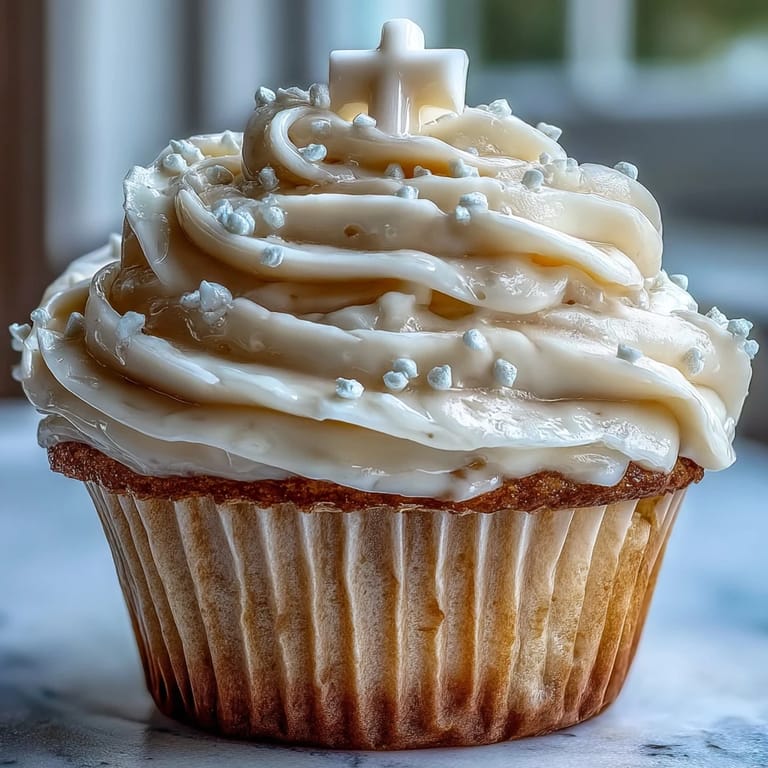
- Fill a piping bag and swirl generous tops on cooled cupcakes—there’s a little thrill in watching soft peaks hold.
- Roll and cut fondant crosses:
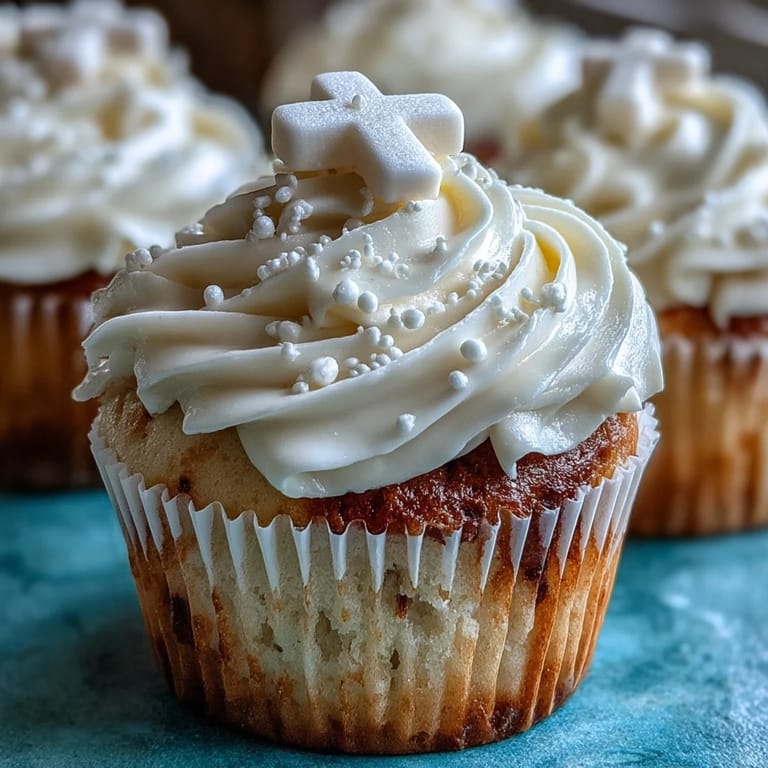
- Dust your surface with cornstarch, knead fondant till supple, roll to 1⁄8 inch thick, and cut crosses—don’t rush, it’s almost meditative.
- Decorate:
- Let fondant crosses air-dry, then gently nestle each on a mound of creamy frosting just before serving.
 Save to Pinterest
  Save to Pinterest
 Watching a quiet hush fall around the table as everyone admired the cupcakes—pausing before picking one up—reminded me how food can mark a moment beyond celebration. They became part of the memories, not just a dessert at the end.
Making Fondant Crosses Even Simpler
When I first worked with fondant, I thought it would be sticky and stubborn, but a gentle dusting of cornstarch worked wonders for smooth rolling and mess-free cutting. For uniform shapes, press the cutter down with confidence, wiggle just a touch, and lift straight up. If you have extra, let them dry completely, and you can store them in an airtight container for future celebrations or even a last-minute cake decoration rescue.
Customizing for Your Gathering
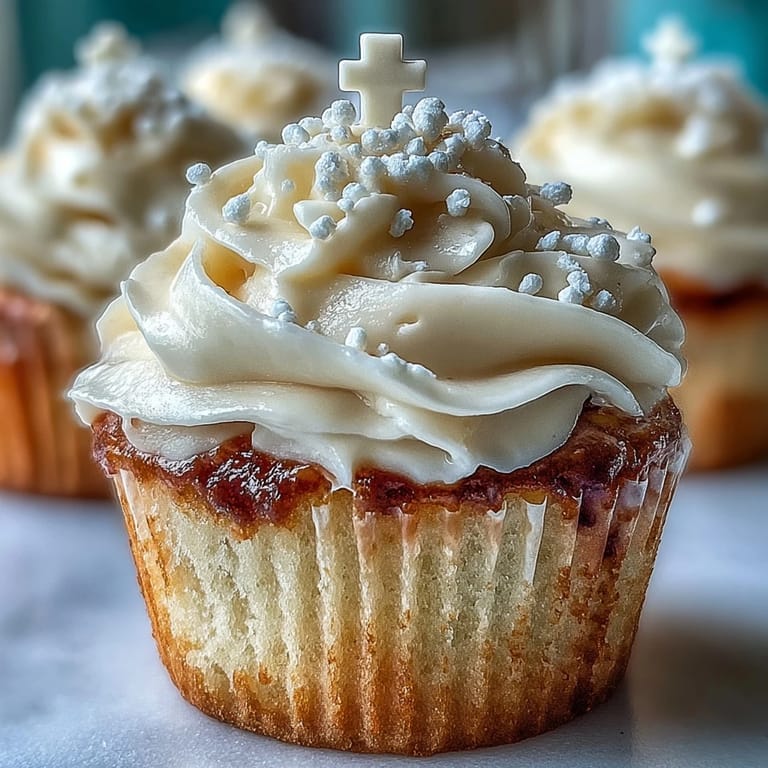
If you want to create a signature touch, try adding a hint of lemon or almond extract to the batter, or sprinkle a few edible pearls on top for a shimmer of elegance. Friends have suggested tinting the fondant pale pink or blue for different occasions, and it makes every cupcake feel unique. The best part is involving little helpers—kids love choosing sprinkles or even shaping simple decorations for the tops.
Troubleshooting and Last-Minute Fixes
Not every batch comes out perfect, and that’s part of the fun. Once, I overmixed the batter and the cupcakes turned out a little chewy—since then, I’ve learned to stop as soon as everything’s barely combined. If your frosting is too thin, add a bit more powdered sugar; if it’s too thick, a few drops of milk will save it.
- If fondant sticks to your cutter, chill it for a few minutes.
- Cracks on the cupcake tops disappear under a generous swirl of frosting.
- Store leftovers in an airtight container to keep them soft for another day.
 Save to Pinterest
  Save to Pinterest
 Sharing these cupcakes is about more than sweetness—it’s a chance to celebrate together, with a little creativity and a lot of care in every bite. However you decorate them, I hope they grace your table with a bit of joy.
Recipe FAQs
- → How do I prevent cupcakes from sinking in the center?
Ensure ingredients are at room temperature, avoid overmixing once flour is added, and bake immediately. A toothpick should come out clean when done; underbaking often causes sinking.
- → What gives the buttercream a smooth, pipeable texture?
Beat softened butter until creamy, then add sifted powdered sugar gradually. Add milk a teaspoon at a time to reach the desired consistency and beat until light and fluffy for easy piping.
- → How thick should I roll the fondant for toppers?
Roll fondant to about 1/8 inch (3 mm). This thickness is sturdy enough to hold shape yet thin enough to sit comfortably atop the frosting without sliding.
- → Can I prepare fondant crosses ahead of time?
Yes. Cut crosses and let them air-dry on a cornstarch-dusted surface for several hours or overnight. Store in an airtight container once fully dry to prevent humidity softening.
- → How can I make a chocolate variation?
Substitute 1/4 cup of flour with unsweetened cocoa powder in the batter and consider a chocolate buttercream. Adjust sugar slightly if you prefer a sweeter balance.
- → What is the best way to store finished cupcakes?
Store at room temperature in an airtight container for up to 2 days. If keeping longer, refrigerate and bring to room temperature before serving to restore softness.