 Save to Pinterest
 The first time I tasted mapo tofu was in a cramped kitchen in Chengdu, watching my friend's grandmother work the wok without any apparent effort, her movements so practiced they seemed almost meditative. She never measured anything, just knew by the color of the oil when the doubanjiang had released its deep, fermented soul into the heat. What struck me most wasn't just the heat on my tongue—it was that strange tingling sensation, like tiny sparkles dancing across my lips from the Sichuan peppercorns, a feeling I'd never experienced before. Years later, I finally understood why she smiled when I asked for the recipe: this dish isn't about perfection, it's about that moment when silky tofu surrenders to a sauce that's bold, numbing, and utterly unforgiving of timidity.
I made this for my partner on a cold evening when we were both too tired to think, and somehow the ritual of gently sliding the tofu into the bubbling sauce felt like an act of care. The whole apartment filled with that distinctive fermented-chili aroma, sharp and complex, and by the time we sat down to eat, we weren't hungry anymore—we were hungry for this specifically, for the way the sauce clung to each spoonful of rice.
Ingredients
- Silken or soft tofu (400 g): Silken tofu melts on your tongue but demands a gentle hand; if you're nervous, use soft tofu instead, which holds together more stubbornly but forgives clumsy stirring.
- Ground pork or beef (150 g, optional): The meat isn't essential—the sauce is the star—but it adds a savory depth that makes you feel like you're eating something substantial rather than just a side dish.
- Sichuan doubanjiang (2 tbsp): This fermented chili bean paste is non-negotiable; it's the backbone of everything, so seek out the real thing in a Chinese market rather than settling for substitutes that taste like regret.
- Soy sauce (1 tbsp): Use a good one with actual flavor, not the thin stuff that tastes like salt and sadness.
- Shaoxing wine (1 tbsp): It adds a subtle sweetness and depth; dry sherry works in a pinch, though it's never quite the same.
- Sugar (1 tsp): Just enough to round out the aggressive heat and fermented funk without making it sweet.
- Chicken or vegetable broth (½ cup): Low-sodium is crucial here because the doubanjiang and soy sauce already bring plenty of salt.
- Cornstarch slurry (1 tbsp cornstarch + 2 tbsp water): This is how you capture the sauce—it thickens everything into a glossy coat that clings to the tofu rather than pooling at the bottom of the pan.
- Sichuan peppercorns (1 tbsp, toasted and ground): Toast them yourself in the dry pan until they smell almost citrusy; ground peppercorns from a jar taste tired and flat.
- Vegetable oil (3 tbsp): Use something neutral that won't compete; the oil is just a vehicle for flavor.
- Garlic (3 cloves, minced): Don't skip this—it's the bridge between the numbing spice and the fermented depths.
- Ginger (2 tsp, minced): Fresh ginger, never powder; it wakes everything up.
- Scallions (2, sliced with whites and greens separated): The whites go into the pan early for their gentle sweetness, the greens at the end for their bright, sharp finish.
- Dried red chilies (1–2, chopped): Optional, but they add a smoky heat that layers beautifully beneath the numbing sensation.
Tired of Takeout? 🥡
Get 10 meals you can make faster than delivery arrives. Seriously.
One email. No spam. Unsubscribe anytime.
Instructions
- Set yourself up for success:
- Drain your tofu and cube it gently—rough handling now means broken pieces later. Mix the cornstarch with cold water until it's smooth, then let it sit; get everything else prepped and within arm's reach because once you start, you won't have time to hunt for your ginger.
- Wake the peppercorns:
- Drop them into a dry pan over medium heat and listen for them to start crackling and releasing that citrusy-numbing fragrance. Grind them coarsely in a mortar and pestle; you want texture, not powder.
- Build the flavor base:
- Heat oil in your wok or skillet, then add the scallion whites, garlic, and ginger, stirring constantly until the kitchen smells almost intoxicating. This shouldn't take more than a minute—you're looking for fragrant, not browned.
- Brown the meat (if using):
- Add your ground pork or beef and break it apart with your spoon as it cooks, looking for no pink remaining. If you're vegetarian, skip this entirely; the sauce is rich enough on its own.
- Awaken the paste:
- Stir in the doubanjiang and any dried chilies, coating everything in that deep red fermented paste. Cook for a minute or two until the oil turns red and aromatic—this is when the paste releases its deepest flavors, so don't rush it.
- Add the braising liquid:
- Pour in the Shaoxing wine first to deglaze the pan, then add soy sauce, sugar, and broth. Bring everything to a gentle simmer, tasting as you go; you should want to dive in immediately.
- Introduce the tofu with care:
- Gently slide the tofu cubes into the simmering sauce, trying not to drop them like stones. Simmer for about 5 minutes, occasionally spooning the sauce over the tofu to let it absorb the flavors while staying whole.
- Thicken into a glaze:
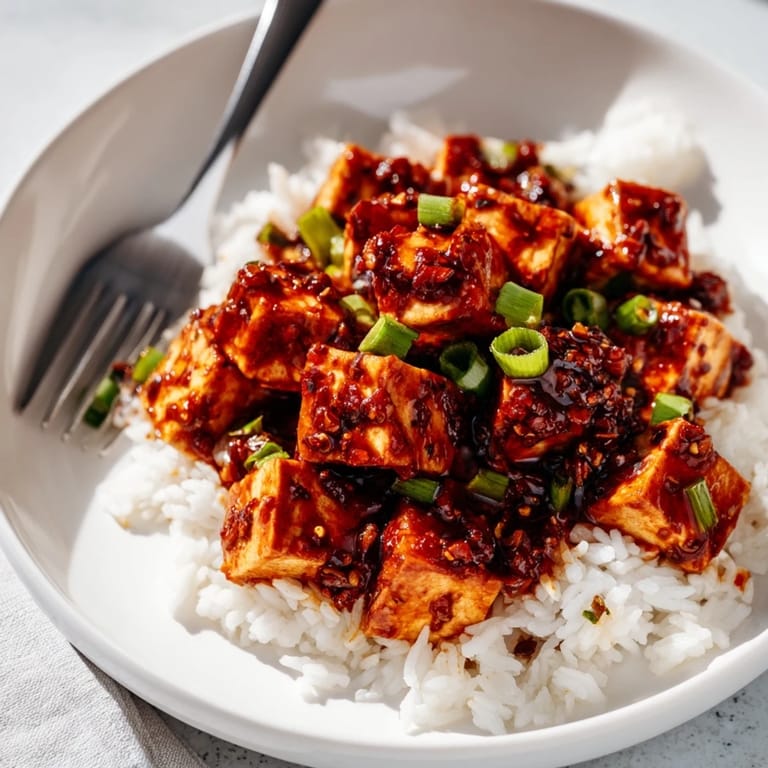
- Give your cornstarch slurry a quick stir—it settles—then drizzle it slowly into the pan while stirring very gently. Watch as the thin liquid transforms into a silky coating that clings to each piece of tofu.
- Finish with fire and green:
- Sprinkle the ground Sichuan peppercorns over everything, then scatter half the scallion greens across the top. The numbing sensation should hit you even before you taste it.
- Get to the table while it's alive:
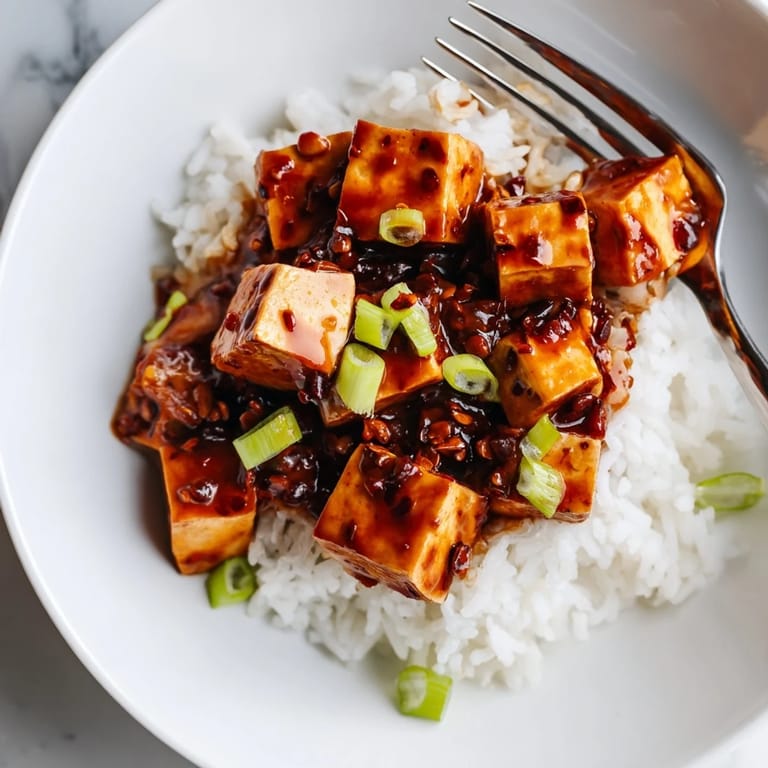
- Spoon everything over steamed rice, garnishing with more scallions and a drizzle of chili oil if you want to push the heat further.
 Save to Pinterest
 I once made this for a dinner party where everyone was skeptical about the heat level, and I watched their faces transform as the numbing sensation hit—that moment when people realize they've been wrong about what their tongue can handle. That's when mapo tofu stops being just dinner and becomes a shared experience, a challenge, a small adventure on a plate.
The Magic of Fermented Heat
What makes mapo tofu different from other spicy dishes is that it's not just hot—it's fermented, numbing, and deeply savory all at once. The doubanjiang isn't there to make you sweat; it's there to build layers of flavor that heat alone could never create. In Sichuan cuisine, this interplay between the hot chilies and the numbing Sichuan pepper is called málà, and it's a flavor profile that makes your mouth feel alive.
Texture Matters More Than You Think
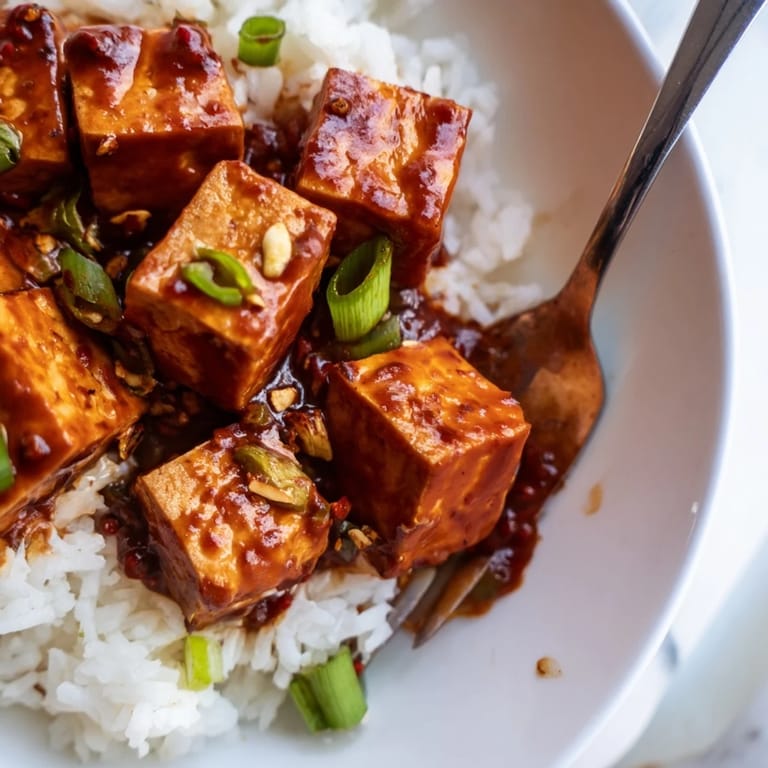
The contrast between silky tofu and a thick, cling sauce is what makes this dish memorable. If your tofu is too firm, it becomes chewy rather than tender. If your sauce is too thin, it slides off the tofu instead of hugging it. The cornstarch slurry is the secret tool that lets you achieve this balance—it transforms a broth into a glaze that actually cares about the tofu.
Building Heat Thoughtfully
Heat in this dish comes from three places: the chili bean paste, the dried chilies, and the Sichuan peppercorns. You control the intensity by adjusting how much doubanjiang you use and whether you add the dried chilies. Start conservative, taste, and adjust—it's easier to add more heat than to rescue a dish that's become unforgivingly spicy.
- If you like things gentle, use less doubanjiang and skip the dried chilies entirely; the Sichuan pepper will still give you that numbing tingle without the burn.
- For medium heat, use the full amount of doubanjiang and one dried chili, breaking it apart so you get flavor without overwhelming heat.
- If you want to test your pain tolerance, double the dried chilies and don't hold back on the paste.
 Save to Pinterest
 This dish reminds me that some of the best meals come from embracing flavors that challenge us rather than comfort us. Mapo tofu asks you to lean into the numbing, the fermented, the unapologetically bold—and once you do, there's no going back.
Recipe FAQs
- → What type of tofu works best for this dish?
Silken or soft tofu is preferred for its delicate texture, but firm tofu can be used for a sturdier bite that holds shape during cooking.
- → How do Sichuan peppercorns affect the flavor?
They provide a unique numbing sensation along with a citrusy aroma that enhances the spicy chili bean sauce's complexity.
- → Can I make this dish vegetarian?
Yes, omit the meat and use vegetarian chili bean paste and vegetable broth to keep it flavorful and meat-free.
- → What is the role of Shaoxing wine in the sauce?
It adds depth and subtle sweetness, balancing the heat and enhancing the overall flavor profile.
- → How can I control the spice level?
Adjust the amount of chili bean paste and dried chilies to suit your preferred heat intensity.